Missions With the Consfords
August 9, 2026
I remember standing in a stifling hot cinder block room in a Ghanaian village, dust motes dancing in the shafts of sunlight. The kids were packed in, maybe thirty of…
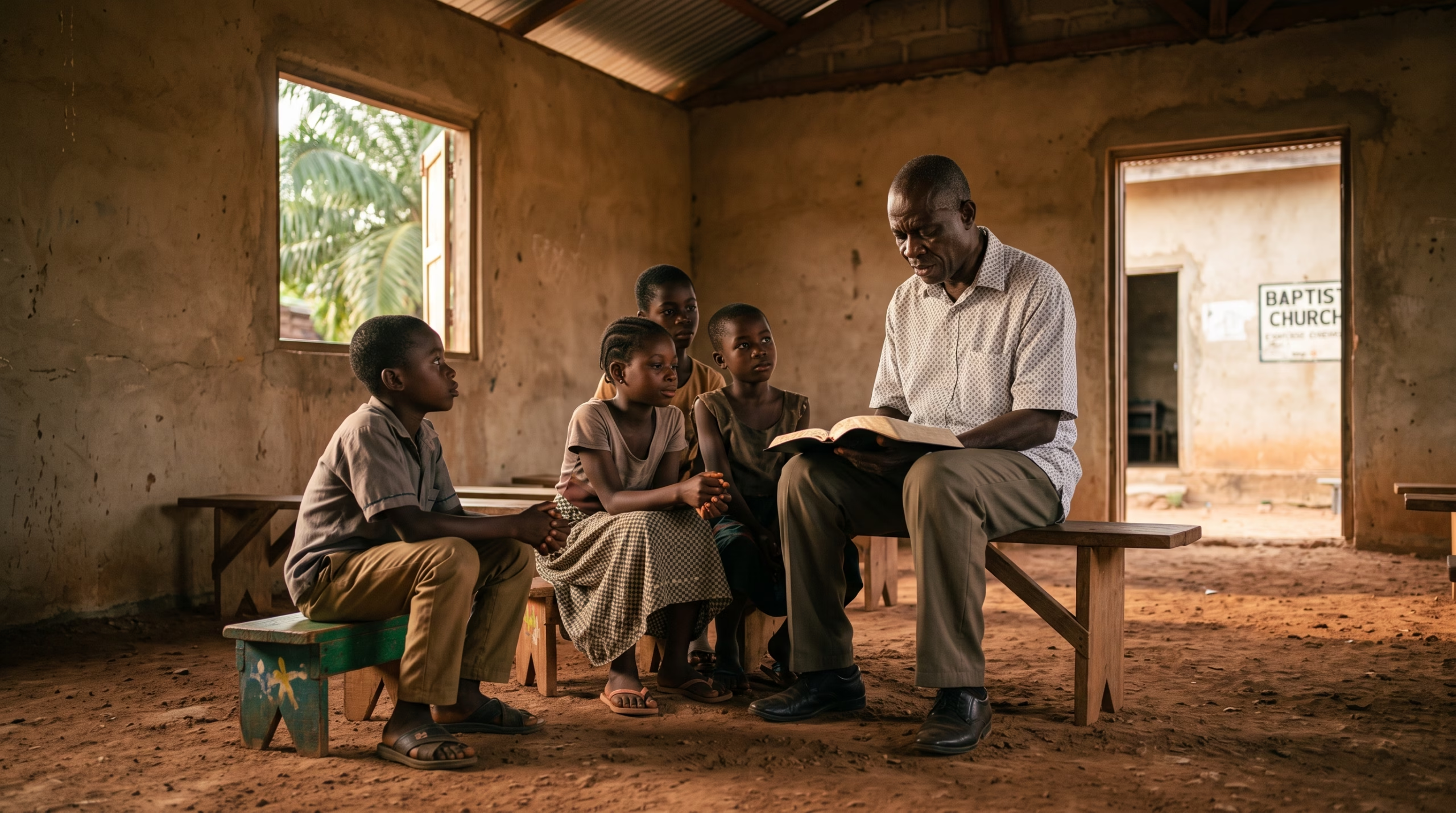
I remember standing in a stifling hot cinder block room in a Ghanaian village, dust motes dancing in the shafts of sunlight. The kids were packed in, maybe thirty of them, eyes wide and eager, ready to hear about Daniel in the lion’s den. That day, I learned more about the heart of teaching Sunday school in Ghana than any seminary class could have taught me.
The mission field clarifies things quickly. It removes the padding. There are no stage lights and no weekly affirmation that you are doing well. There is only the work. You study again. You visit again. You preach again. You forgive again. You trust God again. The mission field does not reward drama. It rewards endurance. Teaching Sunday school here is no different.
The Foundation: Simple Truths in a Complex World
When you’re teaching Sunday school in Ghana, you quickly realize that the basics are the main thing. These kids, many of them, have never heard the stories of the Bible. They don’t have children’s Bibles or flannelgraphs from growing up in church. We start with Creation, the Fall, Noah, Abraham, and the life of Christ. These aren’t just stories; they are the bedrock of everything we believe.
We use the KJV, of course. Sometimes I’ll read a passage and then have to break it down word by word. “For God so loved the world, that he gave his only begotten Son, that whosoever believeth in him should not perish, but have everlasting life” (John 3:16). That verse isn’t just a memory verse here; it’s often the first time they’ve truly understood God’s love and the plan of salvation. It’s a fresh revelation every time. When we want to dig deeper into the KJV text, we often refer to resources like Blue Letter Bible.
The goal is always clear: to plant the seed. We’re not just filling time on a Sunday morning. We’re laying spiritual foundations that will, by God’s grace, last for eternity. The simplicity of the gospel message cuts through all the noise. There’s no need for complicated theology when the truth of Christ’s sacrifice is so powerful.
Sometimes, after a lesson, a child will come up and ask a question that just melts your heart. They are seeking. They are hungry. It reminds me that God is already working in their little lives long before we ever arrive. We are just there to help them see it. If you want to read more about how we approach ministry with this mindset, you can always check out some of the other articles on our blog.
Overcoming Obstacles: Language, Resources, and Culture
You can’t talk about teaching Sunday school in Ghana without talking about the challenges. First off, language. While many Ghanaians speak English, it’s often a second or third language, and sometimes the kids only speak their local dialect. My wife Laura has a real knack for finding local helpers who can translate the stories into the children’s heart language. That makes all the difference.
Then there are the resources. We don’t have fancy classrooms or projectors. Sometimes we’re under a mango tree, sometimes in a small church building with no electricity. We make do with what we have: a KJV Bible, some chalk, a blackboard, and maybe a few pictures we’ve printed out. Creativity becomes a necessity, not a bonus. I’ve learned to draw stick figures that would make an art teacher weep, but the kids understand them.
Cultural context is another big one. Stories that make perfect sense in America might need a little tweaking here. For example, explaining snow in a Bible story to kids who’ve never seen anything colder than a rainy season puddle can be a fun challenge. We focus on the principles, the character of God, and the application to their lives, which are universal.
We see that “My people are destroyed for lack of knowledge” (Hosea 4:6). This isn’t just about academic knowledge, but spiritual understanding. Our job is to bridge that gap, to bring the light of God’s Word into their world in a way they can grasp. It’s not always easy, but it is always worth it. We often find ourselves relying on God for wisdom in ways we never would back home.
“More than 3.2 billion people have little or no access to the gospel.”
International Mission Board
The Power of Presence: Building Relationships That Last
Beyond the lessons, teaching Sunday school in Ghana is about presence. It’s about showing up every week, rain or shine, even when the roads are bad or you’re fighting a bout of malaria. The kids learn to trust you. They learn that you care. That consistency is a powerful testimony in itself. It tells them they matter.
We don’t just teach and leave. We spend time with them. We ask about their families, their school, their games. We learn their names, even the ones that are hard for my American tongue to pronounce. We laugh with them. We pray for them. These relationships are the glue that holds the ministry together and often open doors to their families.
I remember one boy, Kwasi, who was always quiet, always in the back. For months, he just listened. Then one day, after a lesson about Jesus calling the disciples, he walked right up to me and said, “Teacher, I want to follow Jesus too.” It wasn’t a dramatic altar call; it was a quiet, earnest confession. That’s the fruit of consistent presence and patient love. You can read more about how we build these connections in my book, Missionary on Fire.
Relationships are the currency of the mission field. Back home in Texas, problems were fixed through systems: forms, policies, and departments. But in Africa, systems do not run things; relationships do. The cable did not get installed because of pressure. It got installed because of breakfast. It’s the same with the gospel. It spreads through trusted connections, person to person.
Missionary on Fire Podcast
Preserving the Legacy of Faithful Missionaries
The Missionary on Fire podcast features interviews with veteran missionaries, classic sermons from the field, and stories of God’s faithfulness across generations. If you love the heart behind these stories, you will love the podcast. New episodes regularly.
What It Teaches You: Lessons for Life and Ministry
I came to Ghana thinking I was going to teach. And I do. But I’ve found that teaching Sunday school in Ghana has taught me just as much, if not more, about life and ministry. It teaches you patience. It teaches you flexibility. It teaches you to rely on God in ways you never thought possible.
You learn to simplify. All the bells and whistles we sometimes think are necessary for ministry? Most of them aren’t. What’s necessary is the Word of God, the moving of the Holy Spirit, and a willing heart. You learn to strip away the non-essentials and focus on the core message. It’s incredibly freeing, actually.
It also teaches you humility. You quickly realize you’re not the hero of the story. God is. You’re just a vessel. You’re just a tool. When a child understands a Bible truth and their face lights up, that’s God’s work, not mine. I may have praised the Lord loud enough for the whole building to hear, or for the whole village if we were outside. It’s a joy that never gets old.
The mission field clarifies things quickly. It removes the padding. There are no stage lights and no weekly affirmation that you are doing well. There is only the work. You study again. You visit again. You preach again. You forgive again. You trust God again. The mission field does not reward drama. It rewards endurance. Teaching Sunday school here requires that endurance.
Bringing the Lessons Home: Applying Them to Your Ministry
You might not be teaching Sunday school in Ghana, but these principles apply wherever you serve. Are you simplifying the gospel? Are you building genuine relationships? Are you relying on God’s power more than your own resources? These are questions we all need to ask ourselves, whether we’re in Accra or Anytown, USA.
Think about the children in your own church. Do they understand the foundational truths? Do they feel loved and seen? Are you making the most of the resources God has given you, even if they seem limited? We often complicate things that God intended to be simple. The message of salvation is clear and powerful, and it doesn’t need extra layers.
Remember the words of Christ: “Suffer little children, and forbid them not, to come unto me: for of such is the kingdom of heaven” (Matthew 19:14). Jesus had a heart for children, and so should we. Their souls are just as precious, and their capacity for faith is often greater than ours. We should never underestimate the importance of reaching them with the gospel.
Whether you’re teaching in a bustling city church or a small village outreach, the heart of the matter is the same. It’s about faithfully sharing God’s Word and loving the children He puts in front of you. It’s about being present and consistent. It’s about trusting God for the results. You can find more practical insights and stories from our ministry in Ghana right here on our blog.
So, take these lessons to heart. Look for ways to simplify, to connect, and to trust God more fully in your own ministry. The harvest is plentiful, and the laborers are few. Be one of those faithful laborers. Be present. Be patient. Be purposeful. God will do the rest. If you’re looking for more ways to engage with missions or our ministry specifically, I encourage you to connect with us and see how you can be a part of what God is doing.

Joe Consford is a Baptist missionary serving in Ghana, West Africa, with his wife Laura. He writes about missionary life, missions training, and the work of the Gospel in West Africa at consfords.com.
Frequently Asked Questions
What is it like to teach Sunday school in a Ghanaian village?
Teaching Sunday school in a Ghanaian village often involves simple settings, like a hot cinder block room, with many children eager to hear Bible stories for the first time. It focuses on foundational truths, as many children lack prior exposure to biblical narratives, making each lesson a fresh revelation of God’s love and salvation.
What are the main challenges when teaching Sunday school in Ghana?
Key challenges when teaching Sunday school in Ghana include language barriers, as English might be a second or third language, or children may only speak local dialects. Resource limitations are also common, meaning teachers often rely on basic materials and local helpers to convey the gospel effectively.
How do missionaries adapt Bible lessons for children in Ghana?
Missionaries adapt Bible lessons by focusing on simple, foundational truths like Creation, the Fall, and the life of Christ, using the KJV. They break down verses word by word, ensuring the gospel message is clear and understood, often relying on local helpers to bridge language and cultural gaps when teaching Sunday school in Ghana.
What biblical translation is typically used for Sunday school in Ghana and why?
The King James Version (KJV) is typically used for Sunday school in Ghana. While it can require word-by-word breakdown due to its older English, it is often the standard text available and respected. The focus remains on conveying the core message of salvation and God’s love, making the KJV accessible through careful teaching.