Missions With the Consfords
August 10, 2026
I remember sitting in a humble, mud-brick church building in rural Ghana, watching a man named Kwasi hold a King James Bible for the first time. His fingers traced the…
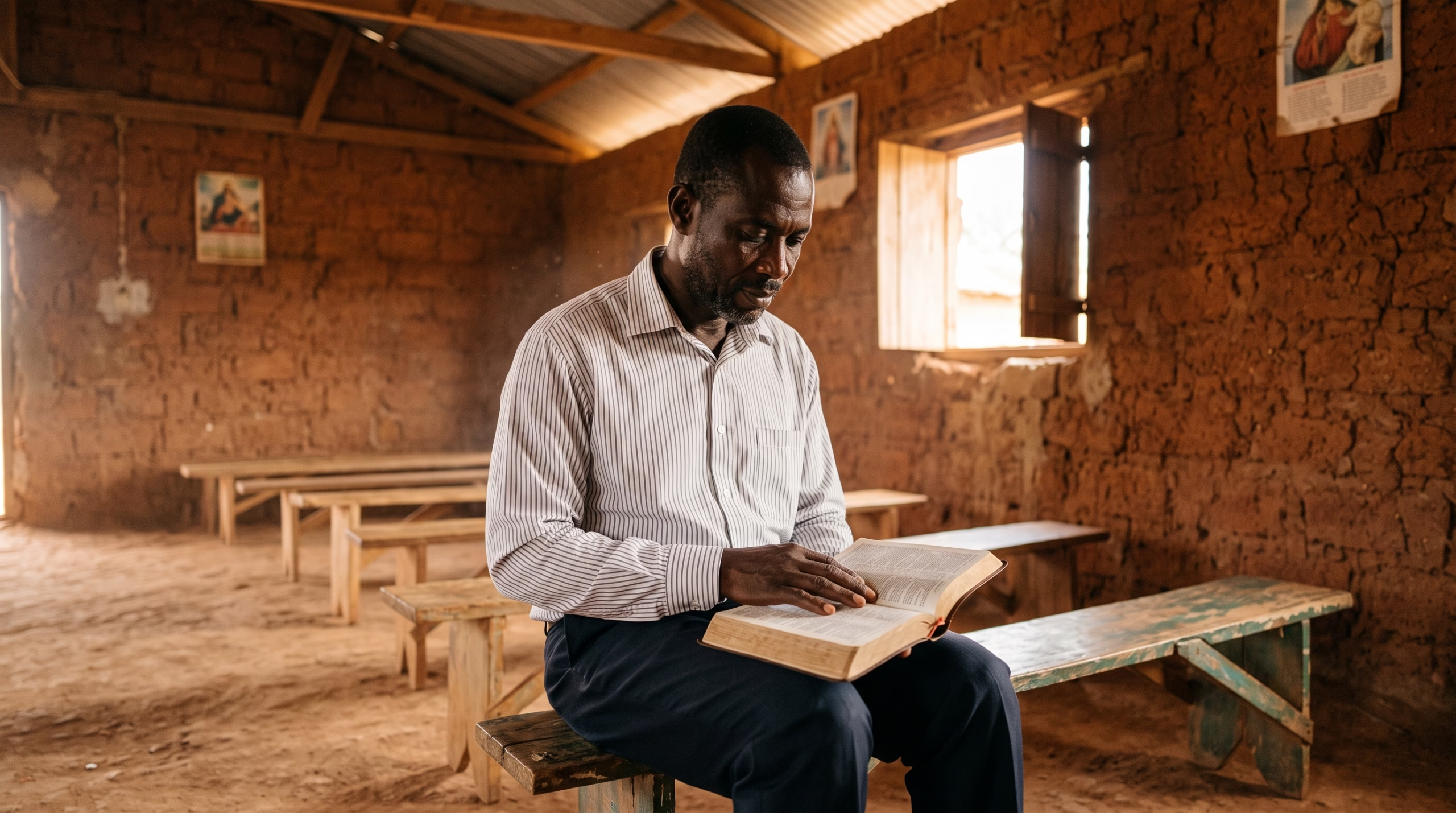
I remember sitting in a humble, mud-brick church building in rural Ghana, watching a man named Kwasi hold a King James Bible for the first time. His fingers traced the words on the page, even though he couldn’t yet read them. He just knew it was the Word of God. That moment, quiet and profound, reminded me again that our work in Africa isn’t about our cleverness or our plans. It’s about getting God’s Book into people’s hands and letting it speak. We’ve learned that there are specific biblical keys for African missions, and frankly, for all missions, that make the difference between just trying hard and actually seeing God work.
My wife Laura and I came to Ghana with a heart for the lost, but also with a lot of ideas we’d picked up along the way. Some of those ideas were good. Others, well, they were more about what we thought ought to happen than what God had already said would happen. The mission field has a way of stripping away the non-essentials. It clarifies things quickly. It makes you get back to basics, and the most basic thing for any missionary is the Bible itself.
Grounding Our Work in God’s Unchanging Word
When we first started planting churches here, I tried to do things the way I’d seen them done back home. We had programs, schedules, and expectations. We worked hard, no doubt about that. But sometimes, it felt like we were pushing a boulder uphill. It was exhausting. It was frustrating. Then, one hot afternoon, after another meeting that went nowhere, I sat down with my KJV Bible and just started reading. I wasn’t looking for a sermon; I was looking for answers.
The answers were right there, plain as day. God’s Word is not just a source of information; it is the very foundation of our faith and our work. It tells us not only what to do, but how to do it. “For as the rain cometh down, and the snow from heaven, and returneth not thither, but watereth the earth, and maketh it bring forth and bud, that it may give seed to the sower, and bread to the eater: So shall my word be that goeth forth out of my mouth: it shall not return unto me void, but it shall accomplish that which I please, and it shall prosper in the thing whereto I sent it” (Isaiah 55:10-11). That verse hit me like a ton of bricks. It’s not my word that accomplishes; it’s His. We just have to make sure we’re delivering His Word faithfully.
This understanding became one of the most important biblical keys for African missions in our ministry. We stopped relying so much on our own cleverness and started relying on the power of the Scripture. We began to teach more simply, to preach more directly from the text, and to trust that God would use His Word to change hearts. If you’re looking for more insights into how we approach ministry, you might find some of our stories and lessons over on the Consford’s blog helpful.
The Mandate to Go and Teach
The Great Commission isn’t a suggestion; it’s a command. “Go ye therefore, and teach all nations, baptizing them in the name of the Father, and of the Son, and of the Holy Ghost: Teaching them to observe all things whatsoever I have commanded you: and, lo, I am with you alway, even unto the end of the world. Amen” (Matthew 28:19-20). This isn’t just a verse we quote; it’s our marching orders. For us, “going” often means bouncing down a rough dirt road for hours, maybe getting stuck in the mud, all to reach a small village that has never heard the gospel.
The “teaching” part is where things get interesting, especially with language barriers and cultural differences. You can’t just drop a theology textbook on someone and expect them to get it. You have to break it down, make it relatable, and often, use stories. I’ve learned to preach with an interpreter, which means I have to slow down, simplify my points, and let the Holy Spirit do the heavy lifting. It’s less about my eloquence and more about the clarity of the gospel message.
“Globally, there are 7,400 unreached people groups, representing 3.2 billion people who have little to no access to the gospel.”
International Mission Board
That number isn’t just a statistic; it represents individuals like Kwasi, waiting to hear the truth. It’s why we go. It’s why we teach. We don’t just teach doctrine; we teach obedience. We want believers to understand what God expects of them and to live it out. This focus on obedience to Christ’s commands is one of the foundational biblical keys for African missions.
Building Relationships, Not Just Programs
Back home in America, we tend to be very task-oriented. We make a plan, we execute the plan, we check off the boxes. In Ghana, I quickly learned that relationships trump programs every single time. You can have the best plan in the world, but if you don’t have trust and connection with the people, it won’t go anywhere. I remember one time we needed a specific piece of equipment for our well, and I spent weeks trying to navigate the official channels. Nothing. Absolutely nothing.
Then, I finally took the advice of one of our Ghanaian brothers. I stopped trying to force the system and just started spending time with people. I drank tea. I shared meals. I listened to stories about their families and their struggles. I became a friend. A week later, after sharing a meal with a local chief, the equipment I needed suddenly became available. It wasn’t about the official process; it was about the relationship. That went about as well as you would expect when you’re trying to apply American efficiency to West African relational culture.
This principle is deeply biblical. Jesus didn’t just preach to crowds; He invested in twelve men. He ate with sinners. He touched the untouchable. He built relationships. We need to do the same. We need to live among the people, share their lives, and earn the right to share the gospel. That takes time. It takes patience. But it’s how trust is built, and trust is the bridge over which the gospel travels. The International Mission Board has some great resources on this very topic, emphasizing the importance of incarnational ministry and building deep relationships in the mission field.
The Power of Prayer and Dependence on God
There are days on the mission field when you hit a wall. You’ve tried everything you know to do, and nothing is working. The language barrier feels insurmountable, the cultural differences are baffling, and the spiritual opposition is palpable. Those are the days you realize that this work is far bigger than you are. It’s not about your strength or your wisdom; it’s about God’s. That’s when you get on your knees.
Missionary on Fire Podcast
Preserving the Legacy of Faithful Missionaries
The Missionary on Fire podcast features interviews with veteran missionaries, classic sermons from the field, and stories of God’s faithfulness across generations. If you love the heart behind these stories, you will love the podcast. New episodes regularly.
Prayer isn’t just something we do when we’ve run out of options; it’s our first and most powerful option. I’ve seen God move in incredible ways in Ghana because people prayed. I’ve seen sick people healed, impossible doors opened, and hardened hearts softened. I remember one situation where we desperately needed funds for a new church roof, and we had no idea where the money would come from. We just prayed. A few weeks later, an unexpected donation arrived, exactly the amount we needed. God is faithful.
The Bible tells us, “Be careful for nothing; but in every thing by prayer and supplication with thanksgiving let your requests be made known unto God. And the peace of God, which passeth all understanding, shall keep your hearts and minds through Christ Jesus” (Philippians 4:6-7). This peace, this assurance that God is in control, is essential for any missionary. We cast our burdens on Him because He cares for us. We also appreciate everyone who supports our ministry through prayer. You can learn more about how you can support us by checking out our prayer letters.
Discipleship and Reproducible Churches
Our ultimate goal isn’t just to get people saved, as wonderful as that is. It’s to make disciples who can then make more disciples. It’s about establishing local, independent churches that can stand on their own, led by national pastors. If we’re doing our job right, these churches won’t need us forever. They’ll be self-governing, self-supporting, and self-propagating. That’s the biblical model.
This means a significant portion of our time is spent training. We teach new believers how to study their Bibles, how to share their faith, and how to live a life that honors God. We mentor promising young men for pastoral ministry, teaching them sound doctrine and practical leadership skills. It’s a slow process, often frustrating, but incredibly rewarding when you see a Ghanaian brother stand up and preach God’s Word with power and conviction.
These biblical keys for African missions are not just theoretical; they are practical principles that guide our daily lives here. They remind us that the work is God’s, the power is God’s, and the glory belongs to Him alone. It’s about building something that will last, something that multiplies. If you’re interested in learning more about the principles that drive our mission, or perhaps even considering how you might get involved in missions, we share a lot of these insights on the Consford’s blog.
The mission field clarifies things quickly. It removes the padding. There are no stage lights and no weekly affirmation that you are doing well. There is only the work. You study again. You visit again. You preach again. You forgive again. You trust God again. The mission field does not reward drama. It rewards endurance. It rewards faithfulness to God’s Word and His methods. These are the biblical keys for African missions that have transformed our ministry in Ghana, and they can transform any ministry, anywhere.
If you’ve been stirred by these thoughts, I encourage you to dig deeper into God’s Word yourself, and to consider how you can apply these same biblical keys in your own life and service. We’re always sharing more of our experiences and lessons learned from the field. You can find more articles, stories, and insights into our work and what we believe on the Consford’s blog.

Joe Consford is a Baptist missionary serving in Ghana, West Africa, with his wife Laura. He writes about missionary life, missions training, and the work of the Gospel in West Africa at consfords.com.
Frequently Asked Questions
What are the fundamental principles for effective missionary work in Africa?
Effective missionary work in Africa, and globally, fundamentally relies on grounding all efforts in God’s unchanging Word. It’s about faithfully delivering the Scripture and trusting its power to transform hearts, rather than relying on human cleverness or programs. These biblical keys for African missions ensure lasting impact.
How did missionaries in Ghana shift their approach to ministry based on biblical principles?
Initially, missionaries in Ghana tried traditional programs, but found them exhausting. They shifted by focusing on the power of Scripture, teaching and preaching directly from the text, and trusting God to use His Word. This change in approach, based on biblical keys for African missions, brought greater effectiveness.
What role does the Bible play in church planting efforts in West Africa?
The Bible is the foundational element for church planting in West Africa. It’s not just a source of information but the very foundation of faith and work, providing guidance on what and how to minister. Trusting God’s Word to accomplish His purposes is paramount.
Which specific biblical passage highlights the power of God’s Word in missionary endeavors?
Isaiah 55:10-11 powerfully illustrates the efficacy of God’s Word: “So shall my word be that goeth forth out of my mouth: it shall not return unto me void, but it shall accomplish that which I please, and it shall prosper in the thing whereto I sent it.” This passage underscores the core of biblical keys for African missions.