
Missions With the Consfords
August 14, 2026
I remember a time early on in Ghana, when Laura and I were trying to set up our first church building. We had a vision for the place, but the…
I remember a time early on in Ghana, when Laura and I were trying to set up our first church building. We had a vision for the place, but the local tradesmen had their own ways of doing things. I’d show them a diagram, explain it in broken Twi, and they’d nod with big smiles. Then, the next day, I’d find they’d built something completely different. It wasn’t malice; it was just a gap in understanding, a difference in how we saw the world. That kind of experience taught me more about practical preparation for the field than any classroom ever could, and it’s why a good missionary training book for churches needs to be grounded in real life.
Before we ever stepped foot in West Africa, I thought I had a pretty good handle on what missions would be like. I’d read books, listened to veteran missionaries, and studied the Bible. And all of that was good, absolutely. However, there’s a distinct difference between reading about a broken-down truck on a dirt road in the middle of nowhere and actually being the one under it, covered in grease, with the sun beating down and no spare parts for miles. The mission field clarifies things quickly. It removes the padding. There are no stage lights and no weekly affirmation that you are doing well. You study again. You visit again. You preach again. You forgive again. You trust God again. The mission field does not reward drama. It rewards endurance.
That initial journey to Ghana, and the decades since, have shown me what truly matters when preparing for global ministry. It’s not just about what you know in your head, but what you can do with your hands, your heart, and your spirit when everything around you is unfamiliar. I’ve tried to capture some of these hard-won lessons in my own writings, especially in my book, “Missionary on Fire,” which you can find more about on our site. It’s built on the conviction that a missionary training book for churches should prepare you for the actual fight, not just the theory.
Bridging the Gap Between Training and Field Reality
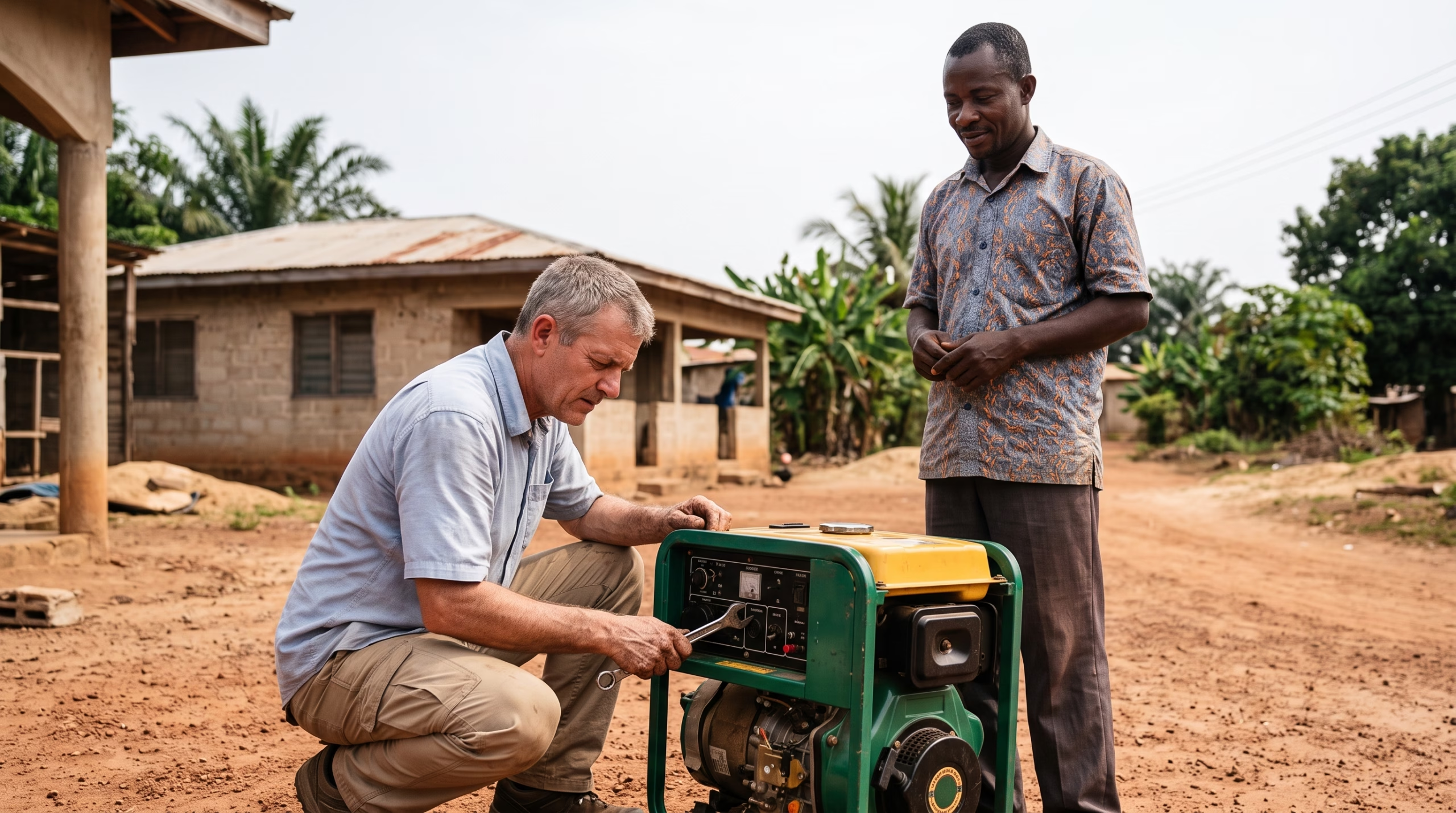
I remember one time when our generator died. It was the heart of our mission station, powering everything from lights to the water pump. Back home in Texas, you’d call a guy, he’d show up, fix it, and send you a bill. In Ghana, calling a guy often meant waiting days, explaining the problem in a language that might not be his first, and then hoping he had the right tools. Consequently, I ended up learning to fix that generator myself, piece by piece, with tools I didn’t even know existed. That went about as well as you would expect, but it got fixed. That’s a lesson that sticks with you.
A truly effective missionary training book for churches, therefore, must bridge this gap. It needs to cover the spiritual disciplines, yes, but also the practical realities of life and ministry in a foreign land. It means understanding that patience isn’t just a virtue; it’s a survival skill when you’re dealing with bureaucracy that moves at a different pace. Furthermore, it means learning to laugh at yourself when you make a cultural blunder, because you will, and everyone will know.
Essential Skills Beyond the Pulpit for Missionaries
When you’re preparing for the mission field, you’re not just preparing for Sunday morning. You’re preparing for Monday through Saturday, for the unexpected, for the long haul. Here are some things I’ve learned are absolutely critical, things a good missionary training book for churches should emphasize:
- Language and Culture Acquisition: You cannot truly reach hearts until you understand their language and their way of life. It’s not just about words; it’s about context, idioms, and non-verbal cues. I’ve made plenty of mistakes, often hilarious ones, trying to communicate. But you keep trying.
- Practical Problem-Solving: Things break. Systems fail. You need to be able to troubleshoot, adapt, and make do with what you have. This isn’t just about mechanics; it’s about finding creative solutions for ministry challenges, too.
- Resilience and Perseverance: The mission field is a marathon, not a sprint. There will be discouragement, loneliness, and setbacks. You need a deep well of faith and a stubborn refusal to quit. “Wherefore seeing we also are compassed about with so great a cloud of witnesses, let us lay aside every weight, and the sin which doth so easily beset us, and let us run with patience the race that is set before us” (Hebrews 12:1). Patience is key, y’all.
- Relationship Building: In Ghana, relationships are everything. Trust is earned over time, through shared meals, consistent presence, and genuine care. The cable did not get installed because of pressure. It got installed because of breakfast.
These skills aren’t usually taught in a seminary classroom, but they are vital for effective ministry. A practical missionary training book for churches can help equip future missionaries with a realistic picture of what they’ll face and how to navigate it.
“Globally, there are 3.4 billion people who still do not have access to the gospel in their own language or culture. This represents over 7,000 unreached people groups.”
International Mission Board
The Local Church’s Indispensable Role in Missionary Training
Missionary training isn’t just for the missionary; it’s for the sending church too. The local church is God’s plan for spreading the gospel. It’s not an agency or an organization; it’s a body of believers, called to send and support. A good missionary training book for churches should empower local congregations to take ownership of this sending process. It should give them a roadmap for how to prepare their people, not just financially, but spiritually, emotionally, and practically.
I believe every church should have a deliberate strategy for missions. It’s not enough to just give money; we need to invest in people. This means identifying potential missionaries, discipling them deeply, and then providing practical training that goes beyond Sunday school lessons. It means teaching them to live simply, to trust God with finances, and to develop a servant’s heart. Moreover, it means teaching them about spiritual warfare and how to stand firm when the enemy attacks.
Consider what the Apostle Paul said: “And the things that thou hast heard of me among many witnesses, the same commit thou to faithful men, who shall be able to teach others also” (2 Timothy 2:2). This isn’t just about passing on doctrine; it’s about passing on the whole package of ministry, including the practical wisdom gained from experience. Your church has a unique role to play in raising up the next generation of missionaries, and that includes providing a solid, practical missionary training book for churches that really hits home.
Lessons Learned the Hard Way (and How to Avoid Them)
Laura and I have learned a lot of lessons the hard way in Ghana. Some of them were funny, like the time I tried to fix a leaky pipe with electrical tape. Some were frustrating, like navigating complex land disputes. And some were deeply challenging, testing our faith and resilience to the core. A lot of these experiences could have been less painful with better preparation.
Missionary on Fire Podcast
Preserving the Legacy of Faithful Missionaries
The Missionary on Fire podcast features interviews with veteran missionaries, classic sermons from the field, and stories of God’s faithfulness across generations. If you love the heart behind these stories, you will love the podcast. New episodes regularly.
For example, understanding local customs around gift-giving or hospitality can save you a lot of awkward moments. Learning basic negotiation skills can prevent you from being taken advantage of. Knowing how to set up a simple budget in a cash-based economy is crucial. These are not glamorous topics, but they make the difference between a missionary who thrives and one who burns out quickly. This is why I believe so strongly in resources like my own missionary training book for churches, available right here on our website. It aims to share these real-world insights, so you don’t have to make all the same mistakes I did.
Another big lesson is the importance of prayer support. We don’t do this work alone. We lean on the prayers of faithful believers back home. If you want to know more about how you can support our work or just connect with us, you can always visit our Connect page. Prayer is the fuel that keeps the missionary going, and a good training program will emphasize not just praying for the field, but how to cultivate a personal prayer life that sustains you through the tough times.
What Makes a Truly Useful Missionary Training Book for Churches?
So, what should you look for in a missionary training book for churches? It needs to be biblical, first and foremost. The Word of God is our ultimate guide. But it also needs to be practical, drawing from real-world experience, not just theory. It should cover:
- Spiritual Disciplines: Prayer, Bible study, fasting, and dependence on the Holy Spirit. These are non-negotiable.
- Cultural Adaptation: How to learn a new culture, build relationships, and avoid common pitfalls.
- Language Learning Strategies: Practical methods for acquiring a new language effectively.
- Teamwork and Conflict Resolution: How to work with other missionaries, national pastors, and church members.
- Financial Stewardship: Managing personal and ministry finances on the field.
- Security and Safety: Practical advice for staying safe in unfamiliar environments.
- Personal and Family Care: Avoiding burnout, maintaining spiritual health, and caring for your family.
When I wrote my books, including “Missionary on Fire,” it was with these practical needs in mind. I wanted to share what I’ve learned from years of church planting in Ghana and navigating life in West Africa. It’s not just a collection of stories; it’s a guide to preparing for the realities of the mission field.
Ultimately, the goal of any missionary training book for churches should be to equip faithful men and women to effectively reach the lost for Christ. It’s about building a solid foundation so that when the challenges come—and they will come—you are ready. It’s about sending out missionaries who are not just passionate, but prepared.
If you’re burdened for missions, or your church is looking to better equip its sent ones, I encourage you to check out my book on missionary preparation. It’s designed to give you a realistic, biblical, and practical look at what it takes to answer God’s call. You can find more details and order your copy right here on our Books page. Let’s get ready for the work God has for us.

Joe Consford is a Baptist missionary serving in Ghana, West Africa, with his wife Laura. He writes about missionary life, missions training, and the work of the Gospel in West Africa at consfords.com.
Frequently Asked Questions
What kind of training is most important for new missionaries heading to West Africa?
For new missionaries, practical skills often prove as vital as theological knowledge. Learning to navigate cultural differences, solve everyday problems like vehicle repairs or securing clean water, and building genuine rapport are crucial. A comprehensive missionary training book for churches should cover these real-world challenges alongside spiritual preparation.
How do missionaries overcome language barriers and cultural misunderstandings in the field?
Overcoming these barriers requires patience, humility, and consistent effort. Missionaries often immerse themselves in the local language, seeking out native speakers for daily practice. Building relationships and observing local customs are key to understanding cultural nuances. A good missionary training book for churches emphasizes these relational and adaptive skills.
What are common unexpected challenges missionaries face in remote areas?
Missionaries in remote areas frequently encounter challenges like unreliable infrastructure, limited access to resources, and differing work ethics or communication styles. Simple tasks can become complex without familiar support systems. The article highlights issues like generator breakdowns and construction misunderstandings as examples of these unexpected hurdles.
Beyond theological knowledge, what practical skills are essential for long-term missionary endurance?
Long-term missionary endurance relies heavily on resilience, problem-solving abilities, and adaptability. Skills such as basic mechanics, resourcefulness in finding solutions, cross-cultural communication, and the capacity for forgiveness and persistent trust in God are paramount. These practical, ‘on-the-field’ skills are what truly sustain missionaries through decades of service.