
Missions With the Consfords
August 13, 2026
I remember pulling up to a police checkpoint outside Kumasi one afternoon, the sun baking the tarmac. The officer waved me over with a smile that didn't quite reach his…
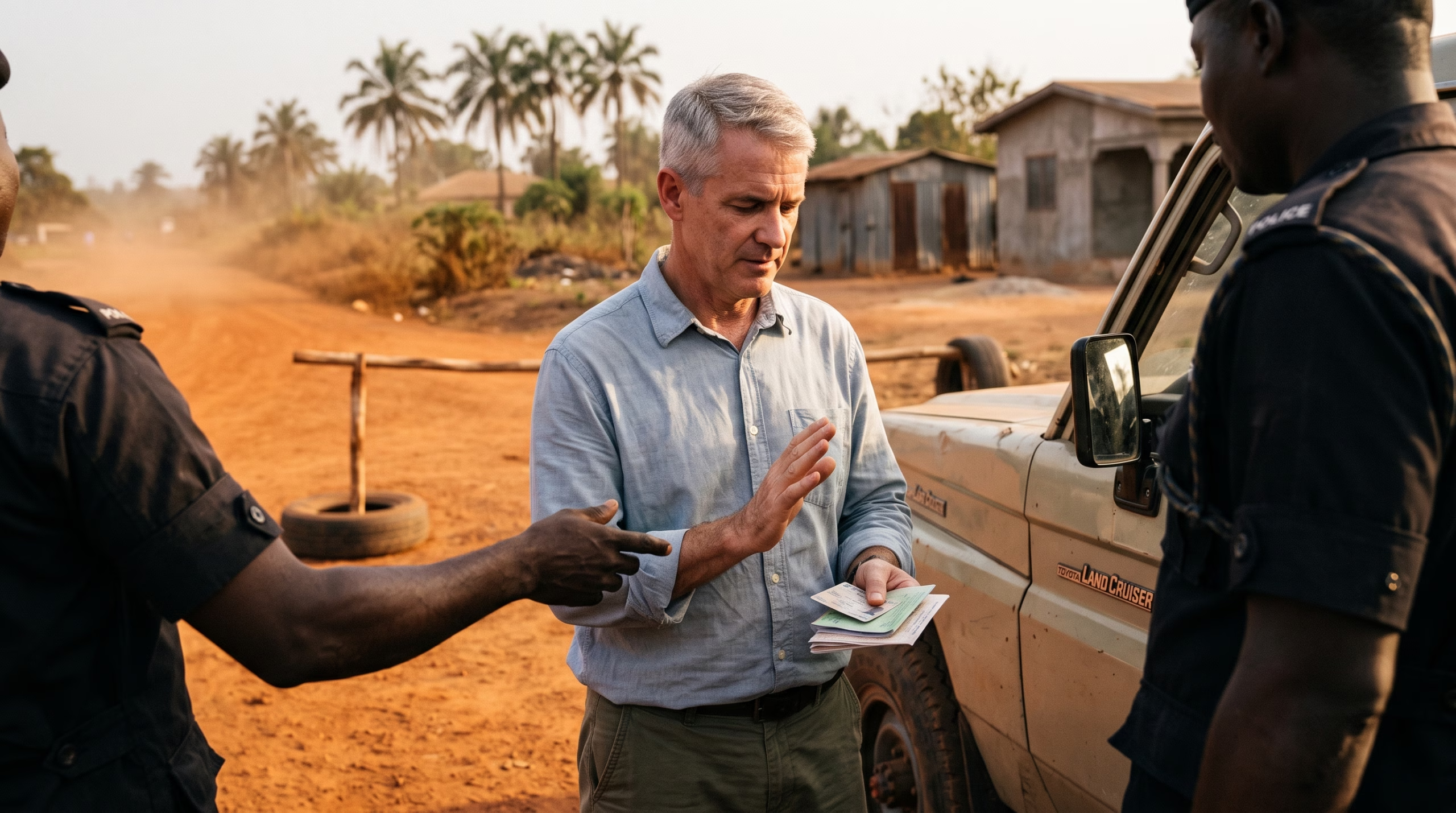
I remember pulling up to a police checkpoint outside Kumasi one afternoon, the sun baking the tarmac. The officer waved me over with a smile that didn’t quite reach his eyes, and I knew this was going to be one of those days. For anyone serving on the field, understanding how to handle these moments, how to avoid compromising your witness, means learning to navigate bribery in Ghana.
Indeed, it’s a reality of life in many parts of the world, including West Africa. You might encounter it at a border crossing, trying to get a permit, or even just driving down the road. It’s a challenge that can test your patience, your principles, and your faith. My wife Laura and I have faced it more times than I can count, and we’ve had to learn some hard lessons along the way.
The Reality of the Request
First, the step in navigating bribery in Ghana is to understand its context. It’s not always a nefarious plot. Sometimes, it’s just a part of how things get done, a “facilitation fee” for something that should be free. Other times, it’s a direct demand for money to overlook a perceived infraction, or to speed up a slow process.
For instance, I remember needing to register our vehicle when we first arrived. The official behind the desk just kept shaking his head, pointing to an imaginary problem with our paperwork. He never asked for money directly, but his meaning was clear. He wanted a “gift” to make the problem disappear.
This kind of situation wears you down. You just want to do the right thing, follow the rules, and get on with the work God called you to do. However, the system itself can seem designed to extract these payments. It feels like a constant battle, a low hum of resistance to honest dealings.
Why We Cannot Pay the Price
For a missionary, the issue of bribery is more than a legal or practical problem; it’s a spiritual one. Our calling is to represent Christ, to live out the truth of the Gospel in every area of our lives. Giving a bribe, even a small one, compromises that witness. It suggests that God’s way isn’t sufficient, or that we’re willing to bend the rules when it’s convenient.
Moreover, the Bible is clear about honest dealings. “Let your conversation be without covetousness; and be content with such things as ye have: for he hath said, I will never leave thee, nor forsake thee.” (Hebrews 13:5). This verse reminds us that we should not be driven by greed or worldly gain, nor should we enable it in others. Our contentment and security come from the Lord, not from shortcuts or dishonest payments.
Furthermore, paying a bribe, even a small one, establishes a precedent. It teaches the person on the other side that you are “one of the ones who pays.” This makes it harder for you, and for other missionaries and honest locals, in the future. We are called to be salt and light, not to blend into the darkness around us. The mission field clarifies things quickly. It removes the padding. There is only the work.
If you’re interested in more stories from the field and how we handle various challenges, you can find them all on our missionary blog. We share quite a bit about the realities of life and ministry in Ghana there.
Guiding Principles for Navigating Bribery in Ghana
Over the years, my wife Laura and I have developed a few guiding principles that help us when we face these situations. These aren’t always easy, but they’ve served us well in maintaining our integrity and our witness.
First, we pray. We pray for wisdom, for courage, and for God to open a way where there seems to be none. We ask Him to protect our testimony and to give us the right words to say. Prayer is not a last resort; it’s the first step.
Second, we are polite but firm. We don’t raise our voices or get angry, even when we feel frustrated. However, we also don’t back down from our commitment not to pay. A calm, consistent “I am sorry, but I cannot do that” is often more effective than an emotional outburst. We explain that it goes against our faith.
Third, we rely on relationships. Building trust with local leaders, church members, and even honest government officials has been invaluable. Sometimes, a phone call from a respected local can clear up a problem faster than any amount of arguing or pleading. Relationships are how things truly get done in Ghana, not systems.
“According to Transparency International’s 2023 Corruption Perception Index, Ghana scored 43 out of 100, ranking 70th out of 180 countries. While this indicates progress, it still highlights the ongoing challenges that many face daily in the region.”
Transparency International
Practical Steps on the Ground
So, what do you actually do when someone asks for a bribe? It can feel like you’re stuck between a rock and a hard place. Here are some of the practical steps I’ve learned from experience.
One common tactic is to delay. If an official is asking for money, and you politely refuse, they might try to make your life difficult. They’ll say your paperwork is wrong, or that they’re too busy. We’ve learned to say, “I understand. I’ll come back tomorrow.” Often, the next day, a different person is at the desk, or the first person has moved on to easier targets. Clearly, patience is a powerful weapon.
Missionary on Fire Podcast
Preserving the Legacy of Faithful Missionaries
The Missionary on Fire podcast features interviews with veteran missionaries, classic sermons from the field, and stories of God’s faithfulness across generations. If you love the heart behind these stories, you will love the podcast. New episodes regularly.
Another strategy is to ask for clarification. “Can you please show me the specific rule that requires this payment?” or “Is there an official receipt I can get for this fee?” These questions often expose the unofficial nature of the request. They make the person think twice about their demand. Ultimately, it puts the burden of proof back on them.
Sometimes, we just have to walk away. This is hard, especially when you’ve traveled a long way or time is critical. But there have been times when the only way to avoid compromise was to simply leave and try another route, another office, or another day. It might mean more effort, but it preserves your integrity. The Lord will provide a way.
The Long Road of Relationships
One of the biggest lessons Laura and I have learned is the power of long-term relationships in avoiding these situations altogether. When you’ve been in a community for years, when people know your character and your mission, these kinds of direct requests become less frequent.
We’ve built friendships with local leaders, police officers, and even government workers over time. We share meals, we visit their families, and we genuinely care about them. When you have that kind of rapport, a quick phone call to a friend can often resolve a misunderstanding without any hint of a bribe. Nevertheless, it takes years to build that kind of trust.
This is why church planting is so much more than just preaching. It’s about living life alongside people, sharing their joys and their burdens. It’s about being a consistent, honest presence in the community. When you’ve shown yourself faithful in the small things, people respect your boundaries on the big things. Our goal isn’t just to preach sermons; it’s to live one. If you’re considering coming to the field, our missionary internships are a great way to see this firsthand.
Trusting God When the Path is Unclear
Ultimately, navigating bribery in Ghana, or any challenging situation on the mission field, comes down to trusting God. There will be times when you don’t know what to do. The options might seem to be either compromise or complete failure. It’s in those moments that our faith is truly tested.
We have seen God open doors that were firmly shut. We have seen Him provide solutions that we could never have imagined. He is faithful to His children who strive to honor Him. He will not leave you or forsake you, even when the road is bumpy and the demands are unreasonable. Our reliance is on Him, not on our cleverness or our ability to negotiate.
Sometimes, the greatest witness we can have is simply to stand firm, to say no politely but consistently, and to trust that God will work it out. This kind of steadfastness speaks volumes to a watching world. It shows that our God is real, and that His principles are worth living by, no matter the cost. This is the heart of what we preach, and what we try to live, every single day.
The challenges of the mission field are many, but God’s grace is always sufficient. I hope this look into how we approach navigating bribery in Ghana has been helpful. If you’re looking for more insights into missionary life, practical advice, and encouraging stories from the field, I invite you to explore more articles and resources on our missionary blog.

Joe Consford is a Baptist missionary serving in Ghana, West Africa, with his wife Laura. He writes about missionary life, missions training, and the work of the Gospel in West Africa at consfords.com.
Frequently Asked Questions
What is the common perception of bribery in Ghana?
In Ghana, bribery can sometimes be seen as a ‘facilitation fee’ or a normal part of getting things done, rather than always a nefarious act. It might involve subtle requests for ‘gifts’ to speed up processes or overlook minor issues, making navigating bribery in Ghana a nuanced challenge for visitors.
How do missionaries maintain their integrity when facing bribery requests?
Missionaries maintain integrity by refusing to pay bribes, understanding it compromises their Christian witness. They rely on God’s provision and seek honest dealings, even when it means facing delays or difficulties. This commitment to biblical principles is central to navigating bribery in Ghana.
What are some typical situations where missionaries encounter bribery in Ghana?
Missionaries often encounter bribery at police checkpoints, border crossings, or when trying to obtain permits and register vehicles. Officials might create perceived problems with paperwork or demand ‘gifts’ to process routine requests, making daily tasks challenging.
Why is paying even a small bribe problematic for a missionary’s long-term work?
Paying even a small bribe establishes a precedent, signaling to officials that the missionary is willing to engage in such practices. This can lead to increased demands in the future and undermine the missionary’s credibility and witness, making it harder for them and others to operate honestly.