
Missions With the Consfords
August 8, 2026
I stood sweating in a small, packed mud-brick church outside Kumasi, the air thick with heat and the smell of woodsmoke. My sermon notes were clutched in a hand that…
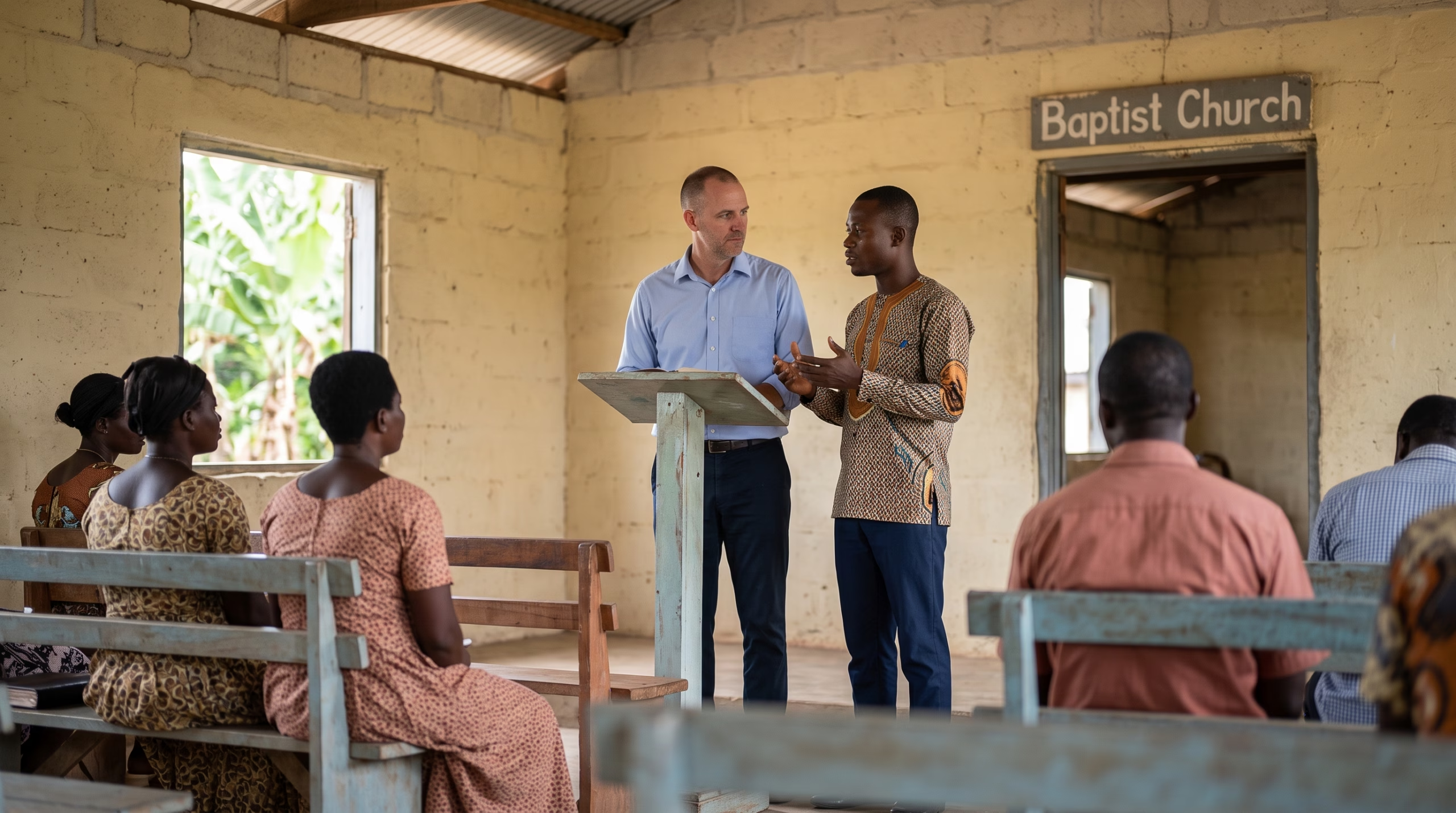
I stood sweating in a small, packed mud-brick church outside Kumasi, the air thick with heat and the smell of woodsmoke. My sermon notes were clutched in a hand that felt slick. Before me stood a young Ghanaian brother, an earnest man named Kofi, ready to translate my words from English into Twi. I had been preaching for years back home, but this was different. This was my first time preaching through an interpreter, and I was about to learn that it is a whole different ballgame.
The words you say are only half of it. The other half is how they land, how they are understood, and how the Holy Spirit can move through two imperfect vessels instead of just one. It’s a humbling thing, standing there, waiting for your thoughts to be reassembled into a language you don’t fully grasp. However, it is also a powerful reminder that the work is God’s, not yours.
The Initial Hurdles of Language and Culture
My first few attempts at preaching through an interpreter were, shall we say, educational. I’d preach a sentence, then pause. Kofi would speak, sometimes for much longer than my sentence, sometimes for much shorter. I had no idea if he was adding to my words, cutting them, or just doing a very efficient job. This uncertainty quickly taught me patience. You learn to trust the man standing next to you.
I remember one time I used an illustration about a baseball game. Blank stares. Absolute silence. Kofi looked at me, then at the congregation, then back at me with a slight shake of his head. He then launched into a story about a stubborn goat and a mango tree. The congregation roared with laughter. After the service, he quietly told me, “Brother Joe, we don’t know baseball. But we know goats.” That was a lesson I filed away quickly. My American metaphors often did not translate.
It’s not just about finding the right words. It’s about finding the right cultural context. You have to learn to think in pictures and concepts that resonate with the people listening. We are all called to teach, and that means meeting people where they are. You can learn more about our ongoing work and how God is moving in Ghana on our Consford’s Blog.
Finding the Right Voice for the Message
Choosing an interpreter is not a casual decision. This person is your voice, your bridge to the hearts of the people you’re trying to reach. My wife Laura and I have learned that the best interpreters are not just fluent in two languages. They are also spiritually discerning, culturally aware, and have a genuine burden for souls.
You need someone who understands the weight of the gospel message. They should be a believer, someone who walks with God. An interpreter who is not saved, or is not serious about their walk, can twist or dilute the message, even unintentionally. We look for men who love the Lord and have a desire to see others come to know Him.
The relationship you build with your interpreter is paramount. It’s a partnership. You pray together. You discuss the sermon beforehand. You learn each other’s rhythms. Over time, Kofi and I developed a silent communication. A raised eyebrow, a slight nod, a pause. He knew when I was about to make a point that needed emphasis. I learned to slow down, to break my sentences into shorter, more digestible chunks. This isn’t just a technical skill; it is a spiritual discipline.
“According to the International Mission Board, around 3.2 billion people have yet to hear the gospel message.”
IMB
More Than Words: The Art of Communication
Preaching through an interpreter forces you to focus on the essence of your message. You can’t rely on fast-paced rhetoric or complex sentence structures. You must simplify, clarify, and emphasize. The interpreter also conveys emotion and conviction. Their tone, their gestures, their facial expressions become an extension of yours. When I get excited, Kofi gets excited. When I am solemn, he reflects that solemnity.
I remember one Sunday, I was preaching on the Prodigal Son. I spoke with all the passion I could muster about the father’s love, the son’s regret, and the joy of repentance. Kofi, in turn, wept as he translated, his voice breaking with emotion. The response from the congregation was profound. It was not just my words they heard; it was the Spirit moving through both of us.
The Bible tells us, “For the word of God is quick, and powerful, and sharper than any twoedged sword, piercing even to the dividing asunder of soul and spirit, and of the joints and marrow, and is a discerner of the thoughts and intents of the heart” (Hebrews 4:12). This verse reminds us that the power is in God’s Word itself, not in our perfect delivery. The interpreter is a vessel, just like the preacher. The Holy Spirit is the true interpreter of hearts.
Common Pitfalls and Practical Solutions
One of the biggest pitfalls is speaking too fast. You get caught up in the flow, and suddenly you’ve delivered three sentences before the interpreter has even finished the first. This creates a jumbled mess. I learned to speak in short bursts, one idea at a time. I would finish a thought, then make eye contact with Kofi and wait. This forced pause felt awkward at first, but it became natural.
Another challenge is using theological jargon. Words like “justification,” “sanctification,” or “propitiation” are not commonly understood, even in English-speaking churches without explanation. They certainly don’t translate directly into Twi without careful rephrasing. I had to learn to explain these concepts in simple, everyday language. Instead of “propitiation,” I might say, “God’s wrath was turned away from us because of Jesus.”
Missionary on Fire Podcast
Preserving the Legacy of Faithful Missionaries
The Missionary on Fire podcast features interviews with veteran missionaries, classic sermons from the field, and stories of God’s faithfulness across generations. If you love the heart behind these stories, you will love the podcast. New episodes regularly.
Complex sentences are another enemy of interpretation. Long clauses, parenthetical statements, and multiple conjunctions can get lost. Break it down. Keep it simple. A good interpreter can handle complexity, but a clear, direct message ensures less gets lost in translation. You can find many KJV study tools and resources at Blue Letter Bible to help you simplify complex theological terms for any audience.
We prepare for every message. I give Kofi my notes ahead of time, outlining the main points and any key phrases. We discuss illustrations and make sure they are culturally appropriate. Sometimes, he’ll suggest a better way to phrase something, or an analogy that would resonate more deeply. I always welcome that input. It’s not about my ego; it’s about the gospel reaching hearts.
The Deeper Work of God in Ghana
Preaching through an interpreter has taught me more about humility and reliance on God than almost anything else in ministry. You quickly realize that the success of the message is not dependent on your eloquence, but on the power of the Holy Spirit. God uses imperfect people to deliver His perfect Word. He can work through a missionary who struggles with the language, and through an interpreter who might miss a nuance here or there.
Our goal in Ghana is not just to deliver sermons, but to plant churches where the local people can hear the gospel in their own tongue, taught by their own people. This means training national pastors and teachers. My role is temporary, to lay a foundation. Their role is to build upon it, in a way that truly belongs to them.
The Apostle Paul understood this principle when he wrote, “But we have this treasure in earthen vessels, that the excellency of the power may be of God, and not of us” (2 Corinthians 4:7). That’s the truth of it. We are just clay pots, carrying the priceless treasure of the gospel. When we are Missionary on Fire for the Lord, He will use us, no matter the language barrier.
The work of missions is often slow, difficult, and full of cultural adjustments. But it is always worth it. To see a man or woman understand the gospel for the first time, to watch their face light up with the truth of salvation, that’s a joy that transcends any language barrier. It reminds you why you left home in the first place.
If you’re considering missions, or just want to understand the heart of what we do, I encourage you to dig deeper into the call to serve. The lessons learned preaching through an interpreter, or navigating a new culture, are vital for anyone serious about reaching the lost. You can learn more about the principles that drive our ministry and how you can be a part of God’s work by exploring my book, “Missionary on Fire,” right here on our website.

Joe Consford is a Baptist missionary serving in Ghana, West Africa, with his wife Laura. He writes about missionary life, missions training, and the work of the Gospel in West Africa at consfords.com.
Frequently Asked Questions
What is the role of an interpreter in a sermon?
An interpreter acts as a linguistic and cultural bridge, conveying the speaker’s message from one language to another. They ensure the sermon’s meaning, tone, and cultural context are accurately understood by the audience, often adapting illustrations to resonate locally. This is crucial for effective preaching through an interpreter.
How do you choose a good interpreter for missionary work?
Beyond fluency, a good interpreter for missionary work should be spiritually discerning, culturally aware, and a genuine believer with a burden for souls. They must understand the weight of the gospel and be serious about their walk with God to accurately convey the message when preaching through an interpreter.
What are common challenges when preaching with a translator?
Common challenges include adapting illustrations to local culture, managing sermon length and pauses, and trusting the interpreter’s accuracy. Misunderstandings can arise if cultural nuances are missed, requiring the preacher to be flexible and patient, learning to think in concepts that resonate with the local people.
How does cultural context impact sermon delivery when using an interpreter?
Cultural context profoundly impacts sermon delivery, as illustrations and metaphors that work in one culture may not translate or resonate in another. Preachers must learn to think in pictures and concepts relevant to the local audience, often requiring the interpreter to adapt examples, like swapping a baseball analogy for a story about a goat, to ensure the message is understood.