
Missions With the Consfords
July 21, 2026
I remember a time, early in our work in Ghana, when our old pickup truck decided it was done with life. It just stopped, right in the middle of a…
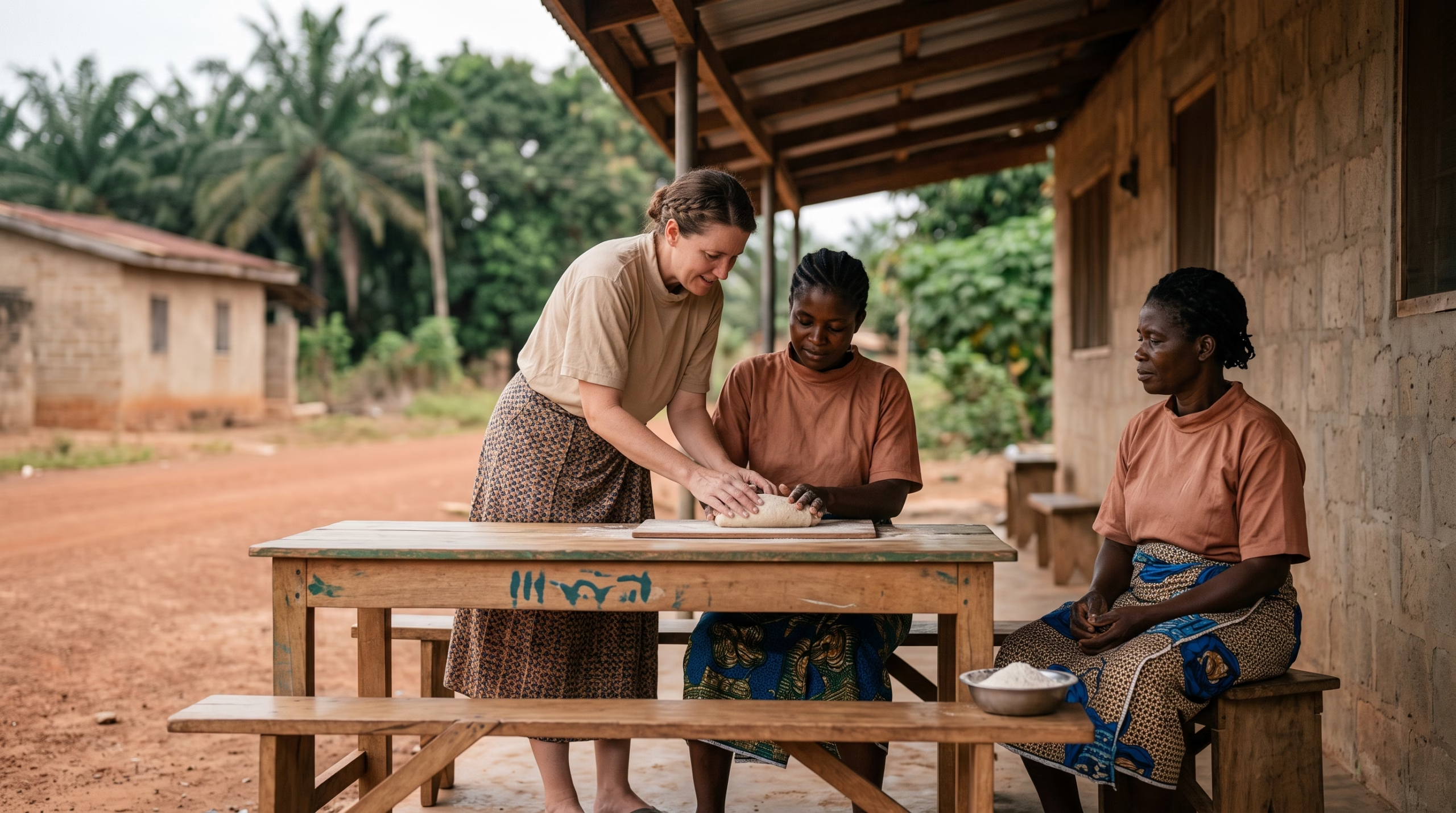
I remember a time, early in our work in Ghana, when our old pickup truck decided it was done with life. It just stopped, right in the middle of a dusty track, about twenty miles from the nearest town. We needed a new engine, and that kind of money wasn’t just sitting in our mission account. It was a moment that really drove home the reality of missionary life: God’s work, especially in a foreign land, depends on God’s people. We were reminded, yet again, that raising support for missions isn’t just about money; it’s about partnership and God’s provision.
The mission field clarifies things quickly. It removes the padding. There are no stage lights and no weekly affirmation that you are doing well. There is only the work. You study again. You visit again. You preach again. You forgive again. You trust God again. The mission field does not reward drama. It rewards endurance. And part of that endurance is learning to trust God to move hearts to provide for the work He’s called you to do.
The Foundation: A Clear Call from God
You can’t effectively ask others to invest in your ministry if you aren’t absolutely sure God called you to it. This isn’t a career choice or a convenient opportunity. This is a divine appointment. My wife Laura and I spent years praying, studying, and seeking counsel before we ever packed a bag for Ghana. We had to know, deep in our bones, that this was God’s will for us.
That conviction becomes your bedrock when the road gets rough, and believe me, it will get rough. When people say no, or when the funds are low, you won’t be tempted to quit because your calling isn’t tied to the response of others. It’s tied to the command of God. We see this principle in scripture, plain as day. Paul wrote in Romans 1:1, “Paul, a servant of Jesus Christ, called to be an apostle, separated unto the gospel of God.” He knew his calling. He leaned on it. You must too.
A clear call from God also gives you the confidence to speak plainly about your ministry. You’re not asking for a handout; you’re inviting others to participate in what God is already doing. You’re giving them a chance to be part of something eternal. If you feel that stirring in your heart, that undeniable pull toward the mission field, you might want to learn more about how to get involved and connect with us. That connection is vital, both to God’s plan and to the practical side of ministry.
Building Relationships, Not Just a Budget
Back home in America, we often think in terms of transactions. You pay for a service, you buy a product. But in Africa, and in the world of missions, things are different. Systems do not run things; relationships do. When we first arrived in Ghana, I made the mistake of trying to operate like I was still in the States. I’d try to get things done by following the rules, filling out forms, or just paying for whatever I needed. That went about as well as you would expect.
I learned quickly that establishing a real connection with people, whether it’s the folks at the utility company or the believers back home, is the key. The cable did not get installed because of pressure. It got installed because of breakfast. The same goes for raising support for missions. Your supporters aren’t just names on a spreadsheet. They are partners. They are friends. They are fellow laborers. They care about you, your family, and the souls you are reaching.
This means consistent, personal communication. It means sharing the good days and the hard days. It means letting them see the real work, the real people, and the real challenges. It involves prayer letters, phone calls, and visits when you’re on furlough. It might mean a supporter sends you a note with a funny story, or you get an email asking for specific prayer for their own family. It’s a two-way street. We have partners who have prayed for us for decades, and we’ve prayed for them. That kind of bond is invaluable.
“Globally, 3.2 billion people have yet to be reached with the gospel, comprising 7,400 unreached people groups.”
IMB.org
Practical Steps for Presenting Your Ministry
Once you have that clear calling and you’re committed to building relationships, you need to be able to articulate your vision. This often means giving presentations in churches, Sunday School classes, and even to individuals over coffee. It’s not about being slick or having all the answers. It’s about being genuine and sharing your heart.
Be clear about your need, but always frame it in terms of God’s provision and the opportunity to participate. Explain what you’ll be doing, where you’ll be doing it, and why it matters. Don’t be afraid to ask directly for financial partnership. Most church folks want to give, but they need to know what they’re giving to. After a presentation, always follow up with a thank you and any requested information. This is part of being a good steward of the relationships God provides. You can find many resources for preparing mission presentations and materials through organizations like Wycliffe Bible Translators, which has helped missionaries for generations.
The Mindset of Trust and Patience
Raising support for missions is rarely a quick process. It takes time. It takes patience. It takes a whole lot of trust in God’s timing. I’ve had meetings where I thought for sure a church would partner with us, and they didn’t. I’ve had others where I felt like I stumbled through the presentation, and they signed on right away. God works in mysterious ways, and often, His timeline is not ours.
Missionary on Fire Podcast
Preserving the Legacy of Faithful Missionaries
The Missionary on Fire podcast features interviews with veteran missionaries, classic sermons from the field, and stories of God’s faithfulness across generations. If you love the heart behind these stories, you will love the podcast. New episodes regularly.
Someday I’ll serve more. Someday I’ll witness more. Someday I’ll surrender fully. But someday is a thief. It steals years politely. It smiles while it does it. It doesn’t take your whole life at once. It just shaves off a little obedience here and a little urgency there until you wake up older than you planned. Don’t let “someday” be your excuse for not starting the process of raising support. But also, don’t rush God’s hand. He knows what you need and when you need it. He’s never late.
The Bible reminds us in Philippians 4:19, “But my God shall supply all your need according to his riches in glory by Christ Jesus.” That’s a promise, not a suggestion. Our job is to be obedient, to work diligently, and to trust that He will fulfill His word. There were times in Ghana when we had very little. I mean, very little. But we never went without. God always provided, sometimes in ways we never expected, like a random package from a supporter with exactly what we needed, or an unexpected gift from a local family.
Stewardship and Gratitude on the Field
Once you are on the field and the support is coming in, your responsibility doesn’t end. In fact, it deepens. You become a steward of God’s resources, entrusted to you by His people. This means living wisely, managing finances carefully, and always, always being accountable. Transparency builds trust, and trust is the bedrock of long-term partnership.
Regular updates are crucial. Our prayer letters, which you can find more about on our connect page, are a big part of this. We share what God is doing, how the funds are being used, and specific prayer requests. We want our partners to feel connected to the work, to celebrate the victories, and to pray through the challenges with us. It’s not just a report; it’s an invitation to continue walking alongside us.
And then there’s gratitude. A simple thank you goes a long way. Thank God for His provision, and thank the people He uses. My wife Laura is much better at remembering birthdays and sending personal notes than I am. I may have praised the Lord loud enough for the whole building to hear when a new supporter came on board, but Laura makes sure they know we appreciate them. It’s a team effort, both on the field and with our partners back home. Remember, you’re building a network of people who are as committed to the Great Commission as you are, even if they can’t be there physically.
Raising support for missions isn’t a hurdle to jump over to get to the “real” work. It is part of the work. It’s discipleship. It’s relationship building. It’s trusting God. It’s inviting others to be part of His plan. It requires faith, patience, and a humble spirit. If you’re feeling a call to the mission field, or if you simply want to learn more about how you can support the work in Ghana, I encourage you to check out our About Us page and consider how you might connect with our ministry. We’re always looking for new partners in this amazing work.

Joe Consford is a Baptist missionary serving in Ghana, West Africa, with his wife Laura. He writes about missionary life, missions training, and the work of the Gospel in West Africa at consfords.com.
Frequently Asked Questions
How do missionaries typically secure funding for their work?
Missionaries primarily secure funding through personal networks, churches, and mission agencies. They build relationships with individuals and congregations who feel called to partner with them in their ministry. This process of raising support for missions emphasizes partnership and shared vision, rather than just transactional giving.
What is the role of a clear divine calling in raising mission support?
A clear divine calling is foundational. It provides the missionary with unwavering conviction, which is essential when facing financial challenges or rejections. This conviction allows them to confidently invite others to participate in God’s work, knowing they are not asking for a handout but offering an opportunity for eternal impact.
How do relationships impact fundraising for missionaries in places like West Africa?
In West Africa, and the mission field generally, relationships are paramount. Unlike transactional cultures, systems often run on personal connections. Building genuine relationships with supporters fosters trust and long-term commitment, which is vital for sustained raising support for missions and enduring ministry.
What practical steps can a prospective missionary take to begin building a support network?
Prospective missionaries should start by clearly articulating their calling and vision. Then, they should prayerfully identify potential partners within their existing network—family, friends, and church members. Begin by sharing your heart and vision, inviting them to pray for you and consider how they might participate in your journey.