
Missions With the Consfords
July 20, 2026
I remember sitting under a mango tree in a village outside Kumasi, trying to explain to a chief why I needed to return to America for a few months. He…
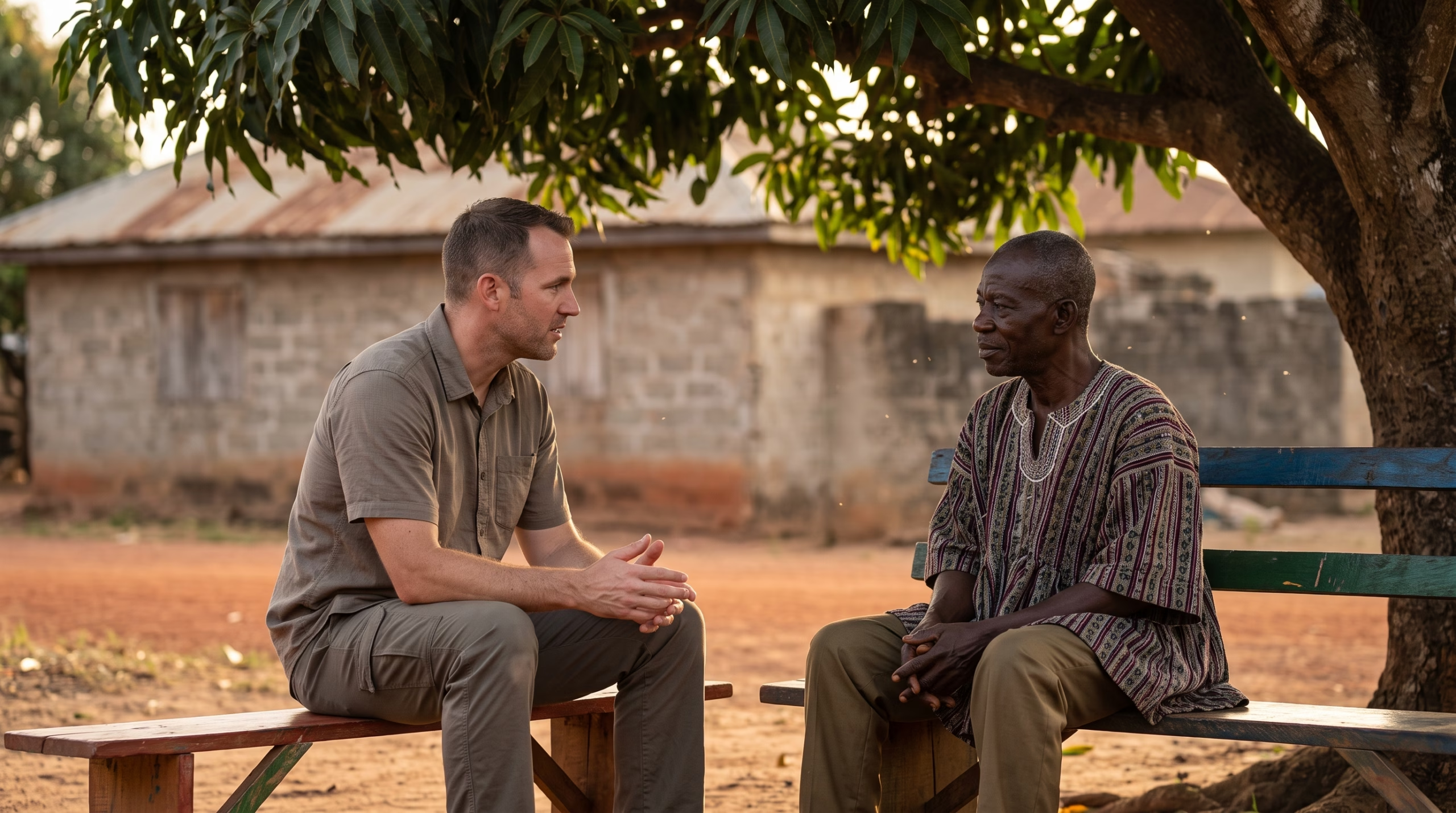
I remember sitting under a mango tree in a village outside Kumasi, trying to explain to a chief why I needed to return to America for a few months. He didn’t understand why I couldn’t just stay and plant the church. It was hard to explain that part of God’s plan for us involved finding partners back home, people who would pray and give so the work could continue. That’s where a clear, heartfelt missionary support letter example really comes into play; it’s how you bring your partners into the story.
You see, we don’t do this work alone. Laura and I have been in Ghana long enough to know that God uses people to accomplish His will. Sometimes those people are the ones we preach to every Sunday, and sometimes they are the faithful folks back home who get our updates and pray for us. Your support letter is more than just a request for money. It is an invitation to join God in what He is doing across the world.
The Heart Behind Your Missionary Support Letter Example
Before you even think about putting pen to paper, or fingers to keyboard, you need to settle the matter of your heart. Why are you writing this letter? Is it because you need money, or is it because you have a burden for souls and you’re inviting others to share in that burden? There’s a big difference. One is a plea; the other is a partnership. God does not need our money, but He often chooses to use His people to fund His work.
When we first started out, I probably focused too much on our needs. The plane tickets, the housing, the language school. All important, of course. But people don’t give to needs alone. They give to vision. They give to what God is doing. They give because they want to be part of something bigger than themselves. Your letter should reflect that. It’s about God’s glory, not your budget.
Think about the stories you have to tell. The man who got saved after years of witchcraft. The children whose lives are changed by the gospel. The new church building that finally has a roof. These are the things that stir hearts. These are the testimonies of God’s faithfulness that compel people to give and to pray. We share these stories often in our updates, and you can find many of them, along with practical advice for your own ministry, on our blog.
Your support letter is an extension of your ministry. It’s a tool for discipleship, really. You’re discipling others to care about the lost, to invest in eternity. It’s not about sales or marketing. It’s about inviting fellow believers to obey the Great Commission with you. “Go ye therefore, and teach all nations, baptizing them in the name of the Father, and of the Son, and of the Holy Ghost” (Matthew 28:19). That command isn’t just for missionaries. It’s for the whole church, and your letter helps them participate.
Crafting Your Effective Missionary Support Letter Example
So, you’ve got your heart right. Now, let’s talk about the practical side of writing. A good support letter is clear, concise, and compelling. It should tell a story, paint a picture, and make a direct appeal. Don’t beat around the bush. State your purpose plainly and directly. People are busy, and they appreciate honesty. They want to know what you’re doing, why you’re doing it, and how they can help.
Start with a hook. A short, vivid anecdote from the field. Something that grabs attention and immediately connects the reader to the work. Maybe it’s a specific person you met, a challenge you overcame, or a victory God granted. This is where your unique experience in Ghana, or wherever God has called you, becomes your most powerful asset. It makes your letter real, not generic.
Next, clearly state your mission and vision. What specific ministry are you involved in? What are your goals? Are you planting churches, discipling believers, running an orphanage, translating the Bible? Be specific. Vague language leaves people guessing. If you’re planting churches, say so. If you’re teaching literacy, explain how that leads to spiritual growth. We’re church planters here in Ghana, and our letters always emphasize that core calling. If you want to see how we communicate our needs and victories, you can check out our prayer letters for examples of how we share our journey.
Here’s a key point: make it about them, too. Your partners. They aren’t just sending money into a black hole. They are investing in souls. Frame your appeal in terms of their participation in God’s work. How will their gift make a difference? What eternal impact will it have? When you show them the fruit of their partnership, they’ll be more inclined to continue giving. We often tell our partners, “You’re right here with us when we see someone trust Christ.” That’s the truth.
What to Include in Your Letter
Every effective missionary support letter example has a few core components. First, the introduction needs to set the stage. As I said, a quick story or a personal greeting works well. Then, remind them of your overall ministry and vision. Even if they’ve received letters before, a quick recap is helpful for new readers or those who haven’t read an update in a while.
Next, share specific updates. What has God been doing? What challenges have you faced? What victories have you seen? Be honest and transparent, but always point back to God’s faithfulness. People appreciate vulnerability, but they also want to know that God is in control. I remember one time, our truck broke down about three hours from home, in the middle of nowhere. I could have just said, “We had car trouble.” Instead, I told them about the kind man who helped us, how we prayed, and how God provided a mechanic. It showed God’s hand in the mundane.
Include clear prayer requests. This is crucial. Your partners want to pray for you. Give them tangible things to lift up. For our family, it’s often for wisdom in discipling new believers, for health, or for specific needs within the churches we’re planting. Don’t make them guess. Be specific. “The effectual fervent prayer of a righteous man availeth much” (James 5:16). We believe that. We live that.
Finally, make a clear financial appeal. State your monthly need, how much you currently raise, and what you’re asking for. Give them instructions on how to give. Don’t assume they know. Provide your mission board’s contact information, online giving links, or whatever method is appropriate. Make it easy for them to respond. If you want to learn more about the challenges and rewards of this kind of work, I wrote a book called “Missionary on Fire” that shares a lot of what we’ve learned; you can find it and other resources on our website.
“Globally, 3.2 billion people live in places with little to no access to the Gospel. They are called unreached people groups.”
IMBMissionary on Fire Podcast
Preserving the Legacy of Faithful Missionaries
The Missionary on Fire podcast features interviews with veteran missionaries, classic sermons from the field, and stories of God’s faithfulness across generations. If you love the heart behind these stories, you will love the podcast. New episodes regularly.
Common Pitfalls and How to Avoid Them
I’ve seen my share of support letters, and I’ve certainly written a few duds myself. One common mistake is making the letter too long. People skim. Get to the point. A page, maybe two at most. If it looks like a novel, it might not get read. You want to inform and inspire, not overwhelm.
Another pitfall is sounding desperate or whiny. Nobody wants to partner with someone who sounds like they’re constantly complaining. Yes, missions is hard. We face challenges daily. But our letters should reflect our trust in God, not just our struggles. There’s a fine line between transparency and self-pity. Stay on the side of faith. I remember one time, our water pump broke for the fifth time in a month. I was ready to throw it in the bush. But then I remembered the promise of God’s provision. I wrote about the broken pump, sure, but I also wrote about how God always provides a way, even if it’s hauling water in buckets for a week. That went over a lot better than just grumbling.
Don’t forget to proofread! Typos and grammatical errors can undermine your credibility. Have someone else read it over before you send it out. My wife Laura catches most of my mistakes, thank the Lord. It’s a simple step, but it makes a big difference. You want your letter to look professional and intentional, not rushed.
Finally, avoid jargon. Don’t use terms that only “church folks” understand. Remember, your letter might go to new believers or folks who aren’t steeped in missions culture. Explain things simply. If you talk about “disciple-making movements,” explain what that means in plain language. If you’re quoting scripture, make sure it’s clear how it applies. I always recommend using a resource like Blue Letter Bible to ensure you’re accurately quoting and understanding your verses.
The Follow-Up and Faith
Writing a great missionary support letter example is only part of the battle. The real work is in the follow-up and the long-term relationship building. Don’t just send a letter once and forget about it. Regular updates are key. Send them monthly, quarterly, or at least a few times a year. Keep your partners informed, encouraged, and engaged. We send out regular prayer letters, and we try to make them personal, even with a lot of names on the list.
Thank your partners. Regularly. A handwritten thank-you note, an email, a phone call – show them you appreciate their sacrifice. Their giving is an act of worship, and it deserves your gratitude. We make it a point to thank our partners, not just for their financial gifts, but for their prayers. We truly believe their prayers make a difference here in Ghana.
And then, there’s the faith part. You do your best, you write your letters, you send your updates, and you trust God with the results. Sometimes a letter will go out and you’ll get an immediate, generous response. Other times, you’ll hear nothing for months. That’s when you have to remember that God is in control. He knows your needs before you ask, and He will provide. Our job is to be faithful in the asking and in the doing. His job is the provision. That’s a burden I’m happy to let Him carry.
Remember that relationships are built over time. Some of our longest-standing supporters started with a small gift years ago and have grown with us. They’ve seen God work through our ministry, and they’ve chosen to keep investing. Your support letter is often the first step in building those lasting partnerships for the Kingdom. It’s a long game, but it’s worth it.
If you’re looking to refine your communication with your supporters, or if you’re just starting out and need some guidance, we encourage you to check out our prayer letters page. You’ll find examples of how we communicate with our partners and practical insights into building strong, lasting relationships that fuel the work of missions.

Joe Consford is a Baptist missionary serving in Ghana, West Africa, with his wife Laura. He writes about missionary life, missions training, and the work of the Gospel in West Africa at consfords.com.
Frequently Asked Questions
What is the primary purpose of a missionary support letter?
The primary purpose of a missionary support letter is to invite others to partner with you in God’s work, not just to ask for money. It’s an opportunity to share your vision, stories of God’s faithfulness, and how potential partners can participate through prayer and financial giving. A strong missionary support letter example focuses on God’s glory.
How can I make my missionary support letter more compelling?
To make your letter compelling, focus on sharing stories of God’s work and vision rather than just your financial needs. Highlight transformed lives, new churches, and the impact of the Gospel. People are moved by what God is doing, not just a budget. Your missionary support letter example should reflect this heart for ministry.
What kind of stories should I include in my support letter?
Include stories that demonstrate God’s faithfulness and the impact of your ministry. This could be about someone getting saved, children’s lives changing, or a new church building. These testimonies stir hearts and compel people to give and pray, inviting them into the larger narrative of God’s work.
Should a missionary support letter focus on personal needs or God’s vision?
While personal needs are part of missionary life, an effective missionary support letter should primarily focus on God’s vision and what He is doing through your ministry. People give to vision and impact, wanting to be part of something bigger than themselves. Frame your needs within the context of advancing God’s kingdom.