
Missions With the Consfords
July 22, 2026
I remember sitting under a mango tree in a small village in Ghana, the sun beating down, trying to explain the plan of salvation to a group of men who…
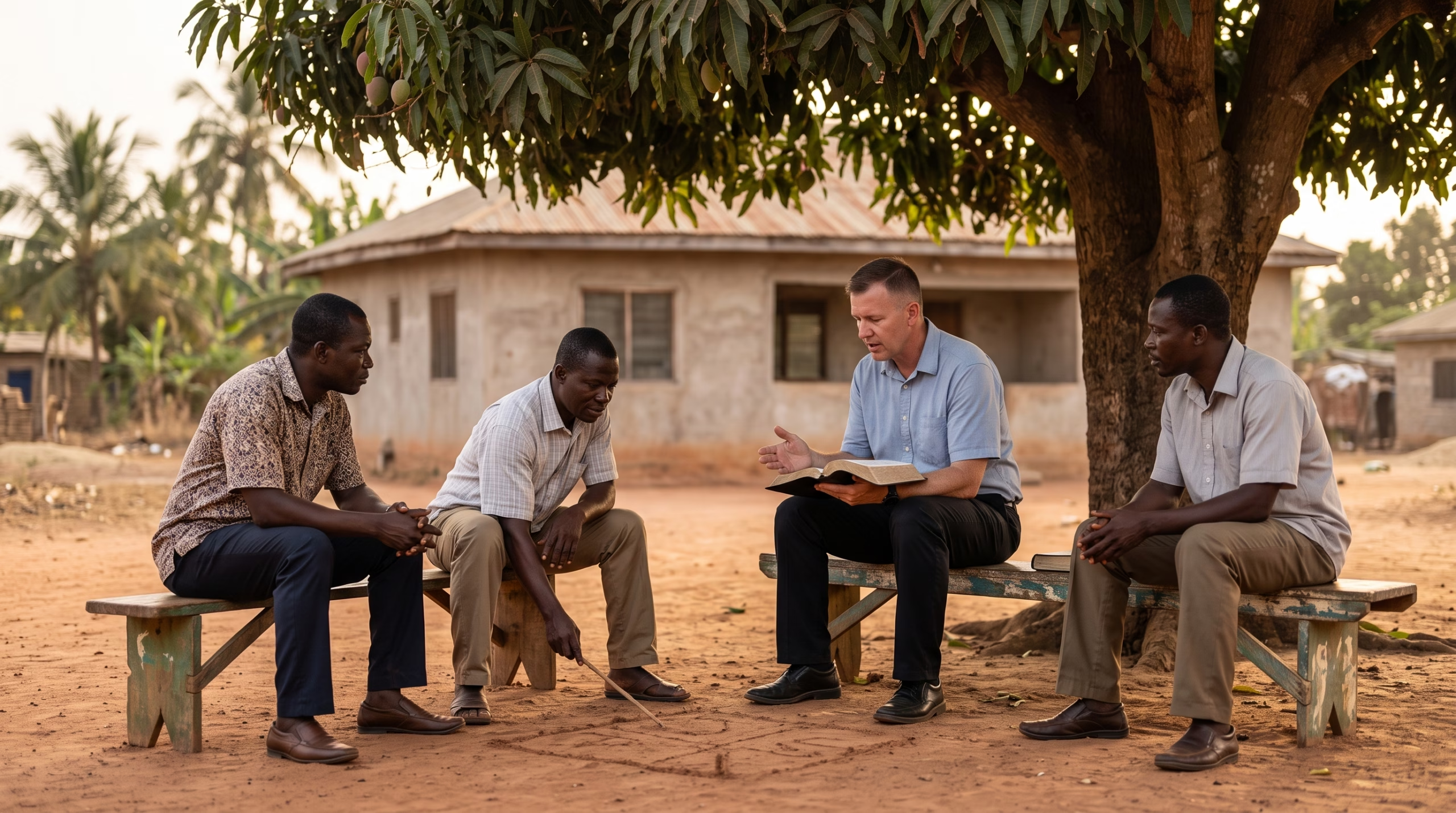
I remember sitting under a mango tree in a small village in Ghana, the sun beating down, trying to explain the plan of salvation to a group of men who had never heard the name of Jesus. My Twi was still rough back then. I stumbled over words, pointing to my KJV Bible, drawing pictures in the dust. That moment showed me more about being an IFB missionary than any seminary class or missions conference ever could. It’s about being there, with the people, with the Word, no matter how hard it gets.
The year 2026 isn’t some distant future for us; it’s right around the corner. Our work here in Ghana continues. The core calling of an Independent Fundamental Baptist (IFB) missionary doesn’t change with the calendar. The methods might shift, the technology might evolve, but the message remains the same. We still believe in getting the Gospel to every creature, just like the Bible says.
The Core Calling of an IFB Missionary
Being an IFB missionary starts with a clear understanding of the Great Commission. It’s not a suggestion; it’s a command. We believe it means going to the uttermost part of the earth, proclaiming the good news, baptizing believers, and teaching them to observe all things Christ commanded. This isn’t a new idea. It’s as old as the church itself.
Our focus is on planting local, indigenous New Testament churches. We’re not just looking for converts; we’re looking for disciples who will then become disciple-makers. My wife Laura and I have spent years pouring into men and women here in Ghana, teaching them the Bible, helping them understand what it means to lead a church, to love their community, and to reach their own people for Christ. It’s a slow work, often frustrating, but always rewarding. It’s a vision that drives us every single day.
We are unashamedly fundamental in our beliefs. This means we hold to the foundational truths of the Bible: the inerrancy of Scripture, the virgin birth of Christ, His sinless life, His atoning death, His bodily resurrection, and His imminent return. We don’t apologize for these truths. They are the bedrock of our faith and the message we carry. This conviction shapes everything we do as an IFB missionary.
Furthermore, the “Independent” part of IFB is crucial. It means our local church sends us, supports us, and holds us accountable, but we operate autonomously on the field. There’s no denominational hierarchy dictating our every move. This allows for flexibility and responsiveness to the specific needs of the people we serve. It also puts a heavy burden of responsibility on us, the missionaries, and on our sending church back home. It’s a structure built on trust and a shared commitment to the Gospel.
The Daily Reality of an IFB Missionary
Life as an IFB missionary in Ghana isn’t always glamorous. There are no flashing lights, no big crowds every Sunday (at least not at first). There’s a lot of sweat, dust, and patience. My days often involve language study, visiting homes in the villages, teaching Bible studies, and working with local men to train them for ministry. Laura runs the household, teaches the kids, and pours into the women and children of the church. We often joke that “ministry” is just life, lived on purpose, for God.
I remember one time our truck broke down about an hour from home, deep in the bush, just as the sun was setting. We had a flat tire, and the spare was flat too. That went about as well as you would expect. We ended up walking a good part of the way, carrying what we could, and trusting God for the rest. We got home safe, eventually. It wasn’t dramatic in the moment; it was just another Tuesday. But those moments teach you resilience. They teach you to depend on God.
The mission field clarifies things quickly. It removes the padding. There are no stage lights and no weekly affirmation that you are doing well. There is only the work. You study again. You visit again. You preach again. You forgive again. You trust God again. The mission field does not reward drama. It rewards endurance. It rewards a willingness to keep showing up, even when you feel like you’re getting nowhere. That’s the real test of an IFB missionary.
“Globally, there are an estimated 3.23 billion people who are considered unreached, meaning they have little to no access to the Gospel in their own language or culture.”
International Mission Board
This statistic grounds our work. It reminds us why we’re here. When you’re dealing with the day-to-day challenges of living in a foreign country, it’s easy to lose sight of the bigger picture. But then you remember the billions who still haven’t heard, and it puts a fire back in your bones. It’s a reminder that every conversation, every Bible study, every church planted, is a step towards reaching those who are lost.
The King James Bible and the IFB Missionary
One of the defining characteristics of an IFB missionary is our unwavering commitment to the King James Bible. We believe it is the preserved Word of God for the English-speaking people. This isn’t just a preference; it’s a conviction. When I stand to preach, whether it’s in a mud-brick church in Ghana or a visiting church back home, I hold up my KJV. I trust it completely.
Some folks back home wonder why we stick with it. They say it’s old-fashioned, hard to understand. But I’ve seen firsthand how God uses this book. I’ve seen illiterate men and women learn to read just so they could read the Bible. I’ve seen lives transformed by its power. The language may be different, but the truth is timeless. “The grass withereth, the flower fadeth: but the word of our God shall stand for ever” (Isaiah 40:8).
This commitment to the KJV goes hand-in-hand with our doctrinal distinctives. We believe in literal interpretation, in the local church being the center of God’s program, and in a separation from worldliness. These aren’t just academic points; they guide our decisions, our lifestyle, and our ministry methods. They give us a firm foundation in a world that is constantly shifting.
Applying Biblical Principles in a Foreign Context
Of course, applying these principles in a different culture requires wisdom. You can’t just drop an American church model into Ghana and expect it to thrive. You have to understand the culture, the customs, the way people think. But the principles of the Bible are universal. God’s Word doesn’t change, even if the context does.
We teach about biblical separation, for example, not by imposing American standards, but by showing what the Bible says about holiness and living a life set apart for God. The local believers then work out what that looks like in their own cultural context, guided by the Holy Spirit and the Word of God. It’s a beautiful thing to watch them take ownership of their faith and their church. It’s not about us; it’s about them growing in Christ.
Missionary on Fire Podcast
Preserving the Legacy of Faithful Missionaries
The Missionary on Fire podcast features interviews with veteran missionaries, classic sermons from the field, and stories of God’s faithfulness across generations. If you love the heart behind these stories, you will love the podcast. New episodes regularly.
The IFB Missionary and Church Planting
The goal of an IFB missionary is not just to evangelize, but to establish self-governing, self-supporting, and self-propagating local churches. We want to work ourselves out of a job. It’s not about building our own kingdom; it’s about building God’s kingdom. This means a heavy emphasis on discipleship and leadership training.
I spend a lot of time with the Ghanaian men God has called to ministry. We study the Bible together, sometimes for hours. We go visiting together. I preach, and then they preach, and we talk about it afterwards. It’s a hands-on, relational approach. We’re not just teaching them theology; we’re teaching them how to live it out, how to shepherd a flock, how to handle difficult situations. It’s hard work, but it’s the most important work.
This commitment to the local church is deeply rooted in our understanding of Scripture. The church is God’s instrument in the world. It is through the church that the Gospel is proclaimed, disciples are made, and believers are nurtured. “And I say also unto thee, That thou art Peter, and upon this rock I will build my church; and the gates of hell shall not prevail against it” (Matthew 16:18). This promise fuels our efforts.
I’ve seen churches planted from nothing more than a small Bible study under a tree. I’ve watched men grow from new converts to faithful pastors. It takes time. It takes patience. And it takes a lot of prayer. But when you see a group of believers meeting faithfully, worshipping God, and reaching out to their community, you know it’s all worth it. That’s victory. You can learn more about our journey and the lessons we’ve learned through our prayer letters.
The Enduring Heart of an IFB Missionary
The heart of an IFB missionary beats with a passion for lost souls and an unwavering faith in God’s power. We face challenges, of course. Language barriers, cultural misunderstandings, spiritual opposition, and sometimes just plain old discouragement. It’s easy to get overwhelmed. But we don’t give up.
We believe God called us here, and He will sustain us. He supplies our needs, protects us, and opens doors for the Gospel. We’ve seen Him do it over and over again. When the money was low, a check arrived. When we needed help, someone showed up. When we felt alone, God sent a friend. His faithfulness is constant.
This enduring faith is not a blind optimism; it’s a settled conviction based on God’s Word and His track record in our lives. We know He is faithful. We know His promises are true. And we know that the work He has called us to is important. “Therefore, my beloved brethren, be ye stedfast, unmoveable, always abounding in the work of the Lord, forasmuch as ye know that your labour is not in vain in the Lord” (1 Corinthians 15:58).
Being an IFB missionary in 2026 means having that same steadfast, unmoveable spirit. It means being willing to adapt to new technologies for communication and discipleship, while holding fast to the old paths of biblical truth and evangelism. It means loving people, even when they’re difficult. It means trusting God, even when you can’t see the way forward. It means remembering that it’s His work, not ours.
The role of an IFB missionary is simple, yet profound: to carry the light of the Gospel to those living in darkness. My wife Laura and I have dedicated our lives to this calling here in Ghana, learning hard lessons and experiencing God’s amazing grace. If you’re interested in understanding the missionary heart more deeply, or perhaps even considering God’s call on your own life, I encourage you to check out my books, “Missionary on Fire” and “That’s My Goat!” They lay out many of the principles and stories that have shaped our ministry. You can find out more and order your copies on our book page.

Joe Consford is a Baptist missionary serving in Ghana, West Africa, with his wife Laura. He writes about missionary life, missions training, and the work of the Gospel in West Africa at consfords.com.
Frequently Asked Questions
What does an IFB missionary do on the field?
An IFB missionary primarily focuses on fulfilling the Great Commission by proclaiming the Gospel, baptizing new believers, and establishing independent, indigenous New Testament churches. They also disciple converts, teaching them biblical truths and equipping them to lead and reach their own communities for Christ.
What are the core beliefs that guide an Independent Fundamental Baptist missionary?
An Independent Fundamental Baptist (IFB) missionary adheres to foundational biblical truths, including the inerrancy of Scripture, the virgin birth, sinless life, atoning death, bodily resurrection, and imminent return of Christ. These convictions form the bedrock of their faith and the message they share, shaping every aspect of their ministry.
How does the ‘Independent’ aspect affect an IFB missionary’s work?
The ‘Independent’ aspect means an IFB missionary is sent, supported, and held accountable by their local church but operates autonomously on the field. This structure allows for flexibility and responsiveness to specific local needs without denominational hierarchy, placing significant responsibility on the missionary and their sending church.
What are some common challenges faced by an IFB missionary in West Africa?
An IFB missionary in West Africa often faces challenges such as language barriers, cultural differences, limited resources, and the slow pace of discipleship and church planting. They must adapt to local customs, build trust, and persevere through frustrations while maintaining their focus on spreading the Gospel and establishing self-sustaining churches.