Missions With the Consfords
August 4, 2026
I remember one afternoon sitting on a plastic chair in a small village compound in Ghana, the air thick with anticipation. The sun was dipping, painting the sky in fiery…
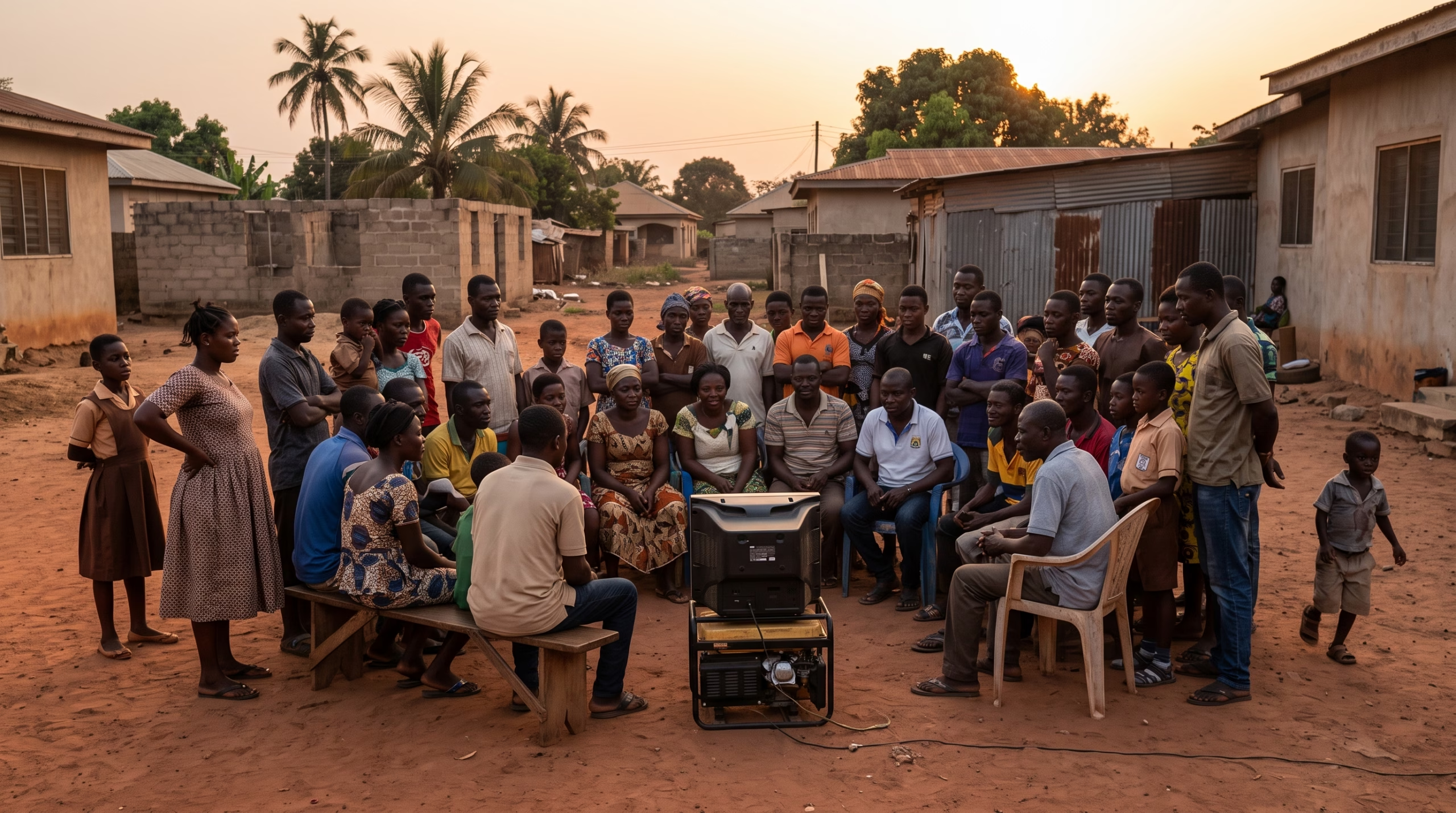
I remember one afternoon sitting on a plastic chair in a small village compound in Ghana, the air thick with anticipation. The sun was dipping, painting the sky in fiery oranges and purples, but nobody was looking up. Every eye was fixed on a small, flickering television screen powered by a generator that coughed and sputtered like an old man. This was the scene for watching the world cup in Ghana, and it was a powerful lesson in community.
My wife Laura and I have seen many things over our years planting churches here in West Africa, but few events bring people together quite like the FIFA World Cup. It’s more than just a game; it’s a national happening, a shared experience that weaves through the fabric of daily life, even in the most remote places.
The Universal Language of Football
You can spend years learning a local language, navigating cultural nuances, and trying to understand the rhythm of a place. But sometimes, a simple football match cuts through all of it. The roar of the crowd, the collective groan, the shared hope for a goal – these are universal sounds. They transcend language barriers and cultural divides, creating an instant connection.
In Ghana, football is not just a sport you watch on weekends. It’s a daily conversation, a source of endless debate, and a deep well of national pride. During the World Cup, this passion amplifies a hundredfold. Work schedules shift, market stalls quiet down, and everyone gathers around any screen they can find.
We’ve learned that building relationships on the mission field often means finding common ground. It means showing up, sitting down, and being present in the moments that matter to the people you’re trying to reach. Sometimes that’s a funeral, sometimes it’s a naming ceremony, and sometimes it’s watching Ghana play in the World Cup. You can learn a lot about people when they’re cheering for the same team. If you want to read more about our experiences and what we’ve learned, you can always check out our articles on the Consfords.com blog.
A Different Kind of Viewing Party
Back home in America, watching the World Cup might involve a sports bar with surround sound or a comfy couch with snacks. In Ghana, it’s a bit different. Picture this: a dusty yard, fifty or sixty people crammed onto benches, plastic chairs, or simply standing, all fixated on a television that might be older than I am. The picture is often fuzzy, the sound cuts in and out, and the generator’s hum is a constant companion.
Rain or shine, the show goes on. If the power goes out, which it often does, someone scrambles to restart the generator, or a new battery is quickly hooked up to keep the signal alive. There’s a collective sigh of relief when the picture flickers back on. It’s an exercise in patience and persistence. That went about as well as you would expect sometimes, with moments of pure chaos and then sudden, quiet resolution. We just chose to believe it would work out.
This communal viewing isn’t just about the game; it’s about being together. Children run around, women chat and cook, and men passionately dissect every play. It’s loud, it’s vibrant, and it’s a beautiful picture of community. “For where two or three are gathered together in my name, there am I in the midst of them” (Matthew 18:20). While they aren’t always gathered in His name, the principle of shared presence and experience is powerful.
When the Black Stars Play
When the Ghanaian national team, the Black Stars, plays in the World Cup, the entire nation holds its breath. The pride is palpable, the hope almost tangible. Everyone, from the biggest city to the smallest village, is united by this one common goal. The team’s performance, win or lose, becomes a national narrative for weeks.
I remember watching a game once where Ghana was playing a much stronger European team. The tension in the room was so thick you could cut it with a machete. Every save, every pass, every near-miss brought gasps and shouts. When Ghana scored, the compound erupted. I may have praised the Lord loud enough for the whole building to hear. When they lost, a quiet sadness settled over everyone, but it was a shared sadness. There was no finger-pointing, just a collective understanding.
“Globally, football (soccer) is the most popular sport, with an estimated 3.5 billion fans worldwide, making events like the FIFA World Cup powerful cultural touchstones in many nations, including Ghana.”
Worldometers
This shared experience, this unity in victory and defeat, is something special to witness. It shows how deeply national identity is tied to these moments. It creates a common bond that can be a starting point for deeper conversations. It’s during these times that you see the true spirit of the world cup in Ghana.
Lessons from the Sidelines
The mission field clarifies things quickly. It removes the padding. There are no stage lights and no weekly affirmation that you are doing well. There is only the work. You study again. You visit again. You preach again. You forgive again. You trust God again. The mission field does not reward drama. It rewards endurance.
Missionary on Fire Podcast
Preserving the Legacy of Faithful Missionaries
The Missionary on Fire podcast features interviews with veteran missionaries, classic sermons from the field, and stories of God’s faithfulness across generations. If you love the heart behind these stories, you will love the podcast. New episodes regularly.
Watching the World Cup in Ghana taught me a lot about patience. Games rarely start on time, the electricity is unreliable, and sometimes you just have to wait. You learn to embrace the rhythm of life as it is, not as you wish it would be. It also taught me about the importance of just being there. You don’t always have to be preaching, teaching, or organizing. Sometimes, just sitting with people, sharing in their joy and sorrow, is the most powerful witness of all.
It’s about building trust, one shared moment at a time. It’s about being seen as a friend, not just a foreigner with a message. “Be kindly affectioned one to another with brotherly love; in honour preferring one another” (Romans 12:10). This verse isn’t just for church folks; it’s for how we live our lives, how we interact with our neighbors, and how we build bridges to share the Gospel. You can find more stories of how we live out our calling on our prayer letters.
Beyond the Final Whistle
When the World Cup ends, the intense focus on football fades, but the relationships built during those weeks remain. The shared memories, the laughter, the collective sighs – these become threads in the larger tapestry of community. They open doors for future conversations, for deeper connections, and for opportunities to share the true hope we have in Christ.
The passion and unity seen during the world cup in Ghana remind me of the passion and unity we ought to have for the Gospel. If people can gather with such fervor for a game, imagine the power when they gather for the Lord. This is why we are here. This is why we serve. We want to see that same passion directed toward the eternal truth of God’s Word.
We are called to go, to teach, and to make disciples. Sometimes that means preaching from a pulpit, and sometimes it means sitting on a plastic chair, watching a fuzzy football game, and simply being present. Both are vital parts of the work. You never know when a shared moment over a game can lead to an open heart for the Gospel. To learn more about how we do ministry and engage with people in Ghana, consider exploring the International Mission Board’s resources on global missions, as they share a similar heart for reaching the unreached.
The World Cup in Ghana is more than just a sporting event; it’s a cultural phenomenon that offers missionaries unique insights and opportunities. It’s a chance to see the heart of a nation, to build relationships, and to plant seeds of truth in unexpected places. The work here is always about people, about meeting them where they are, and about showing them the love of Jesus Christ. That’s the real victory we’re after.
We’re grateful for every opportunity to serve and to share these stories with you. If you’re interested in hearing more about our experiences and the ongoing work in Ghana, I encourage you to visit our main blog page for more articles and updates. Your prayers and support make all of this possible. Keep fighting the good fight.

Joe Consford is a Baptist missionary serving in Ghana, West Africa, with his wife Laura. He writes about missionary life, missions training, and the work of the Gospel in West Africa at consfords.com.
Frequently Asked Questions
What is it like to watch the World Cup in Ghana?
Watching the World Cup in Ghana is a profound community experience. People gather in dusty yards, often around small, generator-powered televisions, sharing collective roars and groans. It’s a national event that unites villages, transcending language and cultural divides, showcasing deep national pride.
How does football impact daily life and community in Ghana?
Football is deeply woven into daily life in Ghana, serving as a constant conversation starter and source of national pride. During the World Cup in Ghana, this passion intensifies, with work schedules shifting and market stalls quieting as everyone seeks out a screen to watch the matches together, fostering strong community bonds.
What challenges do people face when watching the World Cup in remote Ghanaian villages?
In remote Ghanaian villages, watching the World Cup often involves challenges like fuzzy pictures, intermittent sound, and reliance on sputtering generators. Power outages are common, requiring quick action to restart equipment. Despite these hurdles, the collective determination to watch the world cup in Ghana highlights the event’s importance.
How do missionaries use shared experiences like the World Cup to build relationships in West Africa?
Missionaries in West Africa leverage shared experiences like the World Cup to build relationships by finding common ground. By showing up and being present in moments that matter to the local people, such as cheering for the same team during the world cup in Ghana, they foster connections that transcend cultural and linguistic barriers.