Missions With the Consfords
September 14, 2026
I remember sitting under a mango tree in a small village outside Kumasi, watching a young man named Kwesi teach a Bible study. He had a genuine fire for the…
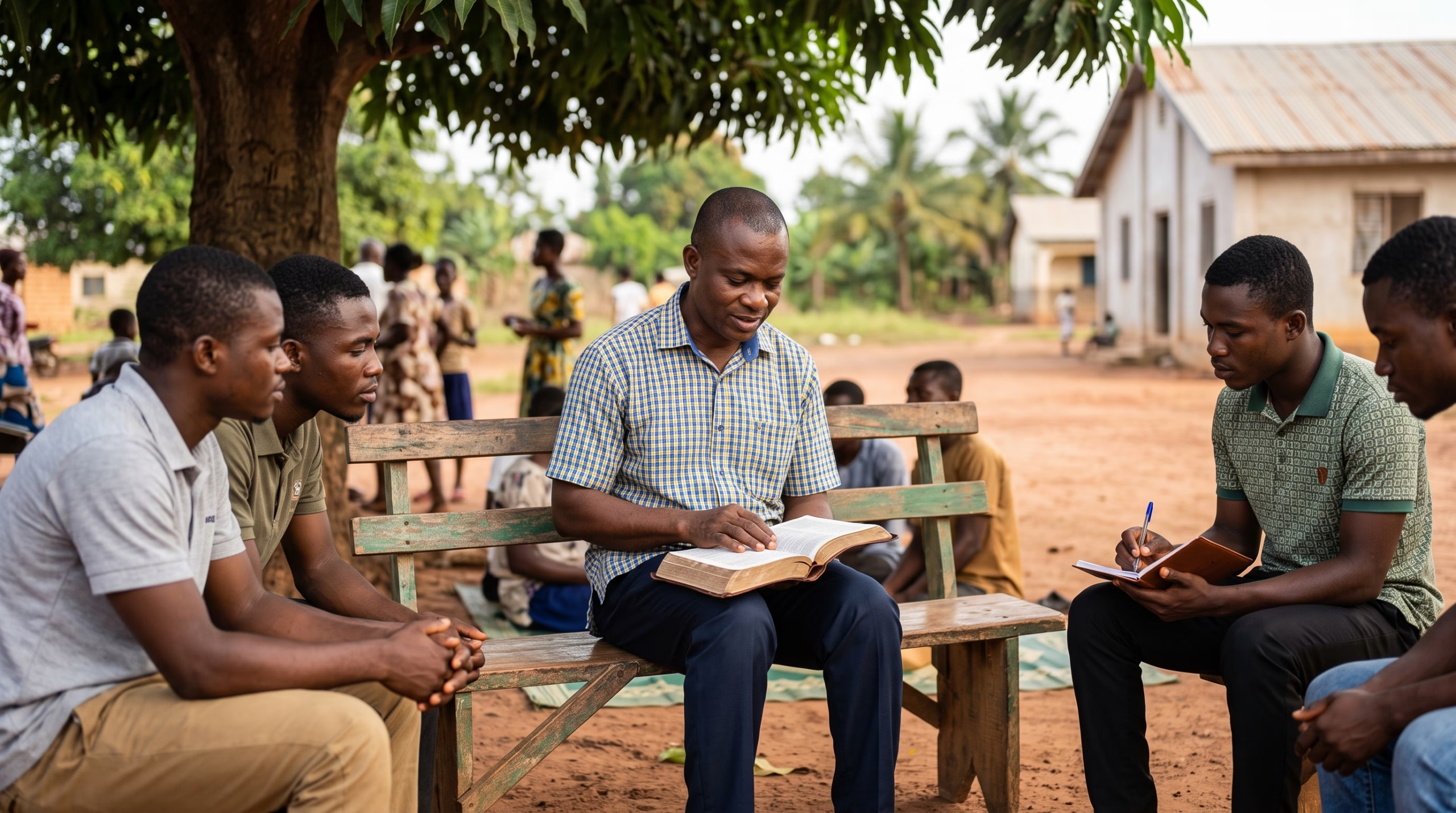
I remember sitting under a mango tree in a small village outside Kumasi, watching a young man named Kwesi teach a Bible study. He had a genuine fire for the Lord, no doubt about it. He’d just gotten saved a few months prior, and his zeal was infectious. As he spoke, however, I heard him mix in some local superstitions with the truth of God’s Word. He was doing his best, trying to share what he knew, and it made me realize just how vital sound theological training in Ghana truly is.
The hunger for the gospel here is real. People are open, eager to hear, and quick to believe. That’s a beautiful thing. However, an open heart needs a firm foundation. Without proper teaching, without a deep understanding of Scripture, that hunger can lead to some shaky ground. We must not only get folks saved; we also have to help them grow strong in the faith, and that starts with equipping their leaders through solid theological training in Ghana.
The Foundation of Faith in Ghana
When my wife Laura and I first came to Ghana, we quickly saw that the spiritual landscape was complex. There’s a strong belief in the spiritual realm, which means people are receptive to talk of God and demons. This openness, however, also leaves them vulnerable to false teachings, prosperity gospel messages, or old traditions mixed into new beliefs. It’s a constant battle to help new believers discern truth from error. This is why there’s a critical need for sound theological training in Ghana.
Imagine a new church plant. We preach the gospel, people get saved, and a small group starts meeting. Who will teach them next week? Who will answer their questions about sin, grace, and the will of God? If we don’t have men who understand the Bible deeply, who have been trained to rightly divide the Word, then that young church is like a house built on sand. It might stand for a while, but the first storm will expose its weak foundation.
The mission field clarifies things quickly. It removes the padding. We see the desperate need for men who not only love the Lord but also know His Word. This isn’t about fancy degrees; it’s about being able to teach the whole counsel of God with accuracy and conviction. Ultimately, it’s about ensuring that the message preached from pulpits across Ghana is biblical and true.
Building on the Right Rock
The need for faithful theological training in Ghana is not just academic. Ministry in Ghana brings its own set of challenges. Language barriers, cultural nuances, and logistical hurdles are daily realities. You might be teaching in Twi one day, then Ewe the next. You deal with everything from church building projects to mediation in family disputes. A missionary has to be ready for anything, and so do the national pastors we are raising up.
Sound theological training doesn’t just teach doctrine; it equips men to navigate these practical waters. It teaches them how to study the Bible for themselves, how to preach a clear sermon, and how to shepherd a flock. It gives them the tools to not just survive, but to thrive in ministry. “Study to shew thyself approved unto God, a workman that needeth not to be ashamed, rightly dividing the word of truth” (2 Timothy 2:15).
That verse isn’t just for seminary students back home. It’s for every man who stands in a pulpit here in Ghana, trying to lead God’s people. They need to understand the context, the original languages, and how to apply ancient truths to modern Ghanaian life. It’s hard work, but it’s essential work if we want to see strong, independent, Bible-believing churches established for the long haul. If you’d like to read more about our experiences, our challenges, and the victories God gives us here, I invite you to check out the rest of the articles on our blog.
The Cost of Untrained Zeal
I’ve seen situations where well-meaning but untrained leaders have inadvertently led their flocks astray. They might emphasize dreams and visions over Scripture, or teach a distorted view of prosperity that leaves people disillusioned when their material circumstances don’t immediately improve. Their heart is in the right place, but their head isn’t grounded in truth. That went about as well as you would expect.
One time, a new convert started his own “ministry” after only a few months of attending our church. He was charismatic and drew a crowd, but his teachings were a mishmash of what he’d heard, mixed with his own interpretations and some old tribal beliefs. Within a year, his group had fractured, and many of those new believers were more confused than when they started. It was heartbreaking to watch.
“In 1910, there were an estimated 9 million Christians in Africa, representing about 9% of the continent’s population. By 2010, more than 500 million Christians lived in Africa, accounting for about 62% of the population.”
Pew Research Center
That kind of rapid growth, which we’ve seen across Africa, only amplifies the need for solid theological training in Ghana. When millions are coming to Christ, we need millions of sound teachers. Otherwise, the enemy will sow tares among the wheat, and the harvest will be compromised. You can read more about the global need for sound doctrine and missions on the International Mission Board website.
Equipping the Next Generation of Leaders
Our goal isn’t just to plant churches; it’s to plant churches that can stand on their own, led by Ghanaian pastors who are thoroughly grounded in the Word. This means investing deeply in their education. We hold regular training sessions, often for days at a time, going through books of the Bible, systematic theology, and practical ministry skills. It’s exhausting work, but it’s worth it.
Missionary on Fire Podcast
Preserving the Legacy of Faithful Missionaries
The Missionary on Fire podcast features interviews with veteran missionaries, classic sermons from the field, and stories of God’s faithfulness across generations. If you love the heart behind these stories, you will love the podcast. New episodes regularly.
We teach them how to interpret Scripture, how to prepare sermons, how to counsel, and how to administer the church. We talk about church history and the dangers of false doctrine. It’s about building a solid theological framework that will serve them for a lifetime. “And the things that thou hast heard of me among many witnesses, the same commit thou to faithful men, who shall be able to teach others also” (2 Timothy 2:2).
That verse is our marching orders. It’s not enough for us to know; we must pass it on. We are raising up men who will, in turn, train others. This is how the gospel spreads deep and wide, establishing a legacy of truth that will endure long after we are gone. This is the long game of missions, and it requires patience and persistence.
Our Part in the Work of Theological Training in Ghana
Laura and I have spent years on the field, learning the language, understanding the culture, and building relationships. We’ve seen firsthand the power of God’s Word to transform lives. We’ve also seen the critical importance of equipping national leaders with the tools they need to correctly handle that Word. Our church planting efforts depend on it.
Sometimes it means sitting for hours, translating complex theological concepts into simple Twi. Other times, it means traveling for days to reach remote villages where pastors have little access to resources. There is only the work. We study, visit, preach, forgive, and trust God, then we do it all again. It’s all part of ensuring that the churches we plant are not just numbers, but strong, healthy bodies of believers. If you want to know more about our journey and vision, you can always read more about us.
Supporting the Work of Theological Training in Ghana
This work isn’t always glamorous. It involves a lot of dusty roads, broken down vehicles, and endless meetings. But it is vital. When we invest in a Ghanaian pastor’s theological education, we are investing in the spiritual health of an entire community. We are helping to raise up men who will faithfully preach the gospel and shepherd God’s flock for decades to come. Our mission is to see the gospel firmly rooted in Ghana, and that means prioritizing sound theological training in Ghana. If you’re interested in learning more about the realities of missions and church planting, I share a lot of these stories and lessons on my video show, Missionary on Fire, and in my books, like “That’s My Goat!”
We see God working in powerful ways here, and we’re grateful for every opportunity to serve. If you feel led to partner with us in this vital work, you can find more information on how to connect with our ministry. If you have a heart for missions and want to understand more about the specific needs and triumphs we experience, I encourage you to read through some of the articles and updates on our blog.
The need for faithful men who can teach God’s Word is immense, and it’s a privilege to play a small part in meeting that need. We pray for more laborers, more wisdom, and more opportunities to train men who will truly be workmen “that needeth not to be ashamed.”

Joe Consford is a Baptist missionary serving in Ghana, West Africa, with his wife Laura. He writes about missionary life, missions training, and the work of the Gospel in West Africa at consfords.com.
Frequently Asked Questions
Why is theological training so important for new believers in Ghana?
I’ve seen firsthand that while the hunger for the gospel in Ghana is strong, without proper theological training, new believers can easily mix local superstitions with God’s Word. It’s crucial to equip leaders to discern truth from error and build a firm foundation in Scripture, ensuring the church grows strong and biblically sound.
How do cultural beliefs and traditions impact theological training in Ghana?
Laura and I quickly learned that Ghana’s spiritual landscape is complex. People are open to the spiritual realm, which is good, but it also makes them vulnerable to false teachings or old traditions mixed with new beliefs. Our theological training in Ghana has to directly address these cultural nuances to help believers rightly divide the Word.
What are some practical challenges of providing theological training in Ghana?
Beyond the academic, practical challenges are daily realities. We deal with language barriers, teaching in Twi one day and Ewe the next. Logistical hurdles are common, and pastors need to be equipped to handle everything from church building projects to family disputes. Sound theological training in Ghana must prepare men for these diverse ministry demands.
How does theological training help new church plants in Ghana become self-sustaining?
When we plant a new church, the immediate question is, ‘Who will teach them next week?’ If we don’t have men deeply trained in the Bible, that church is like a house on sand. Theological training in Ghana ensures we raise up national pastors who can accurately teach the whole counsel of God, making new churches resilient and self-sufficient.