
Missions With the Consfords
September 13, 2026
I remember standing on a dusty church foundation in Accra, Ghana, years ago, watching a group of our church men mix concrete by hand. The sun beat down, the work…
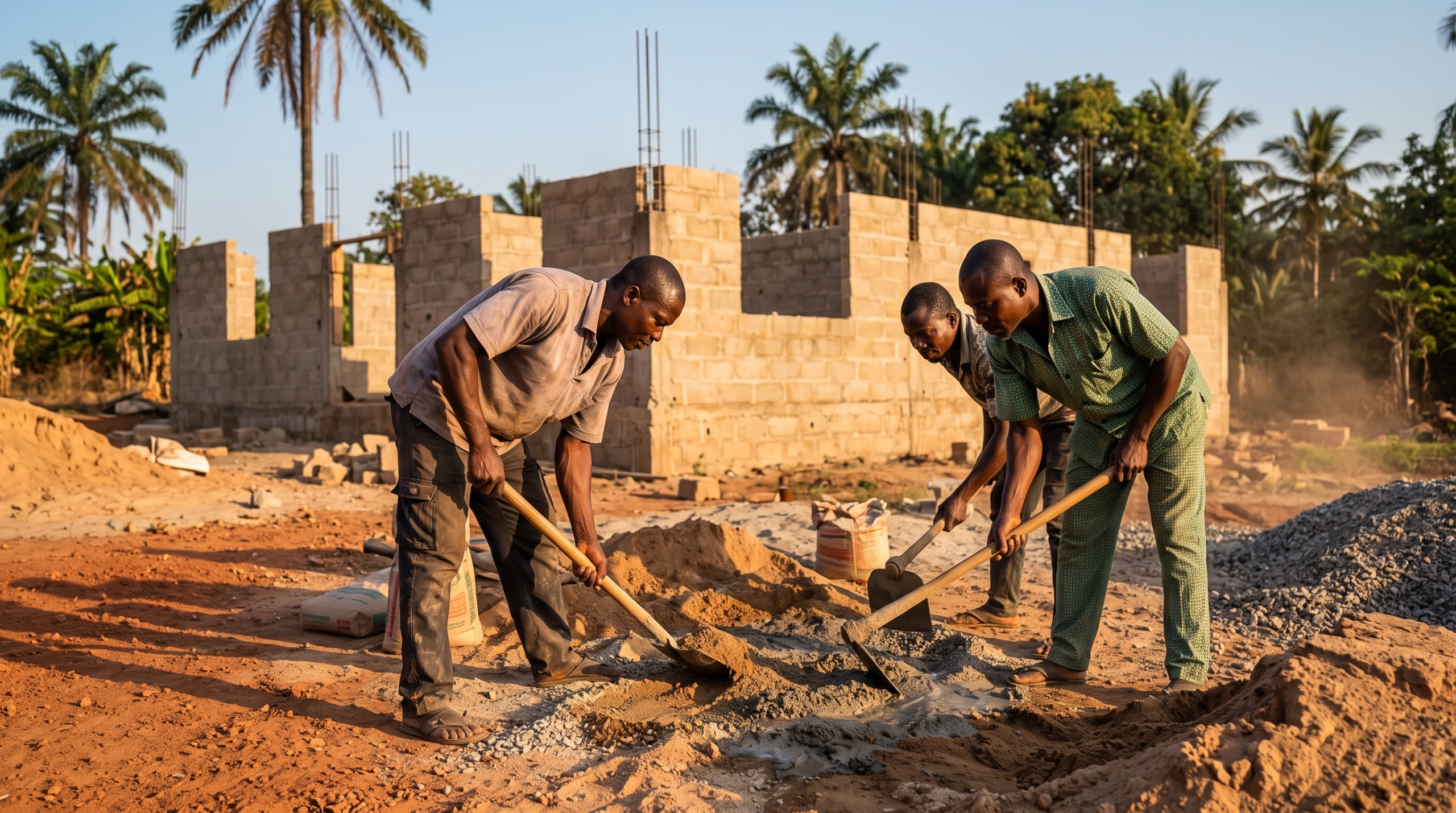
I remember standing on a dusty church foundation in Accra, Ghana, years ago, watching a group of our church men mix concrete by hand. The sun beat down, the work was hard, and the tools were simple. There were no machines, just shovels and strong backs. That kind of basic, ground-level work reminds me a lot of my own missionary student humble beginnings back in seminary.
My wife Laura and I have spent years in West Africa planting churches, and I can tell you that the lessons learned from those early days stick with you. They shape how you approach everything. From the moment I stepped onto the campus of Baptist Bible College, I knew I was starting a journey that would redefine my understanding of ministry.
The Classroom and the Concrete: Learning to Serve as a Missionary Student
Seminary life was not glamorous. We lived on a tight budget, often working part-time jobs while carrying a full course load. You learned to stretch a dollar and to appreciate the little things. This was where the foundation for my calling as a missionary student was laid, not just in theology classes, but in the daily grind.
I remember one time, during a required practical ministry assignment, I was tasked with cleaning the church bus. It was a hot day, and that old bus had seen better days, and probably more than a few dirt roads. I scrubbed and swept, thinking about the grand sermons I hoped to preach someday. Cleaning that bus, making it ready for the next trip, was just as much a part of serving the Lord as anything else.
That kind of work teaches you something crucial. It teaches you that service is service, no matter the task. Furthermore, it prepares you for the realities of the mission field, where you might be building a church one day and teaching a Bible study the next. You learn to do whatever needs doing, with all your heart, as unto the Lord. The Bible says, “And whatsoever ye do, do it heartily, as to the Lord, and not unto men” (Colossians 3:23).
Those years taught me that real ministry is about faithfulness in the small things. It’s about being ready to serve in any capacity, just like those Ghanaian men mixing concrete by hand. If you have a heart for that kind of practical, on-the-ground ministry, you might find some of my stories from the field inspiring. You can learn more about our work and what it takes to be a Missionary on Fire by visiting our main page.
More Than Books: Practical Training for a Missionary Student
Seminary taught me a lot, but not everything came from textbooks. Much of it came from the experience of simply living and working alongside other believers. We learned about leadership, conflict resolution, and the importance of prayer, not just in theory, but in the messy reality of campus life and local church ministry.
I recall one particularly memorable attempt at plumbing during my seminary days. A leaky faucet in our student housing seemed like a simple fix. I watched a YouTube video, gathered some tools, and felt confident. After about two hours, the leak was worse, and I had managed to drench myself and half the bathroom. My wife Laura, ever patient, eventually called in someone who actually knew what they were doing. That went about as well as you would expect.
Moments like that taught me humility. They taught me that sometimes, you just need to ask for help, and that God uses other people for His purposes. These are lessons that serve you well when you are thousands of miles from home, trying to navigate a new culture and build a church. You can’t know everything. You depend on others. You depend on God.
“Roughly 3.2 billion people have little to no access to the Gospel, making up 42% of the world’s population.”
International Mission Board
The need for missionaries who are grounded, practical, and humble is clear when you consider the vast numbers of unreached people. The mission field has a way of stripping away anything that is not truly essential, leaving you with a deeper reliance on the Lord. It requires a willing heart, not perfect skills.
The Cost of Calling: Sacrifice and Surrender for the Missionary Student
Being a missionary student often means living a life of sacrifice. Laura and I made a lot of adjustments during those years. We learned to trust God with finances, with our future, and with the big questions about where He wanted us to go. It wasn’t always easy, but it was always clear that God was guiding us.
Sometimes, the sacrifice felt very real. I remember wanting to buy Laura a nice gift for her birthday, but our budget just wouldn’t allow it. Instead, I wrote her a long letter, thanking her for her partnership and telling her how much I loved her. She still says that letter was one of the best gifts she ever received. It was a reminder that true value is found in what you can give of yourself, rather than what you can buy.
This path of surrender continues on the mission field. We left behind family, friends, and the familiar comforts of home to serve in Ghana. It’s a choice you make every day. You learn to live by faith, not by sight. If you’re studying the Bible and want to dig deeper into God’s call for your life, I often recommend resources like the Blue Letter Bible for in-depth word studies and commentaries.
Those early lessons from our missionary student humble beginnings taught us that God provides. He opens doors. He makes a way where there seems to be no way. This trust is invaluable when you face challenges in a foreign land.
Finding My Feet: First Steps in Ghana
When we first arrived in Ghana, everything was new. The language, the food, the customs, it was all a steep learning curve. Those years as a missionary student, learning to be flexible and resourceful, paid off immediately. You can’t be set in your ways when you’re starting a church from scratch in a new culture.
Missionary on Fire Podcast
Preserving the Legacy of Faithful Missionaries
The Missionary on Fire podcast features interviews with veteran missionaries, classic sermons from the field, and stories of God’s faithfulness across generations. If you love the heart behind these stories, you will love the podcast. New episodes regularly.
I remember trying to preach my first sermon in Twi, the local language. I had studied for months, practiced with a language helper, and felt reasonably ready. I stood up, delivered my message, and sat down, feeling pretty good about it. Then, a church member came up to me afterwards, smiling broadly, and said, “Pastor, that was wonderful! But you kept saying ‘goat’ instead of ‘God’ in the beginning.” My vocabulary was still a work in progress, to say the least.
It was a humbling moment, but it was also a reminder that ministry is about connection, not perfection. It’s about being willing to try, to stumble, and to learn. “For God resisteth the proud, and giveth grace to the humble” (James 4:6). That verse has become a guiding principle for us in Ghana. You learn to laugh at yourself and keep going.
Those early days in Ghana, with all their challenges and triumphs, really cemented the value of those missionary student humble beginnings. They taught me that resilience is built through small victories and persistent effort, not through grand, effortless successes.
Why Humble Beginnings Matter for Every Missionary Student
The path of a missionary is rarely a straight line to success. It’s filled with detours, unexpected challenges, and moments where you question everything. That’s why humble beginnings are so important for any missionary student. They build a spiritual and emotional toughness that you just can’t get from a smooth, easy ride.
When you start small, you learn to appreciate every step of progress. You learn to celebrate the salvation of one soul, the addition of one new family to the church, the completion of one brick in the building. These aren’t just minor achievements; they are monumental victories in God’s eyes. You learn to lean on God for every single thing, because you don’t have a big budget or an army of staff to make things happen.
Humble beginnings teach you patience. They teach you to depend on the Holy Spirit’s leading, rather than your own plans or cleverness. They prepare you for the inevitable setbacks and disappointments that come with any ministry. You learn to pray harder, to trust deeper, and to keep showing up even when you don’t see immediate results. This foundation of humility and dependence is what sustains us, even today.
A Fire That Still Burns
Looking back at my time as a missionary student, I can see God’s hand preparing me for Ghana. The simplicity, the hard work, the reliance on faith, it all shaped me. It was about learning to serve, not about prestige or power. It was about developing a heart for God and for the lost.
Those humble beginnings instilled in me a deep conviction: God uses ordinary people to do extraordinary things when they are surrendered to Him. He needs willing vessels, not perfect people. And He has certainly used Laura and me in ways we never imagined, here in West Africa.
If you’ve felt a stirring in your heart for missions, or if you’re curious about what it truly means to serve God on the foreign field, I encourage you to explore more about our ministry. You’ll find stories, resources, and insights into the kind of faith and grit it takes to build churches in Ghana. Come see what it means to be a Missionary on Fire.

Joe Consford is a Baptist missionary serving in Ghana, West Africa, with his wife Laura. He writes about missionary life, missions training, and the work of the Gospel in West Africa at consfords.com.
Frequently Asked Questions
What is it like to start out as a missionary student?
Starting out as a missionary student, for Laura and me, meant living on a tight budget and often working part-time jobs while studying. It wasn’t glamorous, but it taught us to stretch a dollar and appreciate the little things. Those missionary student humble beginnings laid a crucial foundation for our calling.
How did practical tasks in seminary prepare you for the mission field?
Practical tasks, like cleaning the church bus during a ministry assignment, taught me that service is service, no matter the task. It prepared me for the realities of the mission field in Ghana, where one day I might be building a church and the next teaching a Bible study. You learn to do whatever needs doing heartily.
What kind of lessons did you learn beyond textbooks in seminary?
Beyond textbooks, I learned a lot from simply living and working alongside other believers. We learned about leadership, conflict resolution, and the importance of prayer, not just in theory, but in the messy reality of campus life and local church ministry. These were crucial for our missionary student humble beginnings.
How does faithfulness in small things relate to long-term missionary work?
Faithfulness in small things is absolutely crucial for long-term missionary work. As I saw those Ghanaian men mixing concrete by hand, I realized that real ministry is about being faithful in every task, big or small. That commitment to serving in any capacity is what sustains you on the field.