Missions With the Consfords
July 9, 2026
The first time my wife Laura and I drove into Takoradi, Ghana, the air was thick with the smell of woodsmoke and the sound of distant ocean waves. It was…
The first time my wife Laura and I drove into Takoradi, Ghana, the air was thick with the smell of woodsmoke and the sound of distant ocean waves. It was a bustling port city, alive with people, color, and a sense of purpose. We knew then that our calling as a Takoradi Ghana missionary family was not just about a location, but about the lives we would touch and the churches we would help plant in this vibrant place.
I remember feeling a mix of excitement and a healthy dose of fear. The streets were packed, the language was a new challenge, and everything felt different from the quiet life we had known back home. But that’s the thing about the mission field: it clarifies your purpose. You learn quickly that God’s plan is bigger than your comfort zone.
The Call to Takoradi: More Than Just a Place
Takoradi isn’t just a dot on a map; it’s a strategic hub in West Africa. It’s a place where people from all walks of life converge, bringing with them a hunger for truth, whether they realize it or not. Our initial burden for Ghana quickly narrowed to this region, seeing the need for solid, Bible-preaching churches.
We didn’t just pick Takoradi out of a hat. There was a clear leading, a sense that this was where God wanted us. We spent time in prayer, we talked to other missionaries who knew the area, and we saw the potential for genuine, lasting impact. It takes more than a desire to serve; it takes direction from the Lord.
Our work started simply: building relationships. You can’t just show up and start preaching. You have to earn trust. You have to learn the rhythms of life, understand the culture, and genuinely care about the people. This often meant spending hours in conversations, sharing meals, and simply being present in their lives.
It’s a long game, church planting is. You sow the seed, you water it, and you trust God for the increase. That’s the heartbeat of being a Takoradi Ghana missionary. It’s not about quick conversions as much as it is about deep discipleship.
Building Relationships, Breaking Barriers
Language was one of our first big hurdles. English is an official language in Ghana, but the local dialects are what truly connect you to people’s hearts. In Takoradi, that meant learning Fante, a dialect of Akan. I spent hours stumbling through phrases, making mistakes, and often getting laughed at.
I remember one time I tried to compliment a woman on her cooking, but accidentally said her food was “like a goat.” She looked at me, perplexed, and then burst out laughing. That went about as well as you would expect. Humor, even accidental, can be a great bridge builder. People appreciate the effort, even if the execution is a bit rough.
Beyond language, there are cultural nuances. The way you greet someone, the way you sit, the way you offer or receive a gift—these things matter. They show respect. We learned to listen more than we spoke, to observe, and to ask questions. It’s a humbling process, but it’s essential for earning the right to share the gospel.
Relationships are the currency of the mission field. Back home in the States, you can often accomplish things through systems or institutions. But in Ghana, systems are often fluid. Things happen because of who you know, because of the trust you’ve built. It’s about being a friend, not just a foreigner with a message.
Planting Churches: The Real Work of a Takoradi Ghana Missionary
The goal was always to establish independent, indigenous churches. We weren’t there to build an American outpost; we were there to see Ghanaian churches led by Ghanaian pastors, reaching their own people. This vision shaped every decision we made, from the Bible studies we started to the men we discipled.
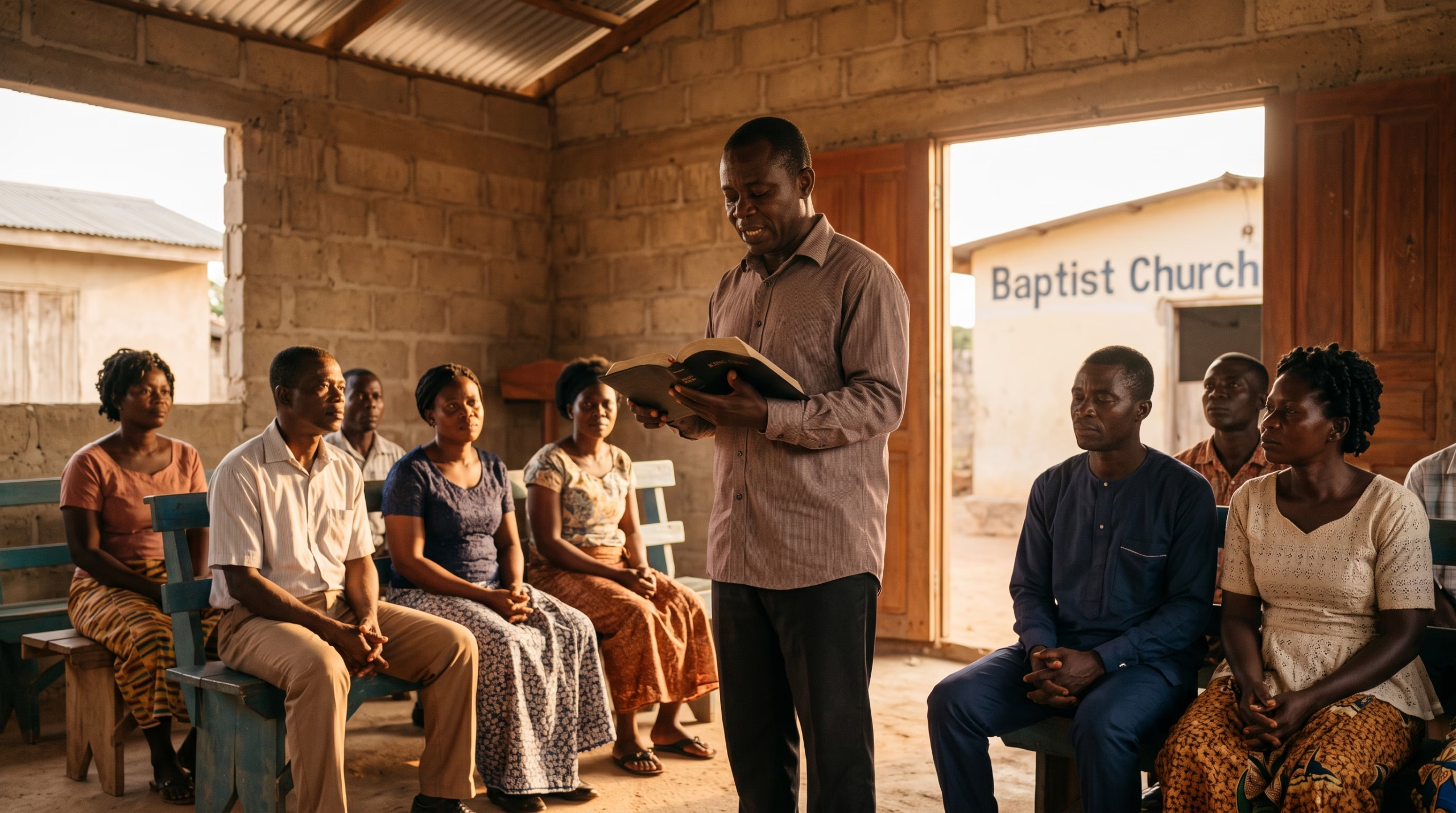
We started small, often in homes or under makeshift shelters. Our first “church building” was a simple structure with a tin roof and wooden benches. It wasn’t fancy, but it was a place where people could gather, hear the Word of God, and grow in their faith. That’s what matters.
Discipleship is the core of church planting. You can’t just preach and leave. You have to teach. You have to model. You have to equip. We spent countless hours with men and women, going through the KJV Bible verse by verse, showing them what it means to live for Christ and to lead others to Him. “Study to shew thyself approved unto God, a workman that needeth not to be ashamed, rightly dividing the word of truth” (2 Timothy 2:15). That verse was our constant guide.
We saw families come to faith, lives transformed, and communities impacted. It’s a slow, steady work, but the fruit is eternal. Seeing a new convert share their faith for the first time, or watching a young man preach his first sermon – those are the moments that make every sacrifice worthwhile.
“Globally, 3.23 billion people (40.9% of the world) remain unreached by the gospel. Sub-Saharan Africa is home to a significant portion of these unreached people groups, underscoring the vital need for continued missionary efforts in the region.”
International Mission BoardMissionary on Fire Podcast
Preserving the Legacy of Faithful Missionaries
The Missionary on Fire podcast features interviews with veteran missionaries, classic sermons from the field, and stories of God’s faithfulness across generations. If you love the heart behind these stories, you will love the podcast. New episodes regularly.
Challenges and God’s Faithfulness
The mission field clarifies things quickly. It removes the padding. There are no stage lights and no weekly affirmation that you are doing well. There is only the work. You study again. You visit again. You preach again. You forgive again. You trust God again. The mission field does not reward drama. It rewards endurance.
We faced our share of challenges. Sickness, unreliable infrastructure, spiritual opposition, and the constant drain of being away from extended family. There were days I wondered if we were truly making a difference, or if we were just spinning our wheels. Doubt can creep in, especially when the going gets tough.
But in those moments, God always showed up. Sometimes it was a word of encouragement from a new believer. Other times, it was a perfectly timed provision when our funds were low. And often, it was simply the quiet assurance in my heart that God had called us here and He would sustain us. “Fear thou not; for I am with thee: be not dismayed; for I am thy God: I will strengthen thee; yea, I will help thee; yea, I will uphold thee with the right hand of my righteousness” (Isaiah 41:10).
We learned to rely on Him in ways we never had before. This kind of dependence is a gift, even when it feels like a burden. It strips away self-reliance and forces you to lean entirely on the Lord. That’s a lesson you don’t forget.
The Enduring Impact of a Takoradi Ghana Missionary
Our goal was never just to start a church, but to see it become self-sustaining and self-propagating. We wanted to train leaders who could continue the work long after we were gone. It’s about raising up a new generation of Ghanaian believers who are passionate about reaching their own country for Christ.
We’ve seen that vision take root. Churches we helped start are now thriving, led by faithful Ghanaian pastors. These men are reaching out to new villages, planting their own churches, and discipling their own people. It’s a beautiful thing to witness the multiplying effect of God’s grace.
The work of a Takoradi Ghana missionary, or any missionary for that matter, is about laying foundations. It’s about planting seeds that will grow into mighty trees. It’s about building something that will outlast you, something that will continue to glorify God for generations to come. This enduring impact is what drives us forward, even on the hardest days.
We continue to pray for the churches in Takoradi and across Ghana. We stay connected with the pastors and leaders, offering counsel and encouragement when needed. The bond forged in shared ministry is a strong one, a family built not on blood, but on the blood of Christ. You can learn more about our ongoing work and how we pursue this calling on our Consford’s blog.
The mission field is not a place for the faint of heart, but it is a place for the faithful. It demands everything you have, and then it asks for a little more. But the reward—seeing souls saved, lives changed, and churches established—is beyond measure. If you feel that same fire in your bones, that calling to step out in faith and make a difference for the Lord, then don’t let “someday” be a thief.
Consider what God might have for you. Maybe it’s not Takoradi, but it’s somewhere. The need for faithful laborers is still great. If you’re wrestling with that call, if you’re asking what it truly means to live a life fully surrendered to God’s purpose, then I encourage you to spend some time exploring the heart behind our Missionary on Fire message. It’s about living with urgency for the Lord’s work, wherever He calls you.

Joe Consford is a Baptist missionary serving in Ghana, West Africa, with his wife Laura. He writes about missionary life, missions training, and the work of the Gospel in West Africa at consfords.com.
Frequently Asked Questions
What is it like to be a missionary in Takoradi, Ghana?
Being a Takoradi Ghana missionary involves immersing oneself in the local culture, learning dialects like Fante, and building genuine relationships. It’s about church planting through deep discipleship, not just quick conversions, and trusting God’s direction in a vibrant West African port city.
What are the biggest challenges for missionaries in Ghana?
Missionaries in Ghana often face challenges like language barriers, cultural nuances, and the long-term commitment required for church planting. Earning trust and understanding local rhythms are crucial, as is adapting to a life vastly different from home, as experienced by a Takoradi Ghana missionary.
How do missionaries build relationships in Takoradi?
Missionaries build relationships in Takoradi by spending hours in conversations, sharing meals, and simply being present in people’s lives. They learn local dialects like Fante, respect cultural customs, and demonstrate genuine care, which helps break down barriers and foster trust over time.
What specific language skills are important for a Takoradi missionary?
While English is an official language, learning local dialects is crucial for a Takoradi Ghana missionary to connect deeply. In Takoradi, specifically, learning Fante, a dialect of Akan, is highly important for effective communication, building trust, and understanding cultural nuances beyond basic interactions.