
Missions With the Consfords
July 14, 2026
I remember sitting under a mango tree outside our first church plant in Ghana, talking with Pastor Kwesi. We were discussing the upcoming needs for the building, and he looked…
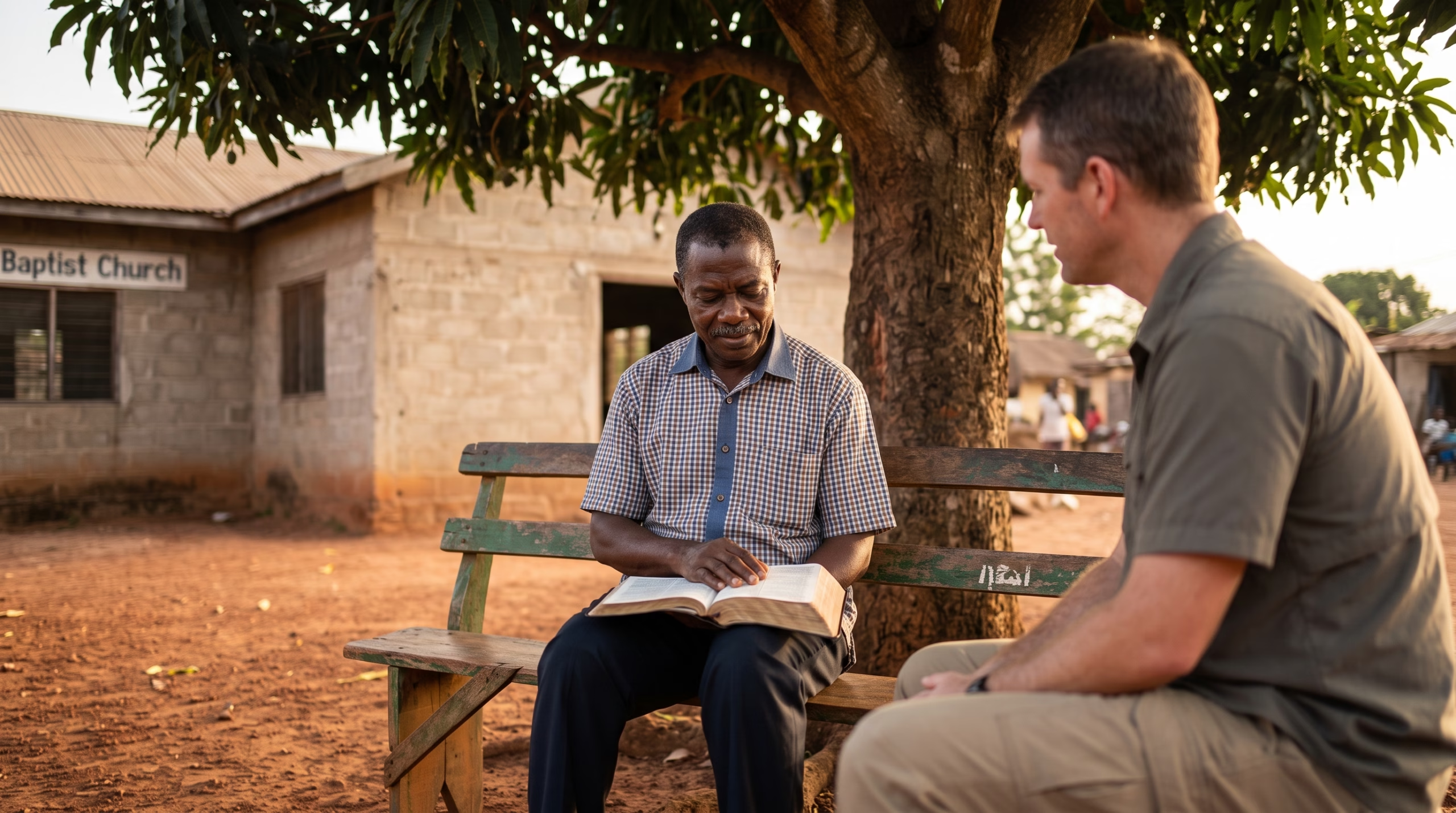
I remember sitting under a mango tree outside our first church plant in Ghana, talking with Pastor Kwesi. We were discussing the upcoming needs for the building, and he looked at me with a serious face. He asked, “Brother Joe, how much should a church give to missions?” It was a question I’d heard before, back home in the States, but it hit different out there. It wasn’t about numbers for him; it was about obedience. So, how much should a church give to missions? It’s a question every church leader wrestles with, and the answer isn’t just a percentage.
The mission field clarifies things quickly. It removes the padding. There are no stage lights and no weekly affirmation that you are doing well. There is only the work. You study again. You visit again. You preach again. You forgive again. You trust God again. The mission field does not reward drama. It rewards endurance. That’s true for the missionary, and it’s true for the sending church. The real question isn’t just “how much,” but “how faithfully?”
The Heart Behind the Giving: More Than a Budget Line Item
I’ve seen churches of all sizes support missions. Some have massive budgets and send out dozens of missionaries. Others are small, struggling congregations, but their commitment to the Great Commission burns just as bright. I recall one little church in rural Georgia, maybe sixty folks on a good Sunday. They didn’t have much, but they took up a special offering every month for us. It wasn’t a huge amount of money, but it was consistent. It was sacrificial.
That little bit of support, faithfully given, often meant the difference between making it to the next village or having to wait. It paid for fuel, bought Bibles, and helped keep our family on the field. They weren’t asking how much should a church give to missions based on their income; they were asking, “How much can we give to reach the lost?” It was a difference in perspective that warmed my heart every time their check arrived. They understood that every dollar was a seed planted in Ghana.
The Bible tells us in 2 Corinthians 9:7, “Every man according as he purposeth in his heart, so let him give; not grudgingly, or of necessity: for God loveth a cheerful giver.” The heart of the giver matters more than the size of the gift. A church’s giving to missions should flow from a genuine burden for souls, not from obligation or comparison. It’s about a church family coming together, purposing in their hearts to obey the Lord’s command to go into all the world. If you’re looking for ways to get involved or just learn more about the work we’re doing, you can always connect with us.
It’s About Sacrifice, Not Surplus
I once spoke at a church where the pastor told me their missions budget was the first thing they cut when times got tough. My heart sank a little when I heard that. It showed me where missions truly stood in their priorities. Giving to missions should not be a leftover, something you do after all your other expenses are covered. It should be a priority, reflecting the priority God places on reaching the lost.
Think about the widow’s mite in Mark 12. She gave two mites, “which make a farthing.” Jesus said she had cast in more than all the rich folks, “for all they did cast in of their abundance; but she of her want did cast in all that she had, even all her living” (Mark 12:44). This isn’t a command for every church to give away every penny. It’s a principle that true giving involves sacrifice. It means giving when it hurts a little, not just when it’s easy. That kind of sacrificial giving blesses the Lord and brings true spiritual returns.
What the Bible Says About Supporting the Work
The Bible doesn’t give a specific percentage for how much a church should give to missions. However, it provides clear principles for giving that apply to all areas of the church’s ministry, including missions. We see the pattern of tithing and offerings throughout Scripture. Believers are commanded to bring “all the tithes into the storehouse” (Malachi 3:10), and then to give offerings “as God hath prospered him” (1 Corinthians 16:2).
For a local church, this means taking a portion of the tithes and offerings received and designating it for missions. Many churches aim for a specific percentage of their overall budget, often 10% or more, to be given specifically to missions. This isn’t a biblical mandate for that exact number, but it’s a practical way to prioritize the Great Commission. It reflects a commitment to supporting those who are fulfilling the command of “Go ye therefore, and teach all nations” (Matthew 28:19).
When a church sets aside a dedicated portion of its income for missions, it makes a statement. It says, “This is important to us. This is part of our identity.” It also ensures that missions giving is consistent and not dependent on sporadic emotional appeals. This kind of steady support allows missionaries like us to plan, to budget, and to keep doing the work without constant financial anxiety. That peace of mind is invaluable on the field.
“Globally, only 3.3% of all giving by evangelicals goes to support missions among the unreached.”
International Mission Board
Supporting Those Who Go
Paul commended the Philippian church for their faithful support. He told them, “Now ye Philippians know also, that in the beginning of the gospel, when I departed from Macedonia, no church communicated with me as concerning giving and receiving, but ye only” (Philippians 4:15). They were a church that understood the importance of partnership. They saw themselves as partakers in the work, even though they weren’t physically with Paul.
This partnership is crucial. Missionaries are not lone rangers. We are sent by local churches and supported by local churches. Our ability to preach the gospel, plant churches, and disciple new believers in Ghana depends directly on the faithful giving of churches back home. It’s a team effort, and every church that gives to missions is an essential part of that team. To learn more about how you can be part of a mission team, you can check out our missionary internships.
Practical Considerations for Church Missions Giving
Beyond the biblical principles, there are practical ways a church can determine how much to give to missions. First, establishing a clear missions policy is vital. This policy should outline the church’s philosophy of missions, the types of missionaries or agencies it will support, and the process for selecting and evaluating those ministries. This brings order and accountability to the giving process.
Second, a church should aim for consistency. It’s better to give a smaller amount consistently than a large, sporadic offering once a year. Regular support allows missionaries to budget and plan. It also builds trust and a strong relationship between the church and the missionary. We’ve seen churches commit to a certain amount monthly, and that steady stream of support is a huge blessing.
Third, prayer is just as important as financial giving. A church that faithfully prays for its missionaries is giving a powerful form of support. We ask our supporting churches to pray for our family, for our work in Ghana, and for the souls we are trying to reach. Financial giving without prayer is like sending a soldier to battle without ammunition. Both are essential for victory. You can learn more about specific prayer needs by reading our prayer letters.
Evaluating Missionaries and Ministries
When deciding how much should a church give to missions, it’s also important to consider who you are supporting. Not all ministries are created equal. Churches should carefully vet missionaries and organizations. Look for clear doctrinal statements, transparent financial practices, and a demonstrated commitment to sound biblical principles. Ask for references. Talk to other supporting churches.
Missionary on Fire Podcast
Preserving the Legacy of Faithful Missionaries
The Missionary on Fire podcast features interviews with veteran missionaries, classic sermons from the field, and stories of God’s faithfulness across generations. If you love the heart behind these stories, you will love the podcast. New episodes regularly.
We believe in accountability. My wife Laura and I send out regular prayer letters and financial updates to our supporting churches. We want them to know exactly what God is doing with their investment. This level of transparency builds trust and confidence, ensuring that their precious missions dollars are being used wisely and effectively to advance the gospel. You can find out more about what other mission organizations are doing globally by visiting Wycliffe Bible Translators.
The Missionary’s Perspective: What Really Helps
From my perspective on the ground in West Africa, it’s not just the total amount of money that matters. It’s the spirit behind it and the consistency of it. A church that sends $100 a month faithfully, year after year, is often more valuable than a church that sends $1,000 once and then forgets about you. That steady support allows us to build long-term plans, knowing we have a base of operations.
I also appreciate churches that don’t just send money but also send encouragement. A personal email, a phone call, or even a visit can mean the world. Living in a foreign land, often far from family and familiar comforts, can be lonely. Knowing that there are church folks back home thinking of you and praying for you is a powerful boost. It reminds us that we are not alone in this fight.
One time, our vehicle broke down in a remote part of Ghana. It was a major repair, and we didn’t have the funds immediately available. I was trying to figure out how we were going to get around, how we would continue visiting the villages. Then, an email came in from a supporting church, completely out of the blue, saying they felt led to send an extra gift. It was exactly the amount we needed for the repair. I may have praised the Lord loud enough for the whole building to hear. It was a reminder that God uses His people to meet needs, often in surprising ways. That went about as well as you would expect.
Beyond Financial Support
Sometimes, the most helpful support isn’t even financial. It’s the readiness of a church to pray specifically for our struggles, to offer practical advice when we’re facing a tough decision, or to simply listen when we need to vent. My wife Laura and I have faced situations in Ghana that would make your hair stand on end. Having a pastor or a missions committee back home who genuinely cares and understands is a lifeline.
Churches can also help by promoting missions within their own congregation. Encourage young people to consider missionary service. Host missions conferences. Invite missionaries to speak. The more a church educates its members about the needs of the lost world, the more likely they are to develop a missions heart themselves. This isn’t just about giving; it’s about cultivating a culture that lives and breathes the Great Commission. If you want to dive deeper into the missionary life, check out my book, Missionary on Fire.
Cultivating a Missions Mindset in Your Church
Ultimately, how much should a church give to missions isn’t a question with a single, universally applicable dollar amount or percentage. It’s a question of conviction, obedience, and faith. A church with a genuine heart for missions will find ways to give, whether they are large or small. They will prioritize it in their budget and in their prayers. They will see it as an extension of their own ministry, not an optional add-on.
Cultivating a missions mindset means integrating missions into the very fabric of the church. It means teaching about missions from the pulpit, sharing missionary updates in services, and praying for missionaries by name. It means challenging members to consider short-term trips or even full-time service. It means understanding that the Great Commission is not just for a select few, but for every believer and every local church. We all have a part to play in reaching the world for Christ.
We see this mindset lived out in the churches we plant in Ghana. Even in their infancy, with limited resources, they are already looking for ways to reach their own communities and beyond. They understand the urgency of the gospel because they themselves were once lost. It’s a beautiful thing to witness, and it reminds me that the spirit of missions is universal, transcending cultures and economies. This is the heart of what we hope to accomplish: raising up indigenous churches that are themselves “Missionary on Fire.”
So, what’s the honest answer to “how much should a church give to missions”? Give as God has prospered you, give cheerfully, give sacrificially, and give consistently. Prioritize it, pray over it, and partner with faithful missionaries. The specific amount will vary from church to church, but the commitment to fulfilling the Great Commission should be unwavering. Your church’s involvement in missions is a direct investment in eternity. If you’re ready to take the next step and connect with our ministry, or simply want to learn more about how your church can make a difference in Ghana, we invite you to reach out to us. We’d love to hear from you and share more about the incredible work God is doing.

Joe Consford is a Baptist missionary serving in Ghana, West Africa, with his wife Laura. He writes about missionary life, missions training, and the work of the Gospel in West Africa at consfords.com.
Frequently Asked Questions
What is the biblical standard for how much a church should give to missions?
The Bible doesn’t prescribe a specific percentage for how much a church should give to missions, but emphasizes cheerful and purposeful giving from the heart (2 Corinthians 9:7). It’s about obedience and a genuine burden for souls, flowing from sacrifice rather than surplus. The focus is on faithfulness over a fixed numerical target.
How do small churches effectively support missionaries on the field?
Small churches can effectively support missionaries through consistent, sacrificial giving, even if the individual amounts are modest. Regular, faithful contributions, like those from a small Georgia church mentioned, can significantly impact a missionary’s ability to cover essential costs like fuel, Bibles, and living expenses, making a real difference on the ground.
What impact does a church’s missions giving have on a missionary’s work in West Africa?
A church’s missions giving directly enables missionaries to sustain their work in places like West Africa. It covers vital operational costs, allows for travel to remote villages, provides resources like Bibles, and supports the missionary’s family. This faithful support allows them to focus on ministry, study, preach, and endure the challenges of the field.
Beyond financial contributions, what other forms of support are crucial for missionaries?
Beyond financial contributions, prayer support is paramount for missionaries. Consistent intercession for their safety, spiritual strength, and ministry effectiveness is invaluable. Encouragement through communication, visits, and practical help with administrative tasks or family needs back home also significantly bolsters a missionary’s endurance and impact on the field. This holistic support helps answer how much should a church give to missions in a broader sense.