
Missions With the Consfords
July 30, 2026
I remember a particular afternoon in a village outside Kumasi, Ghana. The air was thick with the dust of the dry season, and the sun beat down hard. My wife…
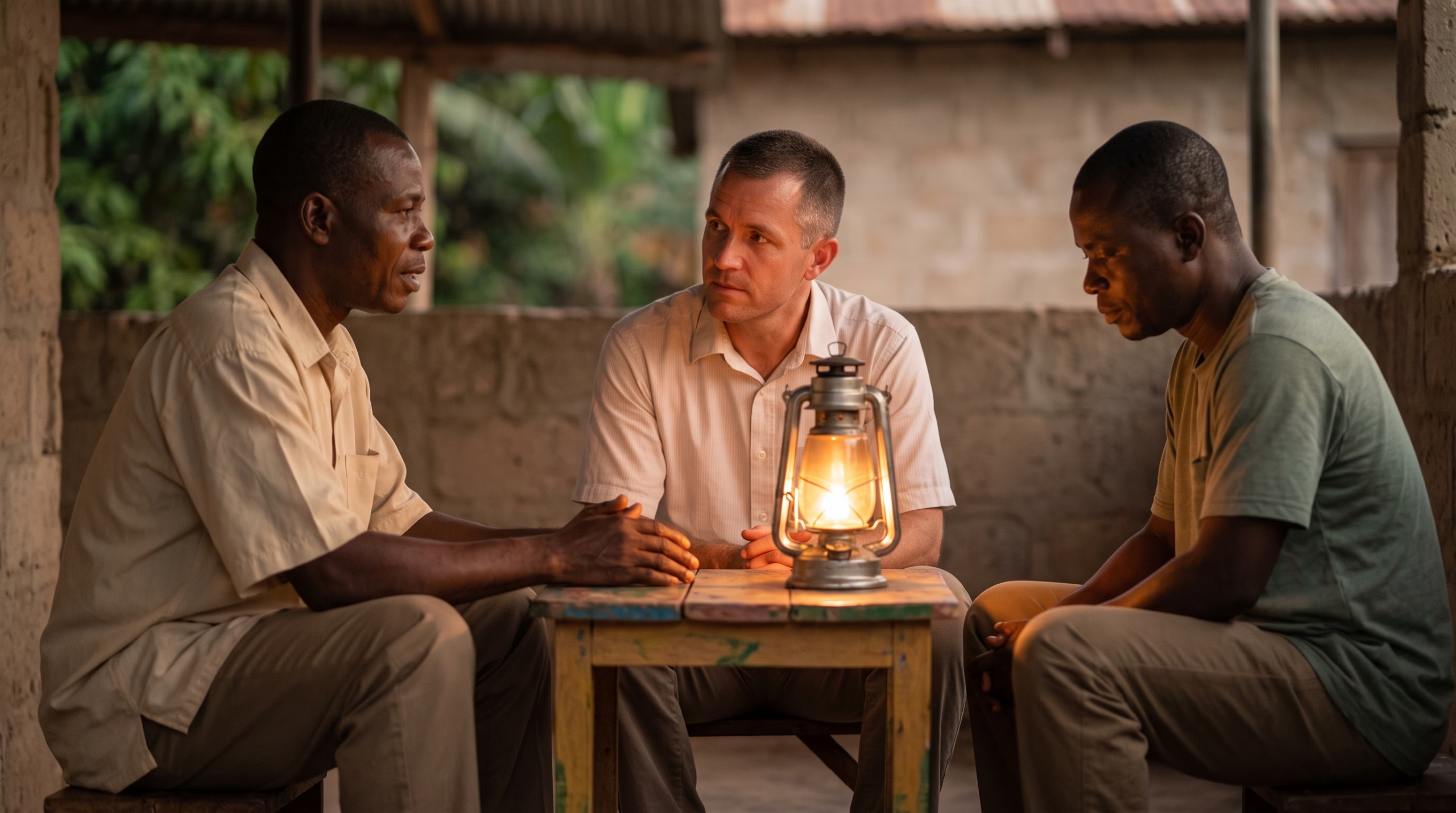
I remember a particular afternoon in a village outside Kumasi, Ghana. The air was thick with the dust of the dry season, and the sun beat down hard. My wife Laura and I were working to set up a new Bible study, and a misunderstanding had flared up between two of the men we were discipling. It was a small thing, really, about who had promised what for the meeting space. But it festered, and suddenly, the whole effort felt derailed. That day, I learned firsthand about the challenge and absolute necessity of forgiving like Jesus in Ghana, not just talking about it.
Planting churches in West Africa has a way of stripping away the comfortable illusions. You learn quickly that human nature, with all its flaws, travels across oceans. Conflict is not unique to America. It’s a universal problem, and how we handle it as believers is a universal testimony. We preach the KJV Bible, and the truth in it applies to every heart, everywhere.
The Raw Reality of Relationships on the Field
The mission field clarifies things quickly. It removes the padding. There are no stage lights and no weekly affirmation that you are doing well. There is only the work. You study again. You visit again. You preach again. You forgive again. You trust God again. The mission field does not reward drama. It rewards endurance.
That day in Kumasi, the argument escalated. Voices were raised. Accusations flew back and forth in Twi, a language I was still wrestling to master. I stood there, feeling a familiar knot tighten in my stomach. My first thought was to get angry, to demand they act like Christians. My second thought was, “Joe, you’ve probably done worse back home.” It was a quiet confession, but a necessary one. I realized I was just as prone to pride and quick judgment as anyone else.
Back home in Texas, problems were often fixed through systems: forms, policies, and departments. But in Africa, systems do not run things; relationships do. When those relationships fray, everything stops. It’s not just about getting a task done; it’s about maintaining the fabric of community. The cable did not get installed because of pressure. It got installed because of breakfast. Likewise, this conflict would not be solved by a rulebook. It needed grace. These kinds of challenges are part of the raw material of missionary life, and I write a lot about them in our blog, sharing lessons learned on the field.
What Does “Forgiving Like Jesus” Really Mean?
When we talk about forgiving like Jesus, we aren’t talking about forgetting the offense. That’s not how human memory works. What we are talking about is choosing to release the debt. It’s deciding that the person who hurt you no longer owes you anything for that wrong. It is a deliberate act of the will, often against every natural inclination.
The Bible is very clear on this. “And be ye kind one to another, tenderhearted, forgiving one another, even as God for Christ’s sake hath forgiven you” (Ephesians 4:32). This verse doesn’t say “forgive if they apologize” or “forgive if they deserve it.” It says “forgiving one another, even as God for Christ’s sake hath forgiven you.” That’s a high bar, y’all. God didn’t wait for us to clean up our act before He offered forgiveness. He offered it while we were yet sinners.
Holding onto bitterness is like drinking poison and expecting the other person to die. It eats away at you. It affects your sleep, your mood, and your testimony. On the mission field, it can absolutely destroy your work. You can’t effectively preach a gospel of grace and reconciliation if your own heart is full of resentment. The stakes are too high. We have a world to reach, and we cannot afford to be sidetracked by unresolved personal issues.
“Roughly 3.2 billion people have little to no access to the gospel. That’s more than 40% of the world’s population.”
IMB
The Long Walk of Reconciliation
Forgiveness is a decision; reconciliation is a process. You can forgive someone in your heart even if they never ask for it. But true reconciliation, rebuilding a broken relationship, takes two willing parties. In Ghana, where community ties are so strong, reconciliation is often expected and pursued with great patience.
After that incident in Kumasi, my wife Laura and I sat down with the two men separately. We listened to each side. It was messy. There were accusations, denials, and a lot of hurt. I realized that my role wasn’t to be a judge, but a peacemaker, modeling the very forgiveness we were teaching. We prayed with them. We reminded them of their shared purpose in Christ. It was a long conversation, one that stretched into the evening, lit by a single kerosene lantern.
Sometimes, reconciliation isn’t possible. The other person may refuse, or it might be unsafe. But even then, we are still called to forgive. We release them to God. We pray for them. That’s a hard truth, and one I’ve had to learn the hard way. It takes more grace than I possess on my own. It requires constant reliance on the Lord. When I need to dig deep into the meaning of these passages, I often turn to resources like Blue Letter Bible for in-depth study.
Learning Humility and Grace in Ghana
One of the humbling lessons of ministry, especially overseas, is seeing your own faults reflected back at you. I’ve had moments where my impatience, my cultural assumptions, or my own pride contributed to a misunderstanding. Sometimes, the hapless one in the absurd situation was me. I may have praised the Lord loud enough for the whole building to hear when I finally understood a complex Twi proverb, only to realize I’d missed the point entirely.
Missionary on Fire Podcast
Preserving the Legacy of Faithful Missionaries
The Missionary on Fire podcast features interviews with veteran missionaries, classic sermons from the field, and stories of God’s faithfulness across generations. If you love the heart behind these stories, you will love the podcast. New episodes regularly.
The Ghanaian believers taught me a lot about grace. They are incredibly resilient people, often facing hardships that would break most of us. Yet, they find joy. They show patience. They extend forgiveness quickly. I’ve watched men who had every right to be angry choose peace instead. Their faith is a genuine, living thing, forged in the crucible of daily life, and it often shames my own easy comforts.
The Lord Jesus said, “For if ye forgive men their trespasses, your heavenly Father will also forgive you” (Matthew 6:14). This isn’t a transactional deal. It’s a statement of spiritual reality. An unforgiving heart creates a barrier, not between us and God’s love, but between us and the freedom that comes from walking in His ways. It’s a reminder that our own need for forgiveness should motivate us to offer it freely to others. Forgiveness is not just for their benefit; it’s for ours.
Daily Choices for a Missionary Heart
Forgiveness is not a one-time event. It’s a daily commitment. Sometimes, I have to choose to forgive the same person for the same offense, day after day. It’s like sweeping the floor; you do it regularly, not just once. This is especially true when you are living and working in close quarters, dealing with ongoing challenges and different personalities, as we do in our church planting efforts.
Unforgiveness is a poison that seeps into every aspect of ministry. It hinders prayer, stifles evangelism, and tears apart the local church. We can’t afford that. We’re called to be lights in a dark world, and a divided, bitter church shines dimly at best. If you’re struggling with this, remember that the first step is often to admit it to God and ask for His strength. You might find more practical advice and encouragement in our blog, where we share many of these field experiences.
The impact of a forgiving heart extends beyond just the personal. It sets an example. It shows the lost world what the love of Christ truly looks like. When we choose to forgive, we are demonstrating the power of the gospel to transform lives and mend relationships. It’s a powerful testimony to the grace of God. If you’re interested in how this plays out in real missionary life, you might enjoy learning more about our missionary internships.
That day in Kumasi, after much prayer and patient conversation, those two men eventually shook hands. It wasn’t perfect, but a wound began to heal. The Bible study went forward. It was a victory, not just for them, but for me, as I continued my own journey of forgiving like Jesus in Ghana. This walk of faith requires constant attention to our hearts. For more stories and practical truths from the mission field, I invite you to check out our blog. We’re always sharing what God is teaching us, even when it’s hard.

Joe Consford is a Baptist missionary serving in Ghana, West Africa, with his wife Laura. He writes about missionary life, missions training, and the work of the Gospel in West Africa at consfords.com.
Frequently Asked Questions
What does it mean to forgive like Jesus in a practical sense?
Forgiving like Jesus practically means choosing to release the debt of an offense, deciding that the person who hurt you no longer owes you anything for that wrong. It’s a deliberate act of the will, often against natural inclinations, focusing on grace rather than demanding restitution or holding onto anger. This is crucial when forgiving like Jesus in Ghana.
How do cultural differences impact the practice of forgiveness on the mission field?
Cultural differences can significantly impact forgiveness. In many West African cultures, relationships and community harmony are paramount, making unresolved conflict deeply disruptive. Unlike Western approaches that might rely on systems, forgiveness on the field often requires direct, personal engagement and a willingness to prioritize relational repair over individual grievances, as seen when forgiving like Jesus in Ghana.
What challenges did missionaries face when teaching forgiveness in Ghana?
Missionaries in Ghana faced challenges like language barriers and the deeply personal nature of conflict. They learned that while Western societies might use policies to resolve disputes, in Ghana, strong relationships are key. Teaching forgiveness meant modeling grace and understanding that human nature’s flaws, including pride and judgment, are universal, requiring consistent application of biblical principles.
How does the Bible define forgiveness in the context of missionary work?
The Bible defines forgiveness not as forgetting an offense, but as a conscious choice to release the emotional and spiritual debt owed by the offender. In missionary work, this means actively choosing grace and releasing resentment, even when the hurt is real. This deliberate act of the will is essential for maintaining community and testifying to Christ’s love, especially when forgiving like Jesus in Ghana.