
Missions With the Consfords
August 16, 2026
I remember standing at the Accra airport, waving goodbye to a few of our church folks, knowing it would be months before we saw them again. Laura and I had…
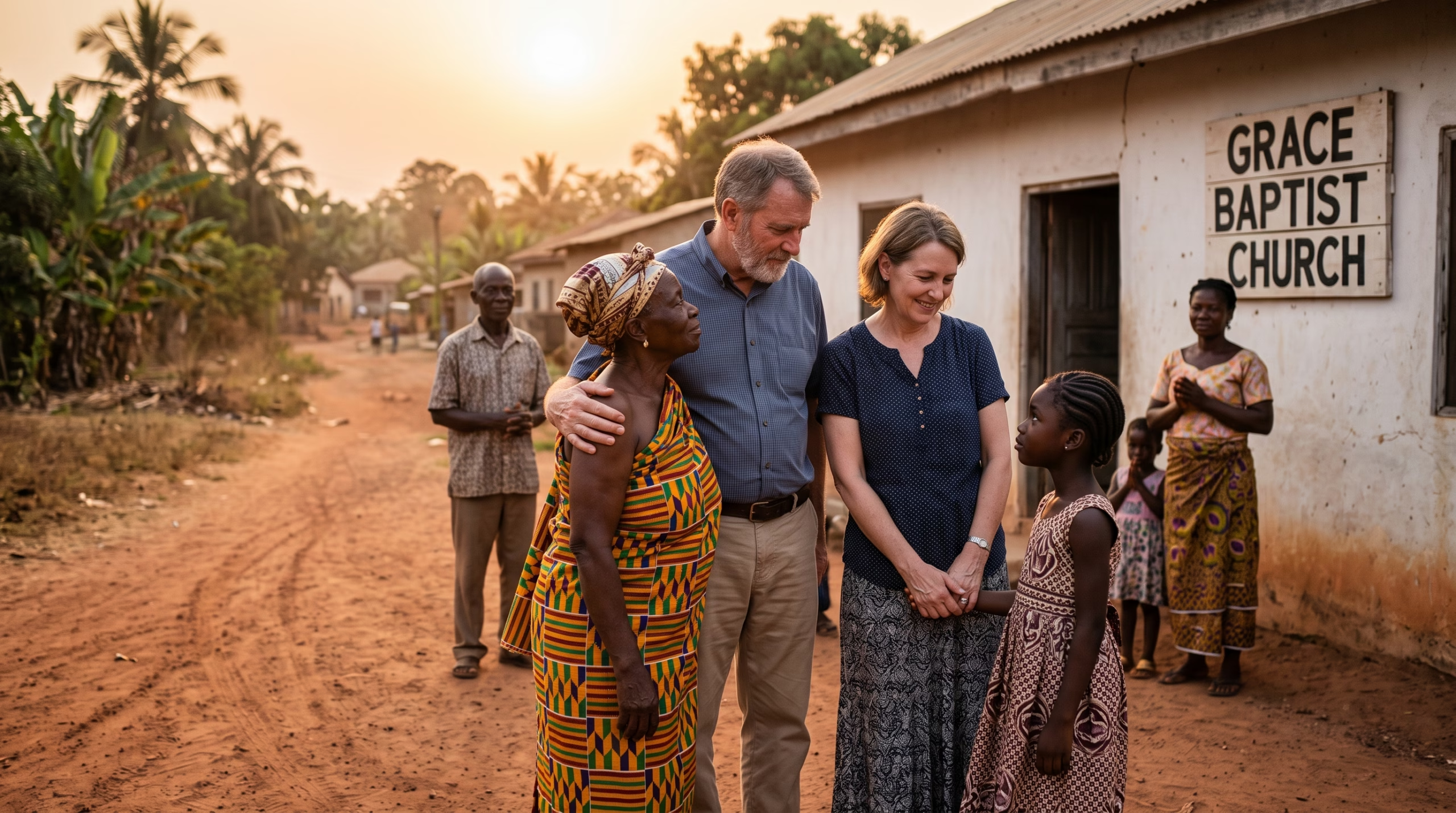
I remember standing at the Accra airport, waving goodbye to a few of our church folks, knowing it would be months before we saw them again. Laura and I had just finished another term on the field. This was our time to leave, to step away from the daily work of planting churches in Ghana. That moment, heavy with goodbyes and anticipation, is the beginning of what it means to be missionaries on furlough.
Furlough is a strange thing. You spend years pouring your life into a place, a people, a language, and then suddenly, you’re packing bags, saying goodbye, and flying across an ocean. It’s necessary. It’s commanded. But it’s never easy. The mission field demands everything you have, and when it’s time to step back, your heart feels like it’s being stretched across two continents.
The Weight of Leaving: What Furlough Feels Like
Leaving Ghana for furlough always feels like tearing a piece of yourself away. We had just broken ground on a new church building, and the children in our Sunday school were just starting to grasp some of the deeper truths of the Bible. There was always more to do, more souls to reach, more disciples to train. The work never truly ends, not really.
I’ve learned to embrace the goodbyes, but that doesn’t make them any lighter. You hug the brothers and sisters you’ve discipled, the kids you’ve watched grow up, the families you’ve shared meals with for years. You promise to pray, to write, to return. You see the concern in their eyes, the quiet worry about who will pick up the slack while you’re gone. Sometimes I feel like I’m abandoning them. That’s a quiet confession. That went about as well as you would expect.
The Bible tells us, “Let us not be weary in well doing: for in due season we shall reap, if we faint not” (Galatians 6:9). That verse always comes to mind during those tough goodbyes. It reminds me that this isn’t quitting; it’s part of the process. It’s resting to be able to sow again. It’s trusting God to keep working even when our hands aren’t physically on the plow.
Re-entry Shock and Reverse Culture Shock
Landing back in America after years in Ghana is like stepping into a different dimension. The roads are smooth. The water runs hot. Every store has more choices than you could possibly imagine. I remember standing in a grocery store aisle, looking at 27 different kinds of cereal, and just feeling overwhelmed. Back home, you get what’s available. Here, you get too many choices.
There’s a subtle disorientation that comes with it. You forget how to drive on multi-lane highways. You forget that you can drink water directly from the tap without boiling it first. You forget that the internet is supposed to be fast and reliable. My wife Laura and I often just stare at things, marveling at the sheer convenience. At that point, I looked at my wife and asked if we had made a wrong turn and wound up in Africa. It’s a different kind of challenge, navigating the familiar that has become foreign.
One time, I tried to pay for something with a stack of Ghanaian cedis out of habit. The cashier just stared at me. Nothing. I quickly pulled out a dollar bill, laughing at my own mistake. It’s those little moments that remind you just how deeply the mission field changes your daily patterns. Your brain has to re-wire itself for American efficiency and abundance. We talk a lot about these kinds of experiences on my show, Missionary on Fire, because they are real. They are part of the journey.
The Purpose of Furlough: Rest, Reconnect, Report
Furlough isn’t a vacation. It’s a vital part of missionary life, a three-pronged season of rest, reconnecting, and reporting. First, there’s the rest. The mission field is relentless. It takes a toll physically, emotionally, and spiritually. You’re constantly pouring out, dealing with challenges, and living under a level of stress that isn’t sustainable indefinitely. Furlough gives you a chance to breathe, to sleep, to slow down. It’s about refilling the tank so you don’t burn out.
Then comes the reconnecting. This is crucial for family. Our kids get to spend time with grandparents, cousins, and friends they only see every few years. Laura and I get to simply be a couple, without the constant demands of ministry. We also reconnect with our home church and fellow believers, strengthening those vital ties. Missions is a team effort, and furlough reminds us of the team we have back home.
Finally, there’s the reporting. We travel to our supporting churches, sharing what God is doing in Ghana. We tell stories of new converts, of churches being planted, of lives changed by the gospel. This isn’t just about fundraising; it’s about accountability and partnership. Our churches pray for us, give to us, and they deserve to know the fruit of their investment. It helps them feel connected to the work. It helps us remember we don’t serve alone.
“Roughly 70% of missionaries will not finish their first term. Of those who do, 75% will not make it to a second term.”
International Mission Board
That statistic is a stark reminder of why furlough is so important. It’s not a luxury; it’s a necessity for endurance. It’s a proactive step against burnout, a way to ensure that missionaries can stay on the field for the long haul. Without proper rest and support, the work becomes unsustainable. We need a break. We need to reset. We need to remember why we started.
Building Bridges: Sharing the Vision
Deputation, or traveling to churches to share our ministry, is a unique experience. You stand before dozens of congregations, telling the same stories, sharing the same burden, answering the same questions. You learn to be concise. You learn to trust the Holy Spirit to move hearts. We show pictures of our Ghanaian church, of the people we serve, of the challenges we face. We try to bring Ghana right into their sanctuaries.
Missionary on Fire Podcast
Preserving the Legacy of Faithful Missionaries
The Missionary on Fire podcast features interviews with veteran missionaries, classic sermons from the field, and stories of God’s faithfulness across generations. If you love the heart behind these stories, you will love the podcast. New episodes regularly.
Sometimes, people have misconceptions about missionaries on furlough. They might think we’re just visiting, or that the work isn’t serious. We try to gently correct those ideas. We explain the daily grind, the spiritual warfare, the joy of seeing souls saved. We emphasize that their prayers and financial support are direct investments in eternity. You see, “how shall they hear without a preacher? and how shall they preach, except they be sent?” (Romans 10:14-15).
We’ve found that the best way to build bridges is through genuine relationships. We don’t just give a presentation and leave. We stay for fellowship meals. We answer questions about life in West Africa. We pray with individuals. We share our prayer letters. It’s about connecting on a human level, letting them see our hearts for the Lord and for the people of Ghana. When they see that, they understand the call better. They feel a part of it. They become partners in the gospel.
The Call Back: Ghana in Your Heart
As furlough progresses, a new feeling begins to emerge: the yearning to return. You miss the heat, the dust, the vibrant colors, the sound of the local language. You miss the faces of your church members. You miss the specific smell of the market. You miss the challenges, even. It’s like a piece of your heart is still there, across the ocean, waiting for you to come back and claim it.
Every furlough teaches us something new. We learn patience. We learn to appreciate the simple things back home. We learn to trust God’s timing. But mostly, we learn again that Ghana is home. It’s where God called us. It’s where the work is. The comfort of America is good, but the calling to Ghana is better. It’s a pull that grows stronger with each passing week.
We are missionaries on furlough, but we are always missionaries. The call doesn’t pause. It just shifts its focus for a season. We take the lessons learned, the rest received, and the connections renewed, and we carry them back to the field. Our experiences, good and bad, feed into how we preach, how we live, and how we lead. That’s why I wrote my book, “Missionary on Fire,” to share these truths.
Returning to Ghana is always a joyous occasion. The greetings are loud, the hugs are long, and the smiles are genuine. You’re back where you belong, ready to pick up the work again with renewed strength. It’s hard to leave, and it’s hard to come back. But it’s worth it. Absolutely.
The journey of a missionary on furlough is a cycle of leaving, resting, and returning, all guided by God’s faithfulness. It’s a reminder that we serve a God who sustains us, even when the road is long and the challenges are great. If you have a burden for missions, or simply want to learn more about the daily realities of church planting in West Africa, I invite you to explore more about our ministry. You can always connect with us and learn how you can be a part of what God is doing in Ghana.

Joe Consford is a Baptist missionary serving in Ghana, West Africa, with his wife Laura. He writes about missionary life, missions training, and the work of the Gospel in West Africa at consfords.com.
Frequently Asked Questions
What is a missionary furlough and why is it necessary?
A missionary furlough is a period of temporary leave from the mission field, typically for rest, fundraising, and reconnecting with supporting churches and family. It’s essential for preventing burnout, allowing missionaries to recharge, and maintaining vital connections that sustain their work long-term. Missionaries on furlough often share updates and seek renewed support.
What are the common emotional challenges missionaries face when leaving the field for furlough?
Missionaries often experience a profound sense of loss and guilt when leaving the field. Saying goodbye to those they’ve discipled and served can feel like abandonment, especially when ongoing projects are left behind. This emotional weight is a significant part of being missionaries on furlough, despite knowing the break is necessary.
How do missionaries cope with reverse culture shock upon returning home?
Coping with reverse culture shock involves acknowledging the disorientation and giving oneself grace. Missionaries often find everyday conveniences overwhelming and struggle to reintegrate into a society that feels both familiar and foreign. Connecting with other returning missionaries and having a strong support system can help navigate this challenging transition.
What specific practical adjustments do missionaries make when transitioning from Ghana to life in America?
Practical adjustments include relearning driving on multi-lane highways, adapting to abundant consumer choices, and appreciating reliable infrastructure like tap water and fast internet. These seemingly minor differences can be disorienting after years in a different environment, highlighting the stark contrast in daily living standards.