
Missions With the Consfords
July 10, 2026
I remember the first time I tried to rush a greeting in a Ghanaian village. I was fresh off the plane, full of American urgency, and keen to get to…
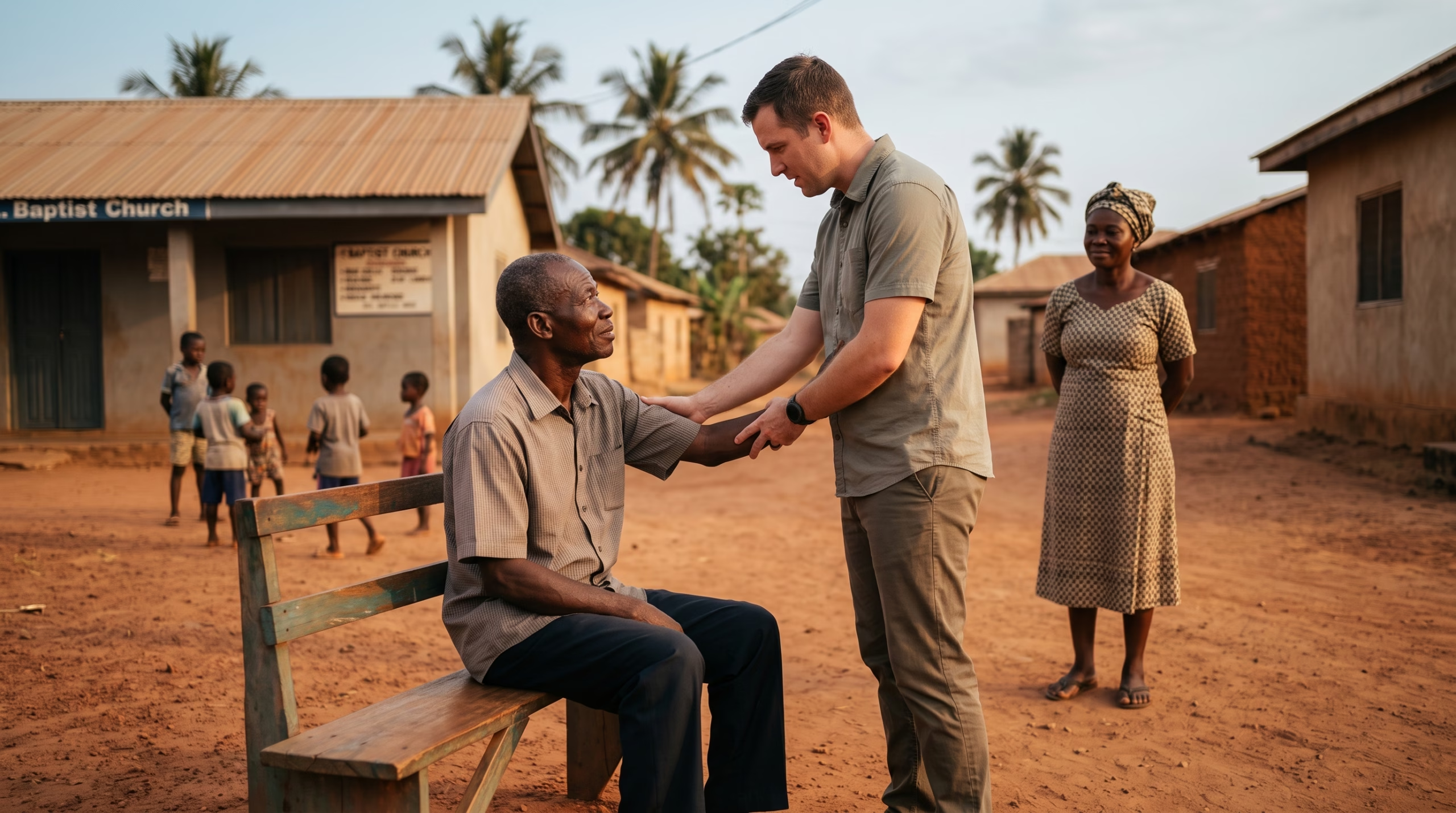
I remember the first time I tried to rush a greeting in a Ghanaian village. I was fresh off the plane, full of American urgency, and keen to get to the point. I shook hands quickly, gave a hurried “How are you?” and started talking business. The men I was with just looked at me, a polite but firm silence hanging in the air. That went about as well as you would expect. It was a clear, immediate lesson in Ghana culture for missionaries: you slow down, you show respect, and you learn the rhythms of the people.
Ghana is a beautiful country, full of warm, welcoming people. But it’s also a place with deep traditions and a rich culture that is very different from what most folks in the West are used to. If you’re going to serve the Lord effectively in Ghana, you’ll need more than just a passport and a calling. You’ll need to learn to listen, to observe, and to adapt. It’s not about changing who you are, but about understanding how to present the unchanging Gospel in a way that truly connects.
The Ghanaian Greeting: More Than Just Hello
Back home, a handshake and a quick “Howdy” might do the trick. In Ghana, a greeting is a whole conversation in itself. You don’t just say hello; you ask about their journey, their family, their health. You take your time. You inquire about the children, the spouse. This isn’t just polite filler; it’s a vital exchange that establishes respect and acknowledges the other person’s humanity and connections.
Always use your right hand for greetings, for giving or receiving items, and for eating. The left hand is generally considered unclean. When addressing elders or those in authority, it’s customary to use titles like “Elder,” “Pastor,” “Mama,” or “Papa.” These small acts of deference build bridges. They show that you value their customs and, by extension, them as individuals. This foundational respect, this willingness to learn and adapt, is the very spirit of what it means to be a missionary on fire.
The Rhythm of Relationships, Not Schedules
If you’re coming from a culture where punctuality is king, Ghana will teach you patience. I’ve sat for hours waiting for a meeting to start, or for a repairman to show up. Sometimes, they don’t show up at all that day. The concept of time is often fluid, and “African time” isn’t just a stereotype; it’s a different approach to life where relationships often take precedence over strict adherence to a clock.
I learned quickly that things don’t get done because of a rigid schedule or a formal system. They get done because of relationships. The cable did not get installed because of pressure. It got installed because of breakfast. You spend time with people. You share meals. You talk about life. You build trust. This is how you earn the right to be heard. “But let patience have her perfect work, that ye may be perfect and entire, wanting nothing” (James 1:4). That verse is a good reminder for anyone serving in West Africa. You study again. You visit again. You preach again. You forgive again. You trust God again. The mission field does not reward drama. It rewards endurance.
The Embrace of Community and Family
Ghanaian society is deeply communal. The concept of “family” extends far beyond immediate blood relatives to include cousins, aunts, uncles, and even close friends or neighbors. Your identity is often tied to your family and community. Decisions are often made collectively, with the well-being of the group taking precedence over individual desires. Hospitality is a cornerstone of this culture; you will often be invited to share meals, even if resources are scarce.
When you are invited into someone’s home, it is a great honor. To refuse without a very good reason can be seen as an insult. We have shared countless meals of fufu and banku with families who had very little, yet offered everything they had with open hearts. This communal spirit means that your ministry isn’t just to individuals, but to families and communities. Understanding these bonds is crucial for planting churches that can thrive and grow. This collective identity is a powerful force.
“Sub-Saharan Africa has the world’s largest Christian population, with over 600 million adherents, and is projected to have the largest share of the global Christian population by 2060.”
Pew Research Center
This statistic highlights the vast potential for ministry in the region, but also the existing spiritual landscape that missionaries must navigate. It’s a place where faith is often public and deeply integrated into daily life, which presents both opportunities and unique challenges for sharing the pure Gospel.
Respecting Authority and Understanding the Spiritual Landscape
Respect for authority figures—elders, chiefs, parents, and pastors—is ingrained in Ghanaian culture. Chiefs, though they may not hold direct political power, still command immense respect and influence in their communities. It’s always wise to pay your respects to local leaders and seek their blessing for your work. This shows humility and acknowledges the established order, which can open doors for ministry.
Missionary on Fire Podcast
Preserving the Legacy of Faithful Missionaries
The Missionary on Fire podcast features interviews with veteran missionaries, classic sermons from the field, and stories of God’s faithfulness across generations. If you love the heart behind these stories, you will love the podcast. New episodes regularly.
The spiritual realm is also very real and tangible to most Ghanaians. Traditional beliefs in spirits, ancestors, and witchcraft often coexist with Christian faith, leading to syncretism. As missionaries, we must be clear about the sufficiency of Christ and the power of the Holy Spirit, addressing these spiritual strongholds head-on with truth and love. “For we wrestle not against flesh and blood, but against principalities, against powers, against the rulers of the darkness of this world, against spiritual wickedness in high places” (Ephesians 6:12). This verse isn’t just a theological concept in Ghana; it’s a daily reality.
Learning how people view the spiritual world helps us share the Gospel more effectively. It’s not enough to say Jesus saves. You must show that He saves from every fear, every curse, and every traditional bondage. We talk more about these challenges and how to face them with God’s power on our blog.
Adapting to Life’s Realities: Resilience and Humility
Life in Ghana will teach you adaptability. Power outages are common. Water can be scarce. Roads can be rough. Things break down, often at the most inconvenient times. There’s a certain level of improvisation required for daily living that can be frustrating if you’re not prepared for it. I’ve fixed a flat tire in the middle of nowhere, negotiated for fuel when the pump was out, and preached in sweltering heat with no fan. Sometimes I think back to those early days, and I wonder if I ever truly left Africa, or if it just followed me home.
Your diet will change. You’ll eat a lot of local staples like fufu, banku, and kenkey, often with your right hand. Your wardrobe will likely become more modest. You learn to appreciate the simple things and to find joy in unexpected places. This kind of resilience, this readiness for anything, is part of what it means to live a life truly Missionary on Fire. It strips away the non-essentials and forces you to rely on God in ways you never thought you would.
This process of adaptation builds character. It teaches humility. It reminds you that you are not in control, but God is. It helps you understand the struggles of the people you serve, making your witness more authentic and your compassion more genuine. The International Mission Board has great resources on practical preparation for missionaries, and I highly recommend looking into them for more details on daily life and cross-cultural ministry.
Understanding Ghana culture for missionaries is not a one-time study; it’s a lifelong journey of learning and growing. It requires humility, patience, and a deep love for the people. You will make mistakes. You will feel awkward. But as you submit to the process and lean on the Lord, He will use you mightily. He will open doors and hearts in ways you never imagined. If you’re feeling a call to missions, or just want to understand more about what it takes to serve God on the field, I encourage you to check out my book, Missionary on Fire. It’s full of lessons learned the hard way, and it might just be the encouragement you need for your own journey.

Joe Consford is a Baptist missionary serving in Ghana, West Africa, with his wife Laura. He writes about missionary life, missions training, and the work of the Gospel in West Africa at consfords.com.
Frequently Asked Questions
What are the most important cultural norms for missionaries to know in Ghana?
The most important cultural norms for Ghana culture for missionaries involve respectful greetings, understanding fluid time concepts, and prioritizing relationships. Always use your right hand for interactions, address elders with titles, and be prepared for meetings to run on ‘African time’ rather than strict schedules. Patience is key.
How should missionaries approach greetings in Ghanaian villages?
Missionaries should approach greetings in Ghanaian villages by taking their time. Don’t rush. Inquire about the person’s journey, family, and health. This establishes respect and acknowledges their humanity. Using titles like ‘Elder’ or ‘Mama’ for those in authority is also customary and builds bridges.
How does the concept of ‘African time’ impact missionary work in Ghana?
The concept of ‘African time’ means schedules are often fluid, and punctuality is less rigid than in Western cultures. For Ghana culture for missionaries, this means prioritizing relationships over strict adherence to a clock. Be prepared for delays, and understand that building trust through shared meals and conversations often facilitates progress more than formal appointments.
What specific gestures or customs should missionaries avoid in Ghana?
Missionaries in Ghana should specifically avoid using their left hand for greetings, giving/receiving items, or eating, as it’s considered unclean. Also, avoid rushing conversations or immediately getting to ‘business’ without first engaging in a proper, unhurried greeting. These small acts of deference are vital for effective Ghana culture for missionaries.