
Missions With the Consfords
November 4, 2026
The Missiology of the Old Testament: Lessons from the Field In this article: The Heart of an Old Testament Missionary The Old Testament Model for Missionary Work The Role of…
The Missiology of the Old Testament: Lessons from the Field
The Heart of an Old Testament Missionary
I’ll never forget the time Matt Litson, a missionary in Ivory Coast, rented a former bar in the community of Belleville and transformed it into a church. With a lot of scrubbing and prayer, God claimed new ground. But what struck me most was the man who was once Mr. Kesse, the father of a rebellious young boy. He had accused me of being a witch, trying to cast spells on his son through my sermons. Yet, as he witnessed the transformation in his child’s life, he began to understand the true power of Jesus. He realized that it wasn’t witchcraft, but salvation that had changed his son’s heart. And soon, he too felt the same transformation. Mr. Kesse’s story reminds me that the best “proof” of the gospel is not in clever arguments, but in changed lives.
The Old Testament Model for Missionary Work
As we look to the Old Testament for models of missionary work, we see that the Israelites were called to be a light to the nations, to proclaim the gospel to all people. But we also see that they were not immune to the cultural and spiritual influences of the people they encountered. In fact, they often found themselves struggling to understand and relate to the cultures around them. Yet, despite these challenges, they remained faithful to their calling, and in doing so, they were able to bring about significant spiritual changes in the lives of those around them.
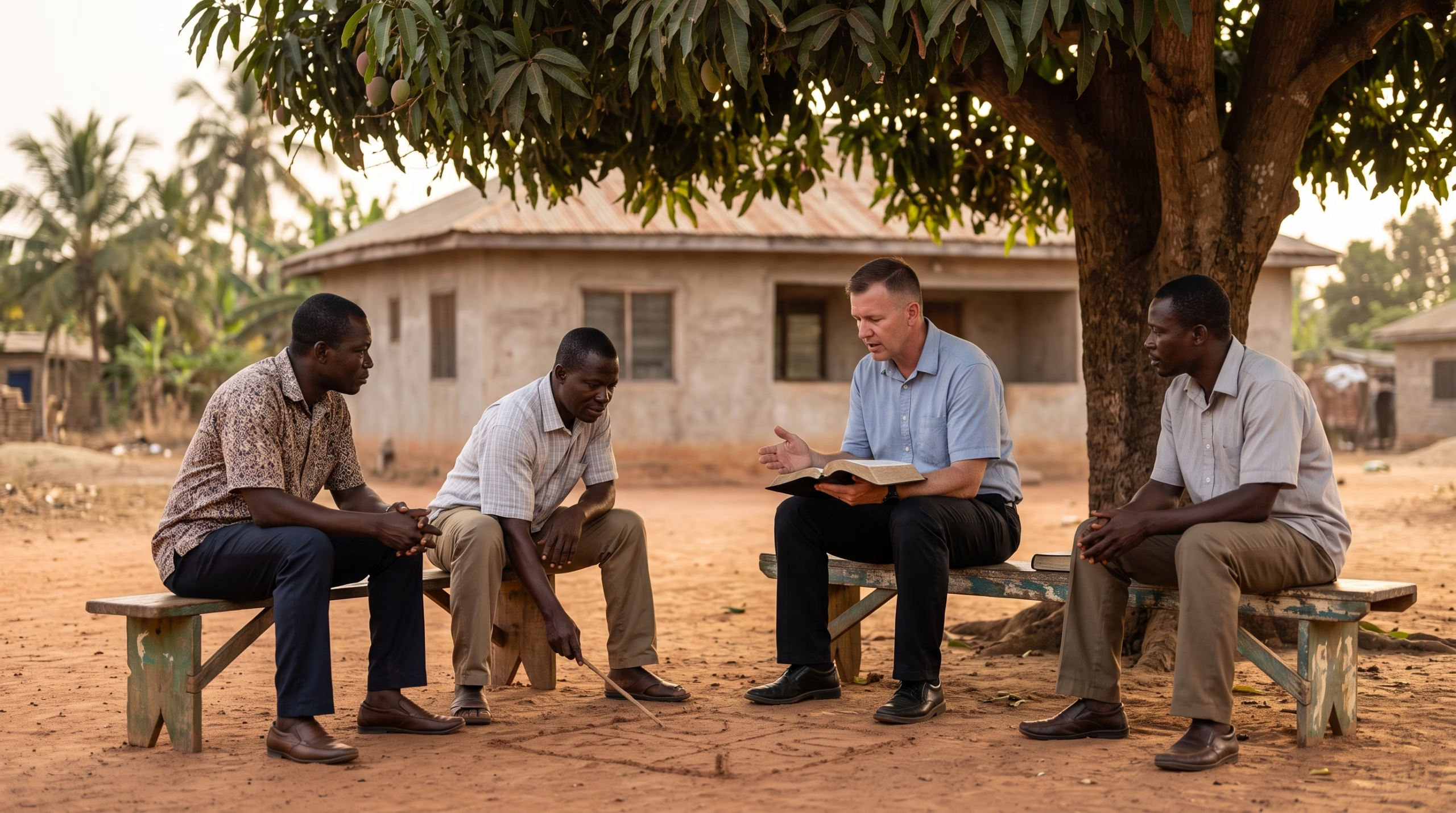
One of the key principles we can learn from the Old Testament is the importance of living among the people we are trying to reach. The Israelites were not content to simply stay in their own communities, but they went out into the world, living among the people they were trying to reach. This allowed them to build relationships, to understand the culture and customs of the people, and to share the gospel in a way that was relevant and meaningful to them.
As missionaries, we must be willing to immerse ourselves in the cultures and communities we are serving. We must be willing to learn from the people, to listen to their stories, and to understand their perspectives. This is not just a matter of cultural sensitivity, but a matter of obedience to God’s call. For “the Son of Man came not to be served but to serve, and to give his life as a ransom for many” (Mark 10:45).
As we seek to apply the principles of the Old Testament to our own missionary work, we must remember that the gospel is not just a message, but a power that can transform lives. We must be willing to share the gospel in a way that is relevant and meaningful to the people we are serving, and we must be willing to trust in the power of the Holy Spirit to bring about spiritual changes in the lives of those around us.
The Role of the Church in Missionary Work
As we look to the Old Testament, we see that the church played a central role in missionary work. The Israelites were a community of believers who were called to be a light to the nations. They were not just individuals, but a collective body, working together to bring about the spread of the gospel. And it is this same principle that is at work in the church today. We are not just individual missionaries, but a collective body, working together to bring about the spread of the gospel.
The statistic is clear: “In 2020, an estimated 2.5 billion people, or 34% of the global population, identified as Christian, but only 2.2 billion, or 29% of the global population, identified as Protestant.” (Source: Pew Research Center) This means that there is still much work to be done in spreading the gospel, and the church must play a central role in this effort.
As we seek to build the church and to spread the gospel, we must remember that we are not just building a institution, but a community of believers who are called to be a light to the nations. We must be willing to work together, to support one another, and to trust in the power of the Holy Spirit to bring about spiritual changes in the lives of those around us.
Lessons from the Field: The Importance of Relationship-Building
As I reflect on my own experiences as a missionary, I am reminded of the importance of relationship-building in spreading the gospel. It is not enough to simply share the gospel with people, we must also take the time to build relationships with them, to understand their culture and customs, and to share the gospel in a way that is relevant and meaningful to them.
I remember one particular experience where I had the opportunity to share the gospel with a man named Omega, a famous comedian from television. He was initially hesitant to listen, but after some time, he began to open up and eventually received the gospel. His wife followed soon after, and they both became faithful servants in the church. This experience taught me the importance of taking the time to build relationships with people, to understand their culture and customs, and to share the gospel in a way that is relevant and meaningful to them.
As we seek to build relationships with people, we must remember that we are not just sharing a message, but a power that can transform lives. We must be willing to trust in the power of the Holy Spirit to bring about spiritual changes in the lives of those around us, and we must be willing to follow the example of Jesus, who “went about doing good and healing all who were under the power of the devil” (Acts 10:38).
Conclusion: The Power of Jesus in Changed Lives
As we look to the Old Testament for models of missionary work, we see that the power of Jesus is not just in changed lives, but in the lives of those who are willing to take risks and share the gospel with others. We see that the church must play a central role in this effort, and that the role of the church is not just to save souls, but to make disciples. And we see that the best “proof” of the gospel is not in clever arguments, but in changed lives.
For more information on missionary work and the power of Jesus in changed lives, please visit our Missionary on Fire page.
For more information on the church and its role in missionary work, please visit our About page.
For more information on the importance of relationship-building in spreading the gospel, please visit our Connect page.
Missionary on Fire Podcast
Preserving the Legacy of Faithful Missionaries
The Missionary on Fire podcast features interviews with veteran missionaries, classic sermons from the field, and stories of God’s faithfulness across generations. If you love the heart behind these stories, you will love the podcast. New episodes regularly.
For more information on the role of the church in making disciples, please visit our Lausanne page.
For more information on the power of Jesus in changed lives, please visit our Blue Letter Bible page.
“In 2020, an estimated 2.5 billion people, or 34% of the global population, identified as Christian, but only 2.2 billion, or 29% of the global population, identified as Protestant.” (Source: Pew Research Center)
As we look to the future of missionary work, we must remain committed to the principles of the Old Testament, living among the people we are trying to reach, building relationships, and sharing the gospel in a way that is relevant and meaningful to them. And we must remember that the best “proof” of the gospel is not in clever arguments, but in changed lives.
As I reflect on the story of Mr. Kesse, I am reminded that the power of Jesus is not just in changed lives, but in the lives of those who are willing to take risks and share the gospel with others. We see that the church must play a central role in this effort, and that the role of the church is not just to save souls, but to make disciples. And we see that the best “proof” of the gospel is not in clever arguments, but in changed lives.
When people first hear the gospel, they often look for explanations that make sense in their cultural context. In Ivory Coast, where animism and witchcraft are common beliefs, a sudden spiritual change is often credited to sorcery. But what Mr. Kesse witnessed, first in his son, then in others, and finally in himself, was not a spell. It was salvation. Jesus does not need smoke or mirrors to change a life. He works from the inside out. What no education system, parenting method, or discipline could fix in his son, Jesus transformed with mercy and grace.
Mr. Kesse thought he was studying a witch, but God was writing a testimony. This story reminds me that the best “proof” of the gospel is not in clever arguments; it is in changed lives. “Therefore if any man be in Christ, he is a new creature: old things are passed away; behold, all things are become new.” (2 Corinthians 5:17)
As we seek to apply the principles of the Old Testament to our own missionary work, we must remember that the gospel is not just a message, but a power that can transform lives. We must be willing to share the gospel in a way that is relevant and meaningful to the people we are serving, and we must be willing to trust in the power of the Holy Spirit to bring about spiritual changes in the lives of those around us.
The story of Mr. Kesse is a powerful reminder of the importance of living among the people we are trying to reach, building relationships, and sharing the gospel in a way that is relevant and meaningful to them. We must be willing to immerse ourselves in the cultures and communities we are serving, to learn from the people, to listen to their stories, and to understand their perspectives.

Joe Consford is a Baptist missionary serving in Ghana, West Africa, with his wife Laura. He writes about missionary life, missions training, and the work of the Gospel in West Africa at consfords.com.
Frequently Asked Questions
What is the key principle of Old Testament missionary work?
The key principle is to live among the people you are trying to reach and trust in the power of the Holy Spirit to bring about spiritual changes in their lives.
How can I apply the Old Testament model of missionary work to my own ministry?
You can apply it by immersing yourself in the culture and community you are serving, learning from the people, and sharing the gospel in a way that is relevant and meaningful to them.
What is the role of the church in Old Testament missionary work?
The church played a central role in Old Testament missionary work, providing a platform for the gospel to be shared and for spiritual changes to take place.
How can I ensure that my missionary work is effective in transforming lives?
You can ensure that your missionary work is effective by trusting in the power of the Holy Spirit to bring about spiritual changes in the lives of those around you, and by being willing to share the gospel in a way that is relevant and meaningful to the people you are serving.