Missions With the Consfords
September 23, 2026
I remember the first time we tried to reach the small village of Kpalime, tucked deep in the Volta Region. The path was barely a goat trail, and the language…
I remember the first time we tried to reach the small village of Kpalime, tucked deep in the Volta Region. The path was barely a goat trail, and the language barrier felt like a concrete wall. The chief was polite but distant, and the village elders just observed us with quiet curiosity. Effective strategies reaching unreached people groups were clearly essential for the Gospel to move forward. You can’t just show up and expect things to happen.
My wife, Laura, and I have learned a lot since those early days in Ghana. We’ve seen what works and what doesn’t. We’ve stumbled, picked ourselves up, and kept going. While the methods might change, the mission remains the same: to take the good news of Jesus Christ to those who have never heard it. This means we have to think, pray, and work with purpose.
Understanding the Ground: Why Local Knowledge Matters
You can’t preach to a people you don’t understand. That’s a lesson I learned the hard way, more than once. When we first arrived in Ghana, I thought I could just translate my sermons and deliver them. That went about as well as you would expect. The words were there, but the meaning often got lost, or worse, completely misunderstood.
The mission field clarifies things quickly. It removes the padding. You have to learn the language, not just enough to get by, but enough to share your heart. You need to understand the culture, the history, the traditions, and the unspoken rules. This takes time. It takes humility. It means sitting, listening, and asking questions, even when you feel foolish. It means eating the local food, attending ceremonies, and just being present in the community. You have to become a student before you can be a teacher.
Back home, we often rely on systems and programs. However, in Ghana, relationships run things, not systems. Getting a new well dug, starting a Bible study, or even just getting a ride to the next town often comes down to who you know and the trust you’ve built. We’ve seen doors open for the Gospel only after years of consistent presence and genuine friendship. We aim to be genuine neighbors. This foundation of local knowledge and relationships is one of the most important strategies reaching unreached people groups.
The Long Game: Patience and Persistence in Ministry
The mission field does not reward drama. It rewards endurance. We once spent over a year just visiting a small fishing village, building relationships, helping with practical needs, and sharing stories from the Bible. We didn’t see a single convert for a long time. There were days I wondered if we were making any difference at all.
But we kept going back to that village. We studied the Bible with them again. We visited them again. We prayed for them again. We forgave them again. We trusted God again.
“There are still more than 7,000 unreached people groups in the world today, representing over 3 billion individuals who have little to no access to the Gospel.”
International Mission Board
This kind of work requires a deep well of patience. It means you don’t give up when things are hard, or when progress is slow. It means you keep showing up, even when you feel like you’re hitting a wall. The Apostle Paul knew this kind of persistence. He wrote in Galatians 6:9, “And let us not be weary in well doing: for in due season we shall reap, if we faint not.” That verse has been a constant encouragement to us. We cannot faint. We must keep working, keep praying, and keep believing that God will bring the harvest in His perfect timing. For more stories about how these strategies play out day-to-day, you can always check out our blog.
Building Bridges: Practical Strategies Reaching Unreached People Groups
Sometimes, the most effective way to share the Gospel isn’t with words first, but with deeds. We’ve found that meeting felt needs opens doors and builds trust faster than any sermon ever could. This isn’t a bait-and-switch; it’s genuine compassion that shows the love of Christ in action. We are trying to help people live better lives, here and now, which points them to the One who gives abundant life.
Community Development and Education
One of our key strategies has been through community development. We’ve helped villages dig boreholes for clean water, which is a massive blessing in places where water is scarce and often contaminated. We’ve worked on building small schools or supporting existing ones. Laura has spent countless hours teaching children English and helping with basic literacy programs. These efforts are about demonstrating the practical love of God. They show that we care about their physical well-being as much as their spiritual state.
When you provide clean water, or help a child learn to read, you’re not just solving a problem; you’re earning the right to be heard. You’re building a bridge of trust. People see that you are genuinely invested in their lives, not just passing through with a message. This makes them far more receptive when you eventually share the Gospel clearly. These practical demonstrations of love are vital strategies reaching unreached people groups.
Medical Outreach and Health Education
We’ve also engaged in medical outreach, partnering with local nurses and doctors when possible. Simple health clinics, providing basic medicines, or teaching about hygiene can make a huge difference. Malaria is a constant threat here, and providing treatment or even just mosquito nets can save lives. When someone is sick, they are often desperate for help. When you offer that help in the name of Jesus, it speaks volumes.
I remember one time we were able to get some basic first aid supplies to a village after a bad storm. We weren’t doctors, but we could clean wounds and offer some pain relief. The gratitude was overwhelming. That opened up conversations we never would have had otherwise. It showed them that God cares about their suffering, and He sent us to show it.
Missionary on Fire Podcast
Preserving the Legacy of Faithful Missionaries
The Missionary on Fire podcast features interviews with veteran missionaries, classic sermons from the field, and stories of God’s faithfulness across generations. If you love the heart behind these stories, you will love the podcast. New episodes regularly.
Equipping the Saints: Discipleship for Multiplication
Our goal isn’t just to make converts; it’s to make disciples who can then make more disciples. We can’t reach all of Ghana ourselves. No single missionary, no matter how dedicated, can. The work has to multiply through local believers. This means investing heavily in discipleship and leadership training.
When someone gets saved, the real work begins. We teach them the Bible, one-on-one and in small groups. We focus on foundational truths and practical Christian living. We encourage them to share their faith with their families and neighbors. We identify potential leaders and train them to teach, preach, and lead their own churches. This is how the church grows organically. It’s how the Gospel spreads beyond our immediate reach.
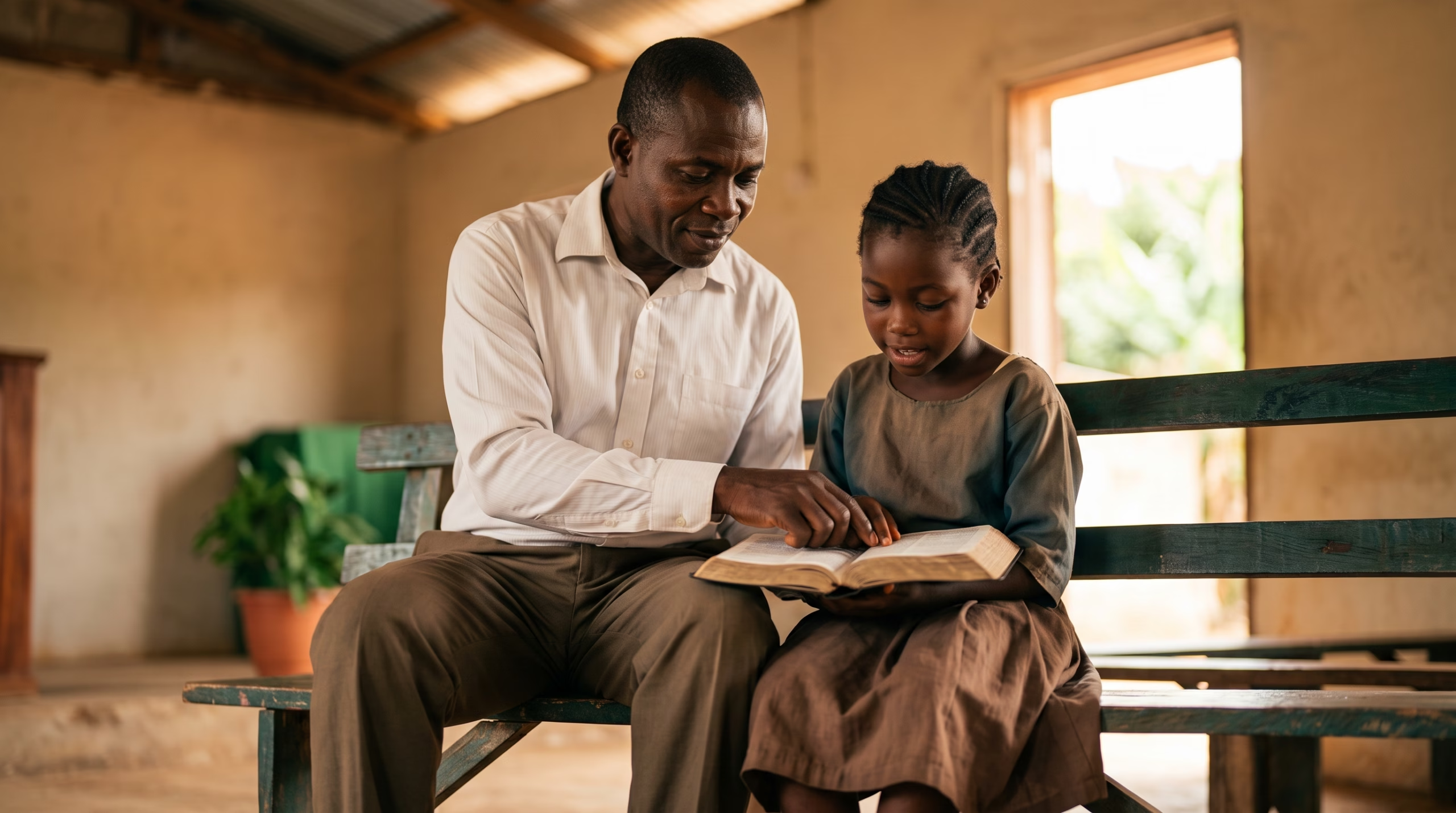
We’ve seen young men and women, who once had no hope, grow into strong, capable leaders for Christ. They understand their own culture and language in a way we never will. They can reach their own people more effectively than any foreigner. This is the biblical model. Paul trained Timothy, and Timothy was to train others. “And the things that thou hast heard of me among many witnesses, the same commit thou to faithful men, who shall be able to teach others also” (2 Timothy 2:2). This multiplication strategy is essential for truly reaching the unreached.
Prayer: The Unseen Foundation
All of these strategies, all the hard work, all the relationships, would be nothing without prayer. Prayer is the foundation of our ministry. We are fighting a spiritual battle, and we cannot win it in our own strength. We need God’s power. We need His guidance. We need Him to open hearts that are closed and minds that are darkened by sin.
Before we go to a new village, we pray. Before we speak to a chief, we pray. Before we start a Bible study, we pray. When things are hard, we pray. When we see victory, we praise God in prayer. Laura and I have seen God do things that can only be explained by His intervention. We’ve seen hardened hearts soften, impossible obstacles removed, and financial needs met at the last minute. This work is His, and He is the one who enables it.
We rely on the prayers of our supporters back home, too. Knowing that believers are lifting us up before the Lord gives us strength and courage. It reminds us that we are not alone in this fight. If you want to join us in this vital work of prayer, you can find our latest prayer needs in our prayer letters. We truly believe that God hears and answers the prayers of His people.
Ultimately, the most effective strategies reaching unreached people groups are those that are rooted in God’s Word, bathed in prayer, and lived out with genuine love and persistence. This is not glamorous work, but it is the most important work in the world. It’s about being faithful to the Great Commission, one person, one village, one church at a time. If these stories resonate with you, and you want to follow along with the day-to-day realities of mission work in Ghana, I invite you to visit our blog. You’ll find regular updates on our church planting efforts and the incredible things God is doing here in Ghana.

Joe Consford is a Baptist missionary serving in Ghana, West Africa, with his wife Laura. He writes about missionary life, missions training, and the work of the Gospel in West Africa at consfords.com.
Frequently Asked Questions
What does ‘unreached people group’ mean in missions?
For us, an unreached people group is a community where less than 2% of the population are evangelical Christians. It means they have little to no access to the Gospel within their own culture and language. Our goal is to develop effective strategies reaching unreached people groups so they can hear the good news.
How important is learning the local language and culture for missionaries?
It’s absolutely critical. I learned the hard way in Ghana that you can’t just translate sermons; you have to understand the heart of the people. Learning the language and culture allows us to build genuine relationships and ensures the message of the Gospel is truly understood, not just heard.
What role do relationships play in sharing the Gospel in West Africa?
In Ghana, relationships run everything. We’ve found that doors for the Gospel only open after years of consistent presence and genuine friendship. We focus on being a true neighbor and building trust. This is one of the most vital strategies reaching unreached people groups.
How do you maintain patience when ministry doesn’t show immediate results?
Patience is a daily discipline on the mission field. I remember spending over a year in a fishing village without seeing a single convert. We kept going back, kept praying, and kept trusting God. We learned that fruit appears on His schedule, not ours, and endurance is rewarded.