
Missions With the Consfords
July 6, 2026
I remember sitting on our porch in Ghana, the generator humming its familiar drone, and the sounds of the village drifting in. Kids laughing, a distant radio, the occasional bleating…
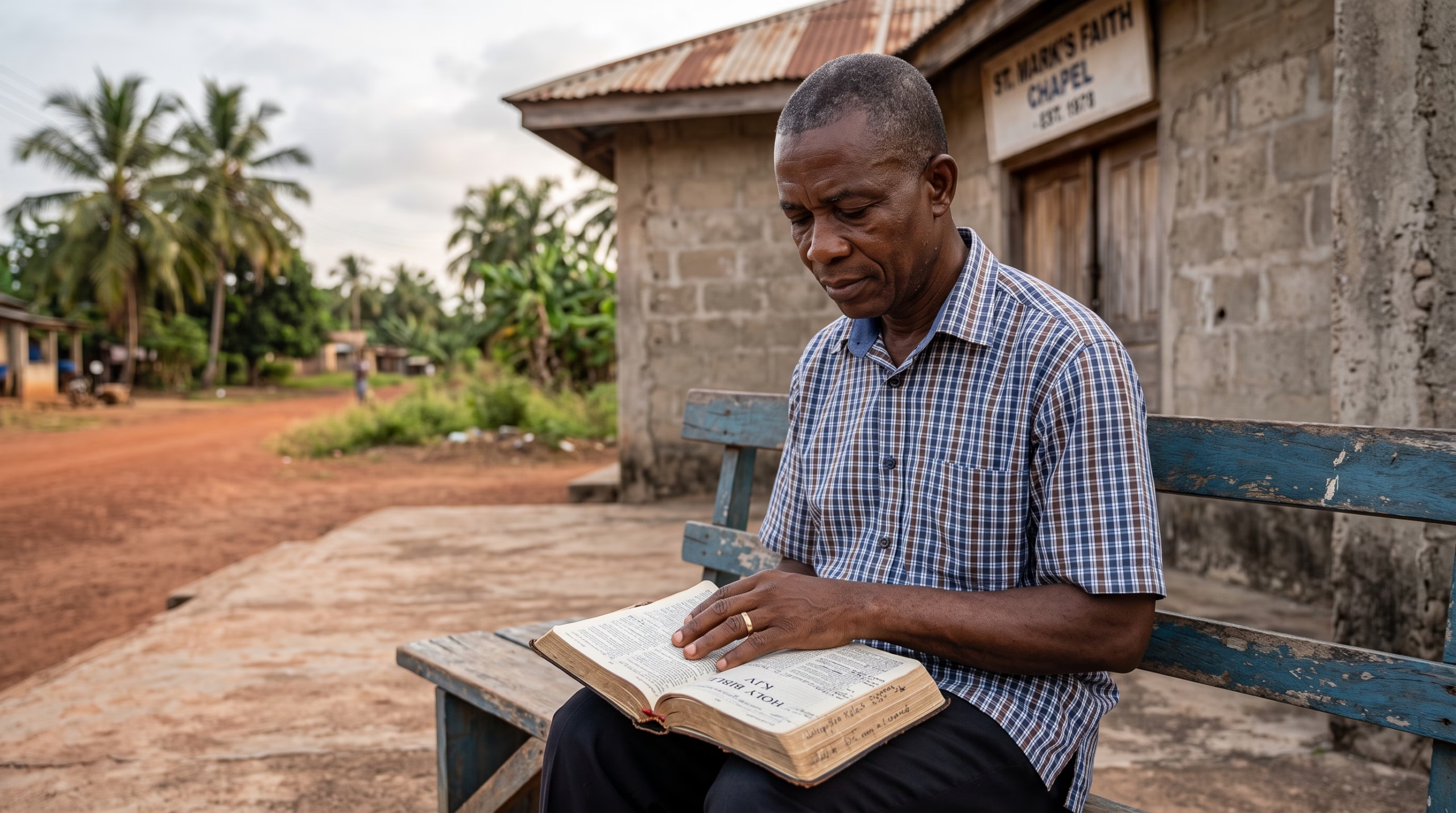
I remember sitting on our porch in Ghana, the generator humming its familiar drone, and the sounds of the village drifting in. Kids laughing, a distant radio, the occasional bleating goat. Yet, in that moment, the quiet felt immense. It was a silence that spoke louder than any noise, a deep, pervasive feeling that we call missionary loneliness.
You can be surrounded by people and still feel profoundly alone. That’s a truth many folks discover, but it hits different when you are thousands of miles from everything familiar, trying to build something from the ground up. It’s a part of the work that doesn’t often make it into the glossy prayer letters, but it’s real.
Understanding Missionary Loneliness
When you first get to the field, everything is new and exciting. You’re learning a language, navigating new customs, and seeing God work in incredible ways. There’s an adrenaline that carries you through the initial culture shock. However, after a while, that adrenaline starts to fade.
The newness wears off. The difficulties remain. You realize that while you love the people, there’s a deep chasm of shared experience that can’t be bridged overnight. You miss the inside jokes, the easy conversations, the comfort of knowing what to expect. This is where missionary loneliness often begins to set in, a quiet, persistent ache.
I’ve stood in front of a congregation I love, preaching God’s Word, and then walked home to a quiet house, feeling a profound sense of isolation. My wife, Laura, has felt it too. It’s not a complaint; it’s just a fact of life on the mission field. It’s the cost of reaching souls who have never heard.
That feeling makes you lean harder on the Lord. It forces you to find your sufficiency in Him, not in the affirmation of others. It clarifies your calling. You remember why you came. If you want to understand more about the drive behind this work, I encourage you to check out our Missionary on Fire page.
The Weight of Cultural Distance
Sometimes, the loneliness isn’t just about being physically alone; it’s about the constant effort of translation. Not just words, but ideas, humor, and even basic assumptions about how the world works. I remember trying to explain the concept of a “potluck” to a group of new believers. That went about as well as you would expect.
The cultural gap can create a different kind of isolation. You might say something with the best intentions, and it’s completely misunderstood. Or you might not understand a local custom, and accidentally cause offense. You learn to laugh at yourself, and to forgive quickly. But sometimes, you just want to talk to someone who already gets it, without explanation.
Laura and I have spent years learning Twi, the local language, but there are still nuances we miss. There are times when a deep conversation just isn’t possible. You find yourself trying to convey profound spiritual truths through simple phrases, and you pray the Holy Spirit fills in the gaps. This constant effort can be exhausting, and it makes you feel very much on your own.
The Bible tells us, “Be strong and of a good courage, fear not, nor be afraid of them: for the LORD thy God, he it is that doth go with thee; he will not fail thee, nor forsake thee” (Deuteronomy 31:6). This verse became a lifeline for us. It reminds us that even when we feel the weight of cultural distance, God is always with us. He never feels distant.
When the Support Fades
Another source of missionary loneliness comes when the connection to your sending church or supporters back home starts to feel thin. People are busy. Life moves on. The initial excitement of sending you out can fade into routine. Prayer letters might not get read with the same urgency. Phone calls become less frequent.
It’s not anyone’s fault. It’s just how things go. But for the missionary on the field, it can feel like being slowly forgotten. You’re pouring your life out, and sometimes it feels like the pipeline of support, both spiritual and emotional, is drying up. You wonder if anyone truly understands what you’re facing.
This is where the enemy loves to whisper doubts. He tells you that you’re not making a difference, that you’re alone, that no one cares. That’s a lie straight from the pit. We combat it by clinging to God’s promises and by intentionally nurturing the relationships we do have, both on the field and back home.
“Among missionaries who leave the field prematurely, a significant percentage cite emotional health challenges, including loneliness and isolation, as contributing factors.”
International Mission Board
It’s a real challenge, as that statistic shows. We’ve learned that communication is key. We send out prayer letters regularly, not just to update but to stay connected. We try to schedule video calls when the internet allows. We don’t want to just be a name on a list; we want to be real people, doing real work, supported by real prayers.
Finding Strength in the Solitude
Loneliness, while painful, isn’t always a bad thing. Sometimes, it’s a tool God uses to draw us closer to Him. When all the familiar comforts are stripped away, when you can’t rely on your usual support systems, you’re left with just God. And that’s exactly where He wants you.
Missionary on Fire Podcast
Preserving the Legacy of Faithful Missionaries
The Missionary on Fire podcast features interviews with veteran missionaries, classic sermons from the field, and stories of God’s faithfulness across generations. If you love the heart behind these stories, you will love the podcast. New episodes regularly.
I’ve had some of my deepest prayer times when I felt most alone. When the house was quiet, and the only sound was the crickets outside, I would pour out my heart to the Lord. He never failed to meet me there. He became my closest Confidant, my truest Friend.
The mission field clarifies things quickly. It removes the padding. There are no stage lights and no weekly affirmation that you are doing well. There is only the work. You study again. You visit again. You preach again. You forgive again. You trust God again. The mission field does not reward drama. It rewards endurance.
It reminds me of Psalm 27:10: “When my father and my mother forsake me, then the LORD will take me up.” While our families haven’t forsaken us, the feeling of being “taken up” by the Lord in moments of deep loneliness is a very real experience. He fills the void that no human relationship ever could completely satisfy. He is our constant companion. We find strength in His promises.
Practical Steps Against Isolation
While we rely on God, that doesn’t mean we just sit around and wait for the loneliness to pass. We take practical steps to fight it. We intentionally build relationships with other missionaries, even if they’re from different denominations. We find common ground in Christ and the work. Those friendships are a lifeline.
We also make an effort to connect with the local believers. While the cultural gap is real, genuine love and shared faith can bridge much of it. Sharing meals, laughing together, serving side-by-side—these things build bonds that fight against isolation. It’s slow work, but it’s vital. We also encourage our supporters back home to connect with us through calls and messages, not just financial support.
Another thing that helps is having hobbies. I love to read. Laura loves to garden. Having something completely unrelated to ministry that you can do for enjoyment provides a mental break. It’s not about escaping the work; it’s about recharging so you can do the work better. You need those moments of refreshment.
Finally, we make sure to stay in the Word. Daily Bible study and prayer are non-negotiable. That’s where we get our spiritual nourishment. That’s where we hear from God. If you’re struggling with loneliness, dig into the Scriptures. You’ll find comfort and strength there. A good resource for studying the KJV Bible is Blue Letter Bible, which has excellent study tools.
Staying on Fire, Not Burning Out
Missionary loneliness is a real challenge, but it doesn’t have to be a mission-ender. It’s a part of the refining process. It’s a reminder that our ultimate satisfaction comes from Christ alone. It forces us to grow in ways we never would have back home.
The goal isn’t to eliminate loneliness entirely, because that’s not realistic in ministry. The goal is to learn how to walk through it, to find God in the quiet spaces, and to keep serving Him faithfully. It’s about being resilient, not just surviving, but thriving for His glory.
We’ve been in Ghana long enough to know that the challenges will keep coming. But so will the victories. God is faithful. He calls us, He equips us, and He sustains us. He never leaves us truly alone.
If you’re interested in learning more about the realities of missions and how to stay passionate for God’s call, even through tough times, I encourage you to explore our Missionary on Fire resources. They’re designed to help you understand what it takes to serve God effectively, wherever you are.

Joe Consford is a Baptist missionary serving in Ghana, West Africa, with his wife Laura. He writes about missionary life, missions training, and the work of the Gospel in West Africa at consfords.com.
Frequently Asked Questions
What is missionary loneliness?
Missionary loneliness is a profound sense of isolation experienced by missionaries, even when surrounded by people. It stems from being far from familiar comforts, navigating cultural differences, and the constant effort of translation, leading to a deep chasm in shared experience.
How does cultural distance contribute to missionary loneliness?
Cultural distance creates isolation through constant effort in translating not just words, but also ideas, humor, and basic assumptions. Misunderstandings can occur, making deep conversations challenging and leaving missionaries longing for someone who ‘gets it’ without explanation, intensifying missionary loneliness.
What are common triggers for loneliness on the mission field?
Common triggers include the fading of initial adrenaline, the newness wearing off, and the realization of persistent difficulties. Missing inside jokes, easy conversations, and the comfort of predictability also contribute. This quiet, persistent ache often sets in after the initial excitement of culture shock subsides.
How do missionaries cope with the emotional toll of isolation?
Missionaries often cope by leaning harder on the Lord, finding sufficiency in Him rather than external affirmation. This emotional toll clarifies their calling and reminds them of their purpose. They learn to laugh at themselves, forgive quickly, and rely on their faith to navigate the challenges of missionary loneliness.