Missions With the Consfords
September 19, 2026
I remember sitting under a mango tree, the afternoon heat heavy and still, watching a young man named Kofi try to pronounce "righteousness." He was a bright kid, eager to…
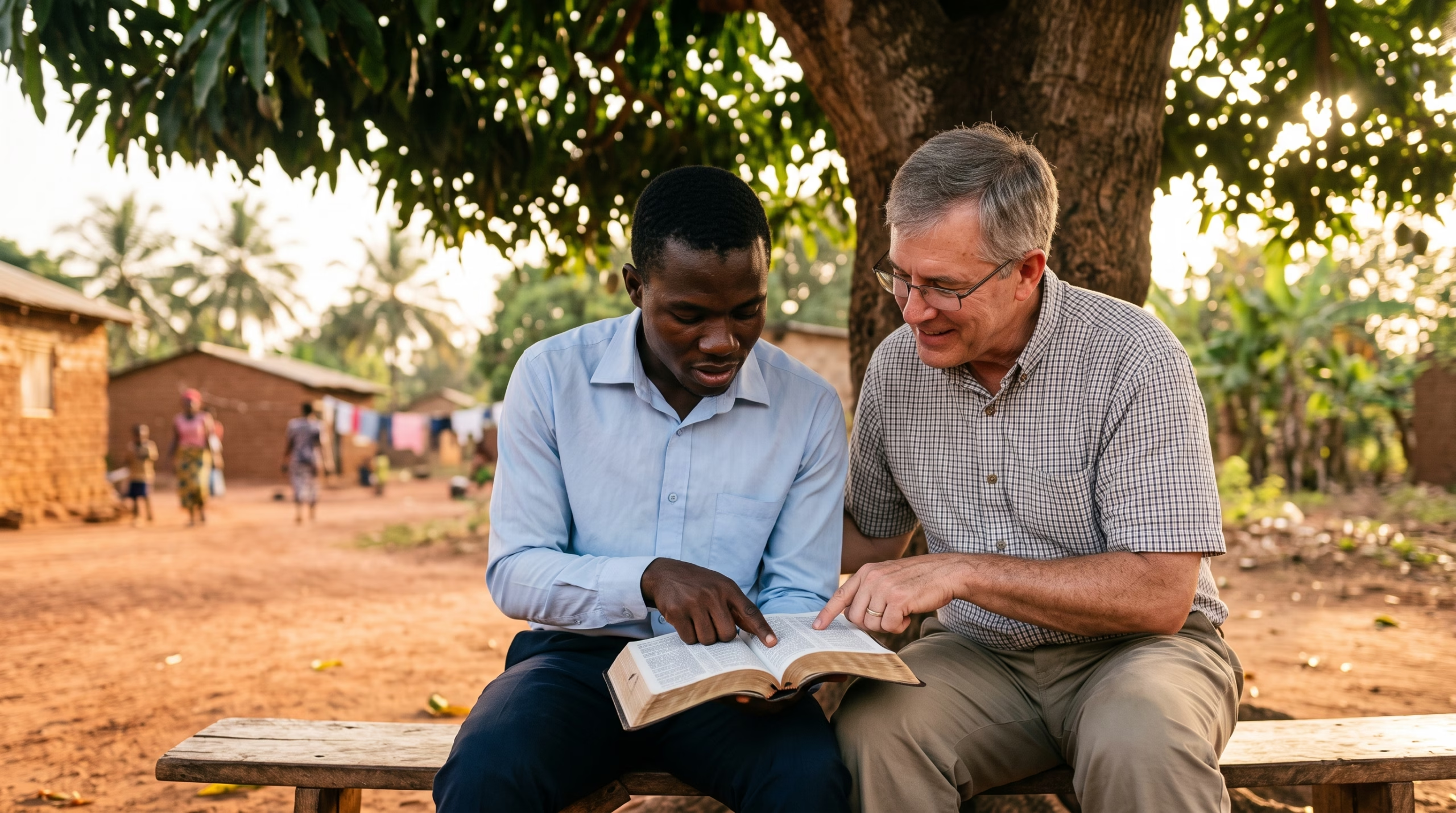
I remember sitting under a mango tree, the afternoon heat heavy and still, watching a young man named Kofi try to pronounce “righteousness.” He was a bright kid, eager to learn English, and I was just as eager to share something more important. Indeed, that’s often how it goes with Ghana missionary English practice: you start with language, and you end up talking about life and eternity.
The Unexpected Classroom in Ghana
When Laura and I first came to Ghana, we did not set out to be English teachers. Our burden was for souls, for planting churches. However, we quickly learned that English is a key to opportunity here. It’s the official language of government and business. It’s the language of higher education, and it often serves as a common tongue between the many different tribes across Ghana.
Consequently, when students or young adults approached us, asking for help with their English, we saw it as a wide-open door. Our original job description did not include this. Nevertheless, the mission field often expands your job description without asking. These informal lessons happen everywhere. Sometimes it’s on a porch, sometimes in a small, dusty classroom, other times under a tree, just like with Kofi. The common thread is always a hunger – a hunger for knowledge, and often, we find, a hunger for truth. This is where Ghana missionary English practice becomes a bridge.
Ghana is a nation of many tongues. We have Ewe, Ga, Twi, Fante, Dagomba, and dozens more, each with its own rich culture and history. For many, English isn’t just a foreign language; it’s the common ground, the way a young person from the Volta Region can communicate easily with someone from the Northern Region. This makes our Ghana missionary English practice especially valuable. It helps them connect with each other, but also with the wider world, and with the KJV Bible we hold dear. We often find ourselves explaining cultural nuances alongside vocabulary, bridging not just language gaps but also understanding between different ways of seeing the world.
The Gospel Through Ghana Missionary English Practice
When someone asks you to help them with their English, they are usually expecting to improve their vocabulary, practice pronunciation, or understand complex sentences. A conversation is a two-way street, however. As we talk about daily life, about their families, their hopes, their struggles, the conversation naturally turns to bigger things. It turns to what gives us peace, what brings true joy.
I’ve found that using the Bible as a textbook is a natural fit. We can read passages together, explain the meaning of words like “redemption” or “grace,” and suddenly we’re not just discussing English. We’re discussing eternal truths. “For what is a man profited, if he shall gain the whole world, and lose his own soul? or what shall a man give in exchange for his soul?” (Matthew 16:26). That verse isn’t just good English; it’s the most important question a person can ever answer. This is where Ghana missionary English practice takes on eternal weight. For more stories about how the Lord opens doors for the gospel, you can always visit our blog.
I remember teaching the word ‘condemnation’ from Romans 8:1. It’s a heavy word, full of legal weight, and it doesn’t have a simple, direct equivalent in many local languages. We had to break it down, explaining the judge, the verdict, the guilt. As we worked through it, the incredible truth of ‘no condemnation to them which are in Christ Jesus’ began to shine through. This kind of careful explanation, facilitated by our Ghana missionary English practice, allows the full weight of scripture to sink into hearts. It’s more than just a lesson; it’s an unveiling of God’s truth.
Building Relationships, One Word at a Time
Building trust takes time. It’s not a one-off event, like a quick evangelistic meeting. It’s showing up week after week, correcting their grammar patiently, and listening to their stories. Sometimes, it means explaining why “I am loving her” isn’t quite right, even though they can clearly see that I am, in fact, loving her. That went about as well as you would expect.
These consistent interactions break down barriers. They see that we care about them, not merely about getting a “decision.” They see us as friends. And when they see us as friends, they’re more open to hearing about our Friend, Jesus Christ. This long-term commitment is crucial for effective Ghana missionary English practice and for sharing the gospel.
Beyond the grammar drills and vocabulary lists, these sessions become a safe space. Students open up about their worries (a sick family member, a difficult exam, the pressure to find work). Laura and I listen, offer counsel from God’s Word, and pray with them. We share our own stories too, of God’s faithfulness in our lives and in our work here in Ghana. That shared vulnerability, built over countless hours of ‘you were’ versus ‘you have been,’ fosters a deep connection. It’s a connection that often transcends the initial goal of language improvement, leading to genuine spiritual curiosity. This aspect of our Ghana missionary English practice is truly foundational.
“English is the official language of instruction from primary school onward in Ghana, making proficiency in the language a crucial factor for educational and economic advancement.”
World Bank
The Harvest of Ghana Missionary English Practice
I remember a young man named Samuel. He came to us for help with his university applications, all of which were in English. We worked through essays, practiced interview questions for scholarships. Over weeks, we talked about his future, his fears, and eventually, his soul. He came to understand his need for a Saviour, and one afternoon, right there in our living room, he got saved. He knelt down and prayed, asking Jesus to forgive his sins and be his Lord. I may have praised the Lord loud enough for the whole building to hear.
Missionary on Fire Podcast
Preserving the Legacy of Faithful Missionaries
The Missionary on Fire podcast features interviews with veteran missionaries, classic sermons from the field, and stories of God’s faithfulness across generations. If you love the heart behind these stories, you will love the podcast. New episodes regularly.
That’s the real reward for all the hours spent on irregular verbs and tricky prepositions. It’s seeing a soul come to Christ. It’s seeing a new believer begin to grow in their faith. Samuel is now an active member of the church we planted here. He often helps new students with their English, sharing his testimony as he does. This is the fruit of consistent Ghana missionary English practice with a gospel focus. We often encourage these new believers to deepen their understanding of the Bible through resources like Blue Letter Bible, which provides powerful study tools in English.
Samuel’s story isn’t unique. I recall another young woman, Akosua, who came to us struggling with her college entrance essays. She was bright but lacked confidence in her written English. As we refined her sentences, we talked about God’s plan for her life, her talents, and how she could use them for His glory. She got into her chosen program and now, a few years later, she teaches Sunday school in English at our church. She uses that same confidence, honed through our lessons, to explain Bible stories to children. It’s a joy to see.
More Than Just a Language Skill
When we help someone with their English, we’re investing in their future, and often, in the future of the church here in Ghana. Many of these students go on to become leaders in their communities, in their workplaces, and in our churches. Imagine a pastor who can confidently teach from the KJV Bible in English, reaching a wider audience. Or consider a Sunday school teacher who can explain complex truths clearly to children. That’s the long game we’re playing. If you’re interested in learning more about the kind of work Samuel is now doing, or about how you can get involved in short-term missions, check out our missionary internships page.
The impact of these language skills extends far beyond personal advancement. Many of the young people we’ve helped are now actively involved in our church planting efforts. They translate for visitors, lead worship songs in English, and confidently share their faith with others who speak different local languages but share English as a common ground. This strengthens the local church’s ability to reach out, to teach, and to grow, becoming a beacon of truth in the community. It’s a powerful illustration of how practical ministry can have a multiplying effect.
It’s about equipping the saints. It’s about raising up a generation of believers who are grounded in the Word and articulate in their faith. That kind of impact goes far beyond any single conversation. It multiplies. “And the things that thou hast heard of me among many witnesses, the same commit thou to faithful men, who shall be able to teach others also” (2 Timothy 2:2). The work of Ghana missionary English practice truly lays a foundation for future ministry. These are the stories you’ll hear me talk about on my Missionary on Fire show.
So, while it might seem like a small thing, sitting down with a student to help them with their English, I see it as a direct path to something much bigger. It opens doors for me to share the gospel and see lives changed. It’s a privilege to see God use something as simple as language lessons to bring people to Himself. If you want to keep up with more stories like these, and see how God is working through our ministry every day, I invite you to read more on our blog. You’ll find regular updates on our church planting efforts and the incredible things God is doing here in Ghana.

Joe Consford is a Baptist missionary serving in Ghana, West Africa, with his wife Laura. He writes about missionary life, missions training, and the work of the Gospel in West Africa at consfords.com.
Frequently Asked Questions
How do missionaries typically begin teaching English in Ghana?
We often start teaching English quite informally. People approach us, asking for help with their English, and we see it as an open door. It’s not usually in our original job description, but the mission field expands that. These lessons happen everywhere – on a porch, in a classroom, or even under a mango tree, just like with Kofi.
What role does English play in Ghanaian society for locals?
English is incredibly important here. It’s the official language for government and business, and it’s the language of higher education. With so many different tribes and languages in Ghana, English often serves as a common tongue, allowing people from different regions to communicate easily. This makes our Ghana missionary English practice especially valuable.
How do you integrate spiritual lessons into Ghana missionary English practice?
It happens very naturally. When someone asks for English help, they’re not expecting a sermon, but as we talk about daily life, hopes, and struggles, the conversation often turns to bigger things. I’ve found using the Bible as a textbook is a perfect fit. We read passages, explain words like ‘redemption,’ and suddenly we’re discussing eternal truths, not just English.
Are there specific Bible translations you use for English lessons in Ghana?
Yes, we primarily use the King James Version (KJV) Bible in our Ghana missionary English practice. It’s the version we hold dear, and while it can be challenging for new English learners, it allows us to explain both the language and the rich, historical theological concepts within its text. It helps bridge not just language gaps but also understanding between different ways of seeing the world.