Missions With the Consfords
July 26, 2026
The first time I saw our little assembly gather under a mango tree in a village outside Kumasi, it didn't look much like a "church" by American standards. There were…
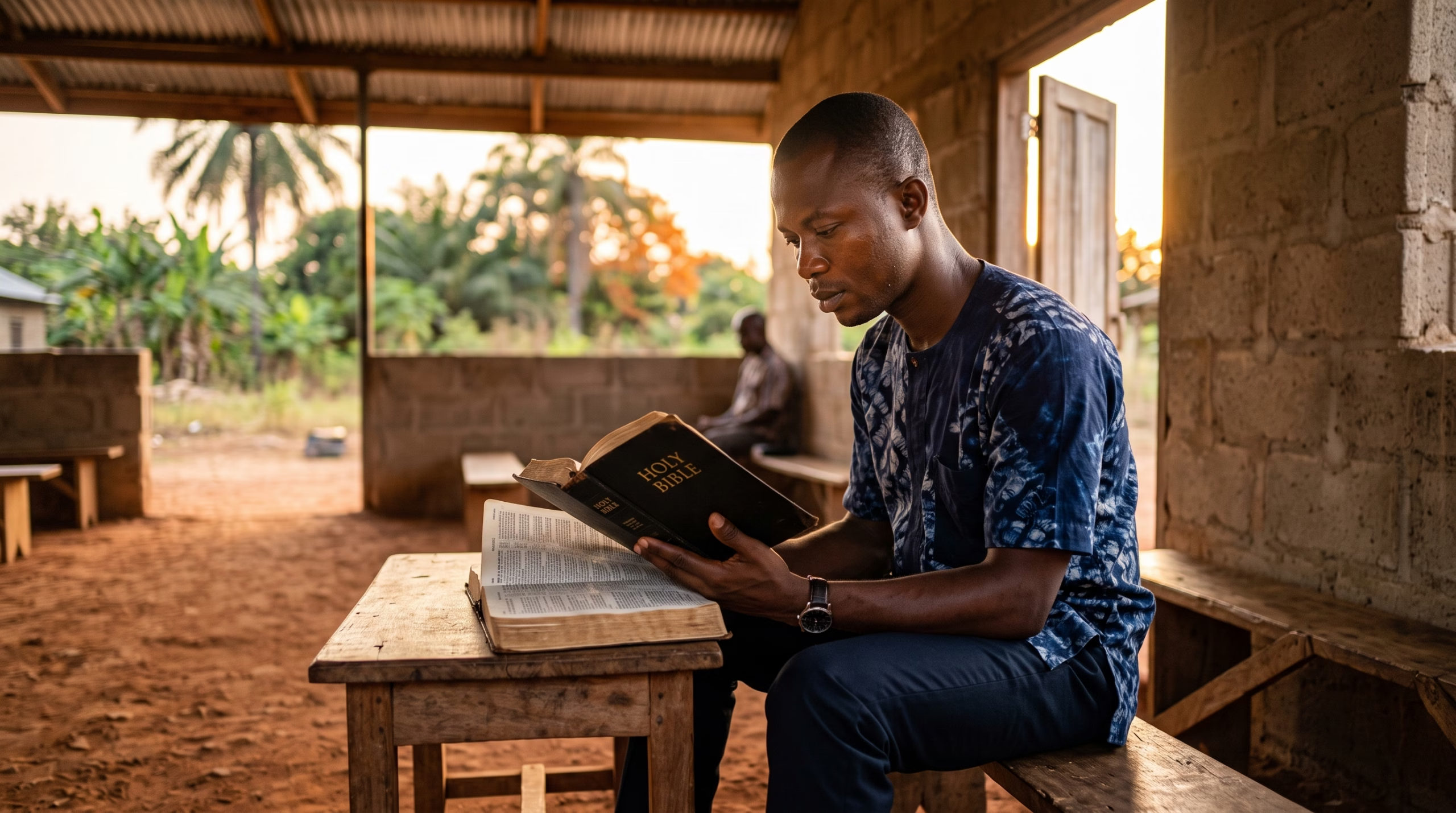
The first time I saw our little assembly gather under a mango tree in a village outside Kumasi, it didn’t look much like a “church” by American standards. There were no walls, no roof, just a rough-hewn bench and a few dozen eager faces. Yet, that moment clarified everything about building churches in Ghana for me. It’s not about the structure; it’s about the Spirit and the people.
My wife Laura and I have spent years on the ground in West Africa, learning that the true foundation for any lasting work is trust. You can pour all the concrete you want, but if you haven’t poured into relationships, you’re building on sand. That’s a lesson you learn quickly when you’re planting churches in a new culture, navigating language barriers, and building from the ground up.
The Foundation of Trust, Not Concrete
When we first arrived in Ghana, I had a lot of ideas about how things should work. I had the books, the training, and a whole lot of American assumptions. That went about as well as you would expect. I quickly learned that the ministry here does not reward drama. It rewards endurance, patience, and a willingness to simply show up, day after day.
Relationships are the currency here. You don’t just walk into a village, preach a sermon, and expect a church to sprout up. You share meals. You sit for hours, sometimes without saying much, just being present. You learn a few words of Twi, even if you butcher them. You show respect for the elders and the customs. Sometimes, you just listen to stories.
I remember one elder, Nana Kwame, who would only ever talk to me about farming for the first six months I knew him. Every visit, we’d discuss yam yields and the latest rains. I started to wonder if he’d ever let me talk about the Gospel. Then, one morning, after a particularly long discussion about soil erosion, he looked at me and said, “Joe, why do you keep coming here?” That was the opening. That was the moment he saw me as a friend, not just a foreigner with a message. This kind of patient, relationship-first approach is something you can read more about in our regular updates on our blog, where we share the ongoing stories of our work.
The cable did not get installed because of pressure back home. It got installed because of breakfast. The mission field clarifies things quickly. It removes the padding. There are no stage lights and no weekly affirmation that you are doing well. There is only the work. You study again. You visit again. You preach again. You forgive again. You trust God again.
Preaching the Word, One Soul at a Time
Once trust is established, the real work of building churches in Ghana begins: sharing the unadulterated Word of God. We use the King James Version of the Bible, and it’s a powerful tool in the hands of new believers. There’s a reverence for the Scriptures here that can sometimes be lost in the West. People truly hunger for truth, and they want it straight from God’s mouth.
I remember sitting with a young man named Kofi, who had just gotten saved. He had a copy of the KJV Bible, worn from use, and he was trying to understand a passage in Romans. We sat together, just the two of us, going through it line by line. His eyes lit up when the meaning clicked. That’s why we do what we do. That’s the joy of seeing the Holy Spirit illuminate truth.
The Apostle Paul understood this principle when he wrote, “For other foundation can no man lay than that is laid, which is Jesus Christ” (1 Corinthians 3:11). Our job is not to invent a new way to get to God. Our job is to clearly present Jesus Christ, the only foundation. Then, we help new believers understand His Word. For those who want to dive deeper into KJV studies, I often recommend resources like Blue Letter Bible for their comprehensive tools.
Discipleship is not a program; it’s a lifestyle. It’s spending time, answering questions, praying together, and modeling what a Christ-centered life looks like. It’s helping new converts grow strong in their faith so they can then reach their own families and communities. This is how the church truly multiplies.
Training Leaders: The Ghanaian Way
A missionary’s ultimate goal isn’t to build his own kingdom, but to raise up indigenous leaders who will carry on the work. This is paramount for building churches in Ghana that are truly self-sustaining and self-propagating. It means pouring into men and women who have a burden for their own people.
Training leaders is not always a smooth road. There are cultural differences in leadership styles, communication, and decision-making. I’ve made my share of mistakes, trying to impose Western structures where they simply didn’t fit. One time, I tried to implement a very detailed, minute-by-minute Sunday school schedule. The Ghanaian brethren smiled, nodded, and then proceeded to run Sunday school their way, which involved more singing and spontaneous testimonies than my rigid plan allowed. I learned to let go. They knew their people better than I did.
The key is identifying those with a genuine call and a servant’s heart. Then, you equip them with the Word of God and practical ministry skills. You teach them how to preach, how to teach, how to counsel, and how to lead their homes. It’s a long process, but it’s the only way to ensure the work continues long after we’re gone.
“According to the IMB, there are more than 7,000 unreached people groups in the world today, representing billions of individuals who have little to no access to the Gospel.”
International Mission Board
This statistic underscores the urgency of raising up local leaders. We cannot reach everyone ourselves. The vision must be bigger than any one missionary couple. It must be about equipping Ghanaians to reach Ghanaians, and then, to reach beyond their borders to other unreached peoples. That’s the real engine of missions.
Overcoming Obstacles: From Logistics to Laughter
Life on the mission field, especially when you’re building churches in Ghana, is rarely predictable. We’ve dealt with everything from flat tires in the middle of nowhere to power outages during crucial meetings. I remember one Sunday, our truck broke down about an hour from the village where we were supposed to have service. We hitched a ride on a passing lorry, crammed in with sacks of yams and a few goats. We arrived dusty, but we arrived. The service went on.
Missionary on Fire Podcast
Preserving the Legacy of Faithful Missionaries
The Missionary on Fire podcast features interviews with veteran missionaries, classic sermons from the field, and stories of God’s faithfulness across generations. If you love the heart behind these stories, you will love the podcast. New episodes regularly.
At that point I looked at my wife and asked if we had made a wrong turn and wound up in Africa. Oh, wait. We were already in Africa. The humor is often found in the underreaction. The truck dies. The response: fix it during the breaks. You learn to laugh, or you’ll go crazy. You learn that God is bigger than a dead battery or a muddy road. He always provides a way, even if it’s not the way you planned.
One time, we were trying to get a new sound system installed for a church plant. The technician kept promising to come, but “African time” is a real thing. After two weeks of waiting, I was getting frustrated. Laura simply suggested we invite him to dinner. He showed up, we ate fufu and talked for hours, and the next morning, he was there bright and early, sound system in hand. Systems don’t run things; relationships do. That’s a lesson I’m still learning, and one you’ll hear about often on my show, Missionary on Fire.
These obstacles aren’t just inconveniences; they’re opportunities for God to show up. They teach you resilience. They teach you to depend on Him, not on your own strength or resources. They strip away the comfortable illusion of control and leave you with just faith.
The Enduring Work of Building Churches in Ghana
The work of building churches in Ghana is an enduring one. It’s not a sprint; it’s a marathon. It requires a long-term vision and a commitment to stay, even when things are hard. We’ve seen churches grow from a handful of believers meeting under a tree to vibrant congregations with their own buildings and multiple outreach ministries.
The ripple effect of one church plant is incredible. It’s not just about Sunday services. It’s about community development, literacy programs, and a spiritual anchor for an entire area. When a community embraces the Gospel, you see lives transformed, families strengthened, and a new sense of hope emerge. This is what we call “fruit that remains.”
Laura and I have poured our lives into this work, and we’ve seen God do amazing things. We’ve witnessed countless souls get saved, marriages restored, and communities changed. It’s a testament to the power of God’s Word and the faithfulness of His people. We share more of these inspiring stories and practical insights into missions on our blog, so you can stay connected with what God is doing here.
The Scripture reminds us, “And let us not be weary in well doing: for in due season we shall reap, if we faint not” (Galatians 6:9). This verse is a constant encouragement. There are days when you feel weary, days when the challenges seem overwhelming. But we press on, knowing that our labor in the Lord is not in vain. We trust in His timing and His power to bring the harvest.
Prayer and Partnership
Prayer is the bedrock of all we do. We cannot build anything of lasting value without constant communication with our Heavenly Father. We’ve seen Him answer prayers in miraculous ways, opening doors that seemed closed and providing resources when we had none. We know that we are not alone in this work. We have faithful partners back home who pray for us and support us, making it all possible.
This partnership is crucial. It’s a team effort, with folks on the field and folks back home working together for the glory of God. If you feel a burden for missions, remember that your prayers and support are vital. This work is bigger than any one person or family. It truly takes the whole Body of Christ.
The journey of building churches in Ghana has been one of the greatest privileges of our lives. It has taught us patience, faith, and the incredible power of God’s love to transform lives. We invite you to join us in this ongoing adventure, whether through prayer, support, or simply by staying informed about what God is doing here. You can find more of our stories, insights, and updates on the Consford Family’s mission on our blog, where we regularly share what’s happening on the field.

Joe Consford is a Baptist missionary serving in Ghana, West Africa, with his wife Laura. He writes about missionary life, missions training, and the work of the Gospel in West Africa at consfords.com.
Frequently Asked Questions
What is the primary approach to building churches in Ghana?
The primary approach to building churches in Ghana emphasizes relationships and trust over physical structures. Missionaries often spend significant time sharing meals, listening to stories, and building friendships within communities before introducing the Gospel. This relational foundation is crucial for lasting ministry.
How important are local relationships when planting churches in Ghana?
Local relationships are the currency of ministry when planting churches in Ghana. Without establishing deep trust and respect with community elders and residents, efforts to share the Gospel or construct buildings are often ineffective. Patience and presence are key to fostering these vital connections.
What challenges do missionaries face when building churches in Ghana?
Missionaries building churches in Ghana often face challenges like navigating language barriers, cultural differences, and overcoming initial skepticism. They learn to prioritize endurance and patience, understanding that ministry rewards consistent presence and a willingness to adapt to local customs and rhythms.
How do missionaries introduce the Gospel after establishing trust in Ghanaian villages?
After establishing trust, missionaries introduce the Gospel by sharing the unadulterated Word of God, often using the King James Version of the Bible. This process is gradual and respectful, building on the foundation of friendship and mutual understanding developed through patient, consistent engagement in the community.