
Missions With the Consfords
November 7, 2026
Living in a foreign country is a new experience every single day. Even after months, or years, on the field, things still happen that make you scratch your head and…
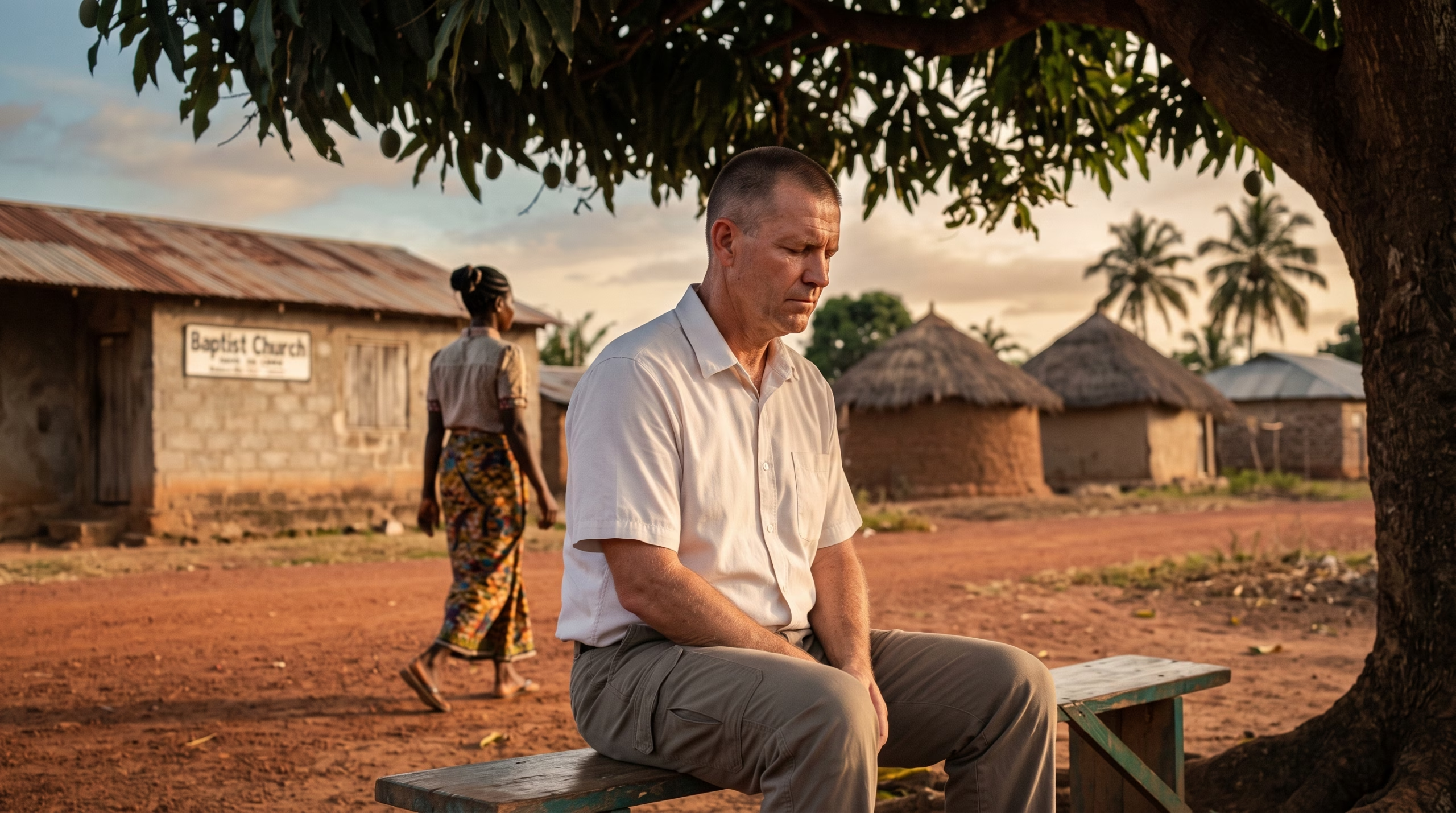
Living in a foreign country is a new experience every single day. Even after months, or years, on the field, things still happen that make you scratch your head and wonder if someone is playing a joke on you. Sometimes it feels like you are the only one who thinks it is strange. You are in full panic mode, while the rest of the neighborhood shrugs and goes on with life like nothing is wrong, like the time they stole my phone line. It had been a normal day in Africa. I had gone to the grocery store, made a few visits to people who had missed church, and returned home to relax. That evening, I picked up the phone and dialed Texas. Talking to family back home was a treasured part of our routine, a tether to the people and world we left behind. The conversation was going just fine, until it was not. The line went dead, no static, no fading signal, just gone, silent. I hung up and redialed, but there was still nothing. I figured it was a momentary issue and went to bed. Surely, it would be working again by morning. But the next day, there was still no phone service, not just for me, for anyone. I walked around the neighborhood asking if others were having trouble. It turned out nobody had a working phone. That gave me a weird sense of relief. At least I had not broken something. I hopped in the car and headed into town to visit the local phone office. It was a small concrete building with a faded sign and one sleepy fan pushing warm air in lazy circles. They told me they were “aware of the issue and looking into it.” They sounded sincere enough. I figured we would be reconnected soon. We were not. Two days turned into three, then five, then a full week, still no phone. I returned to the phone office. They were surprised to see me “so soon.” I blinked. A week without communication from your family does not feel “soon.” I explained that I was a missionary and needed the phone to coordinate ministry, check on church members, and keep in touch with our family in America. They nodded politely and repeated the same line: “We’re looking into the situation. Please be patient.” By now, I had the official phrase memorized. I could say it in English, French, and a couple of local dialects. Every time I visited, I got the same robotic answer. But there was no robot behind the desk, just a man who did not have the tools or materials to fix the problem. I was not mad. I was not even impatient, at least, not at first. But the complete lack of urgency was infuriating. Meanwhile, my neighbors were not losing sleep over it. They did not even seem bothered. “This happens sometimes,” they said with a shrug. “They’ll fix it when they can.” Apparently, “emergency” was not a word that applied to missing phone service. One morning, I decided to skip the office altogether. Instead of talking to people who had no tools, I went looking for the ones who did. I had seen the phone company’s truck before, a rusty pickup with a ladder strapped to the top. If anyone could fix the problem, it would be the guys who drove that truck. I asked around town, stopping by a few cafés and repair shops until someone pointed me to the informal breakfast club downtown. Every morning, a crowd of men would gather under a big tree near the market. They ate fried bread and beans, sipped strong, gritty coffee out of tin cups, and listened as someone read the day’s newspaper aloud. It was news hour, community theater, and town hall meeting all rolled into one. Sure enough, the phone repair crew was there, three men in blue uniforms with frayed cuffs and calloused hands. I bought breakfast and joined their table. We laughed, swapped stories, and talked about football (soccer) and politics. Eventually, I mentioned the phone outage. One of the repairmen leaned over his plate and explained what had happened. “Copper thieves,” he said simply. I raised an eyebrow. He went on to explain that thieves had climbed the poles and cut long sections of copper phone line right off the top. They sold it by the pound in the black market. The phone company did not have backup supplies. They were prioritizing hospitals, banks, and government offices. Residential areas? not even on the list. “Maybe in a few weeks,” he said, shrugging. That is when something clicked in my head. After thanking the crew and finishing breakfast, I asked if I could see where the line had been cut. One of the men offered to show me. Sure enough, when we reached a certain pole near the edge of the neighborhood, the wires just… stopped, clean cut, gone. The man turned to me. “Unless you can find cable, there’s not much we can do.” That was all I needed to hear. I went hunting. There was a sprawling market on the far end of town. It had everything: motor oil, goat heads, wedding dresses, and broken calculators. Somewhere in that organized chaos, I hoped to find a miracle. I walked past plastic tub vendors, spice merchants, racks of used cell phones, and stalls full of extension cords and mismatched screws. At last, tucked between a spice seller and a man who dealt in used spark plugs, I saw something that made my heart skip, a dusty spool of copper phone line. I asked the price. It was expensive, but not impossible. I paid for it, loaded it in my car, and drove it straight back to the repairmen. Their jaws dropped. “Where did you find this?” one of them asked. “Between cinnamon and carburetors,” I said. They laughed. I laughed. And then I handed them the cable, plus a little something extra for their trouble. The next day, the truck showed up. They climbed the pole, pulled the line, made the splices, and, just like that, our neighborhood had phone service again. That evening, I dialed Texas. It rang. My mom answered. “Hello?” Just like that, we picked up where we left off. I do not even remember what we talked about. It did not matter. I was just glad to hear her voice. But the real victory was not the working phone; it was the lesson God had taught me in the process. Back home in Texas, problems were fixed through systems, forms, policies, departments. But in Africa, systems do not run things; relationships do. I had to stop being a customer and become a friend. The cable did not get installed because of pressure. It got installed because of breakfast. That phone line was never just about communication; it was about connection. That week taught me something vital. If I wanted to reach people with the gospel, I had to stop trying to fix problems and start building friendships. Evangelism does not start in the pulpit. It starts at the breakfast table. It is not about shouting the loudest or being the smartest. It is about sitting with someone over a cup of coffee and listening. It is about laughing at a joke, helping carry a load, or buying breakfast for a stranger. Relationships are the key that unlock hearts. I used to think ministry meant speaking in front of crowds. But more often, ministry happens under trees, in market stalls, and over beans and bread. The copper line they stole from the pole may have cut me off from my family temporarily, but it reconnected me with a deeper understanding of why I was in Africa in the first place. We are not here to build systems. We are here to build people. We are not called to fix everything. We are called to love everyone. Jesus did not start with sermons. He started with relationships. So should we. Jesus said it best: “And he saith unto them, Follow me, and I will make you fishers of men.” , Matthew 4:19
1. Flexibility: The Key to Thriving in Lifelong Ministry
As a missionary, I have learned that flexibility is essential for thriving in lifelong ministry. It is the ability to adapt to changing circumstances, to be open to new opportunities, and to trust in God’s sovereignty. In the midst of chaos, flexibility allows us to pivot and respond to the needs of others. It is not about being rigid and inflexible, but about being willing to be uncomfortable and to take risks. In the story of the stolen phone line, I learned that sometimes the best way to get things done is not by following the rules, but by building relationships and trusting in the people around you. I had to stop being a customer and become a friend, and in doing so, I discovered a deeper understanding of why I was in Africa in the first place.
2. Relationships: The Foundation of Thriving in Lifelong Ministry
Relationships are the foundation of thriving in lifelong ministry. They are the key that unlock hearts and the bridge that connects us to the people we serve. In the story of the stolen phone line, I learned that relationships are not just about communication, but about connection. It is about sitting with someone over a cup of coffee and listening, laughing at a joke, helping carry a load, or buying breakfast for a stranger. Relationships are not just a means to an end, but an end in themselves. They are the way we show God’s love to others and the way we build trust and credibility in the communities we serve.
3. Prioritizing People over Systems
As a missionary, I have learned that prioritizing people over systems is essential for thriving in lifelong ministry. It is not about building grand systems or implementing complex strategies, but about building relationships and trusting in the people around you. In the story of the stolen phone line, I learned that sometimes the best way to get things done is not by following the rules, but by building relationships and trusting in the people around you. I had to stop being a customer and become a friend, and in doing so, I discovered a deeper understanding of why I was in Africa in the first place.
4. The Importance of Community
Community is essential for thriving in lifelong ministry. It is the network of relationships that support and encourage us, and the place where we find our sense of belonging and purpose. In the story of the stolen phone line, I learned that community is not just about gathering people together, but about building relationships and trusting in the people around you. I found community in the informal breakfast club downtown, where I met the phone repair crew and learned about the importance of building relationships and trusting in the people around you.
5. Trusting in God’s Sovereignty
Trusting in God’s sovereignty is essential for thriving in lifelong ministry. It is the foundation of our faith and the source of our strength. In the story of the stolen phone line, I learned that sometimes the best way to get things done is not by following the rules, but by trusting in God’s sovereignty. I had to stop being a customer and become a friend, and in doing so, I discovered a deeper understanding of why I was in Africa in the first place.
6. Embracing the Challenges of Lifelong Ministry
Embracing the challenges of lifelong ministry is essential for thriving in lifelong ministry. It is not about avoiding difficulties, but about facing them head-on and trusting in God’s sovereignty. In the story of the stolen phone line, I learned that sometimes the best way to get things done is not by following the rules, but by embracing the challenges and trusting in God’s sovereignty. I had to stop being a customer and become a friend, and in doing so, I discovered a deeper understanding of why I was in Africa in the first place.
“About 70% of missionaries return home within 2-3 years of arrival due to the challenges they face.” International Mission Board
7. Finding Joy in the Journey
Finding joy in the journey is essential for thriving in lifelong ministry. It is not about reaching a destination, but about enjoying the process and trusting in God’s sovereignty. In the story of the stolen phone line, I learned that sometimes the best way to get things done is not by following the rules, but by finding joy in the journey and trusting in God’s sovereignty. I had to stop being a customer and become a friend, and in doing so, I discovered a deeper understanding of why I was in Africa in the first place.
As I reflect on the story of the stolen phone line, I am reminded that thriving in lifelong ministry requires flexibility, relationships, prioritizing people over systems, community, trusting in God’s sovereignty, embracing the challenges, and finding joy in the journey. It is not about following a set of rules or implementing a complex strategy, but about building relationships and trusting in the people around you. If you are considering a career in lifelong ministry, I encourage you to read the story of the stolen phone line and reflect on the lessons I learned. You can find more information about our missionary work and how you can get involved on our website, Missionary on Fire.
For more information on how to thrive in lifelong ministry, check out our book, Missionary on Fire, or our prayer letters, Prayer Letters. We also offer missionary internships for those interested in serving on the field. For more information, visit our website, Missionary Internships.
As a missionary, I have learned that thriving in lifelong ministry requires a willingness to adapt, build relationships, and trust in God’s sovereignty. I hope that the story of the stolen phone line has inspired you to reflect on your own ministry and to find joy in the journey. Remember, we are not here to build systems, but to build people. We are not called to fix everything, but to love everyone. Jesus did not start with sermons, but with relationships. So should we.
Jesus said it best: “And he saith unto them, Follow me, and I will make you fishers of men.” , Matthew 4:19
Conclusion
Thriving in lifelong ministry requires flexibility, relationships, prioritizing people over systems, community, trusting in God’s sovereignty, embracing the challenges, and finding joy in the journey. It is not about following a set of rules or implementing a complex strategy, but about building relationships and trusting in the people around you. I hope that the story of the stolen phone line has inspired you to reflect on your own ministry and to find joy in the journey. Remember, we are not here to build systems, but to build people. We are not called to fix everything, but to love everyone. Jesus did not start with sermons, but with relationships. So should we.
Missionary on Fire Podcast
Preserving the Legacy of Faithful Missionaries
The Missionary on Fire podcast features interviews with veteran missionaries, classic sermons from the field, and stories of God’s faithfulness across generations. If you love the heart behind these stories, you will love the podcast. New episodes regularly.
For more information on how to thrive in lifelong ministry, visit our website, Missionary on Fire, or check out our book, Missionary on Fire. We also offer missionary internships for those interested in serving on the field. For more information, visit our website, Missionary Internships.
As you continue on your own journey in ministry, remember to prioritize building relationships and trusting in God’s sovereignty. It is not about reaching a destination, but about enjoying the process and trusting in God’s sovereignty. I’ve learned that sometimes the best way to get things done is not by following the rules, but by building relationships and trusting in the people around you. I hope that the story of the stolen phone line has inspired you to find joy in the journey and to trust in God’s sovereignty. Jesus said it best: “And he saith unto them, Follow me, and I will make you fishers of men.” , Matthew 4:19
References:
- International Mission Board
- Missionary on Fire
- Missionary on Fire
- Prayer Letters
- Missionary Internships
As I close this article, I want to leave you with a challenge. As you continue on your own journey in ministry, remember to prioritize building relationships and trusting in God’s sovereignty. It is not about reaching a destination, but about enjoying the process and trusting in God’s sovereignty. I’ve learned that sometimes the best way to get things done is not by following the rules, but by building relationships and trusting in the people around you. I hope that the story of the stolen phone line has inspired you to find joy in the journey and to trust in God’s sovereignty. Jesus said it best: “And he saith unto them, Follow me, and I will make you fishers of men.” , Matthew 4:19
References:
- International Mission Board
- Missionary on Fire
- Missionary on Fire
- Prayer Letters
- Missionary Internships
As you continue on your own journey in ministry, remember to prioritize building relationships and trusting in God’s sovereignty. It is not about reaching a destination, but about enjoying the process and trusting in God’s sovereignty. I’ve learned that sometimes the best way to get things done is not by following the rules, but by building relationships and trusting in the people around you. I hope that the story of the stolen phone line has inspired you to find joy in the journey and to trust in God’s sovereignty. Jesus said it best: “And he saith unto them, Follow me, and I will make you fishers of men.” , Matthew 4:19

Joe Consford is a Baptist missionary serving in Ghana, West Africa, with his wife Laura. He writes about missionary life, missions training, and the work of the Gospel in West Africa at consfords.com.
Frequently Asked Questions
What is thriving in lifelong ministry?
Thriving in lifelong ministry means being able to navigate the challenges of living and working in a foreign country with resilience and adaptability. It’s about being able to find joy and purpose in the midst of uncertainty.
How do I stay connected with my family while living abroad?
As a missionary, staying connected with your family is crucial. Consider using a reliable phone service or investing in a satellite phone to ensure you can stay in touch with loved ones.
What are some common challenges faced by missionaries in Ghana?
One common challenge faced by missionaries in Ghana is the lack of reliable phone service. However, with the right mindset and resources, you can thrive in lifelong ministry despite these challenges.
How can I build resilience in my ministry?
Building resilience in your ministry requires being proactive and adaptable. Take time to reflect on your experiences, learn from your mistakes, and seek support from your community when needed.